Lynx
®
NGT-9000
Pilot’s Guide 2-69
Operation - Panel Mount
Premature Descent
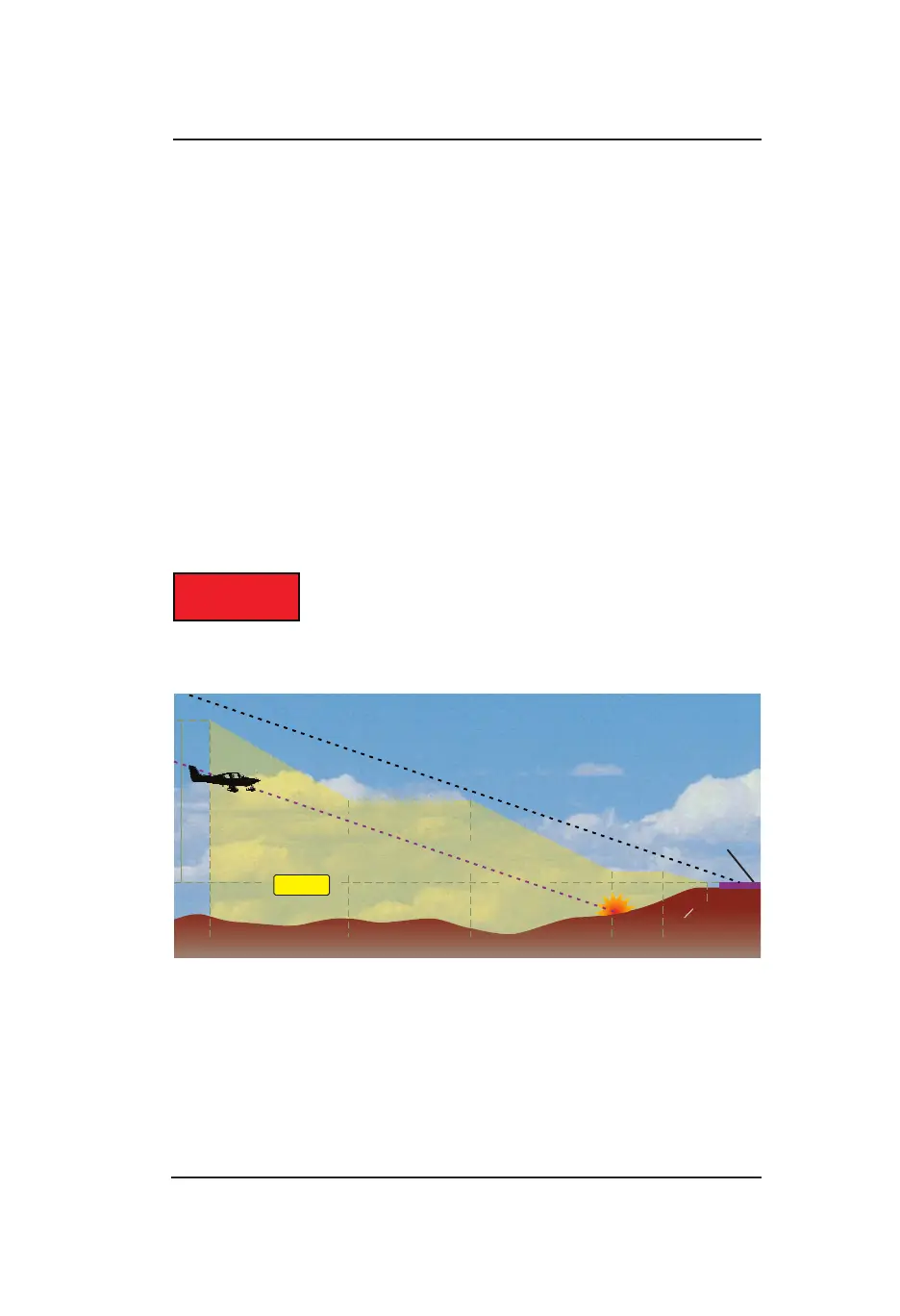
The premature descent alert condition (Figure 2-34) occurs when
your aircraft is signicantly below the normal nal approach ight path
to the nearest runway (typically a 3-degree implied glideslope). This
condition may exist for a variety of reasons such as poor visibility
or nighttime operation. If this condition is not corrected, then likely
the aircraft will touch down short of the runway even if the aircraft is
properly congured for landing and is descending at a normal rate. The
premature descent alert is only enabled in the terminal and approach
phases.
The TAWS function uses the aircraft’s current position, ight path
information, and the runway database to detect the premature descent
condition and then a caution alert is sent.
TAWS function calculates premature descent alerts
based on the aircrafts proximity to the closest runway
and measures the aircrafts distance from that runway
once per second. The closest runway may or may not be
the runway intended for a landing.
WARNING
Figure 2-34: Premature Descent Alert Condition
1
2
nm
Caution Alert:
“Too low, terrain!”
700 ft
15 nm
12 nm
5 nm
2 nm 1 nm
350 ft
150 ft
Nearest
Runway
Premature Descent
Normal Final Approach
TERRAIN



 To Next Page
 Loading...