User Interface
R&S
®
GP-E/GP-S
71User Manual v16.2.1 ─ 01
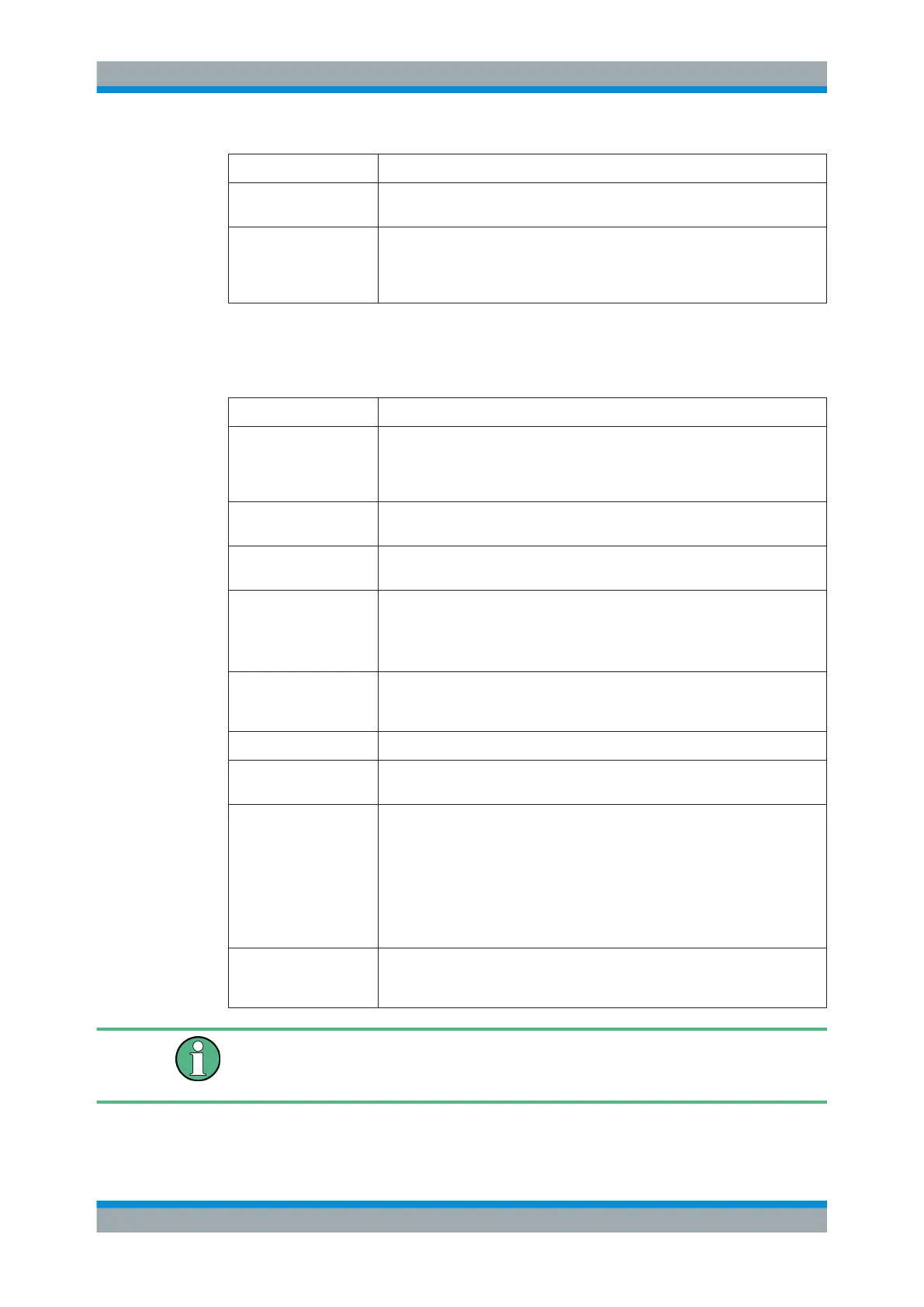
Field Description
"Enable DNS Cache" This checkbox is pre-selected by default; it has to be selected to activate DNS
caching. Clear the checkbox to disable DNS caching.
"Log Refused Connec-
tion Attempts"
Optional: Select this checkbox to create an entry in the System log (see "Sys-
tem Log" on page 41) whenever a connection attempt from the outside to this
Ethernet zone fails. Filtering the System log by "Program" ulogd, the log
entries for refused connection attempts are displayed.
gateprotect Firewall provides IP addresses to computers on the network using the
Dynamic Host Configuration Protocol. The "DHCP Server" tab provides the following
options:
Field Description
"On" / "Off" A slider switch indicates whether the DHCP server is active ( "On" ) or inactive
( "Off" ). By clicking the slider switch, you can toggle the state of the DHCP
server. The DHCP server is enabled by default. If the DHCP server is disabled,
no other settings can be configured on this tab.
"Domain Name" Optional: Enter a custom domain name that the DHCP server assigns to the cli-
ents.
"Lease Time" Enter the default and maximum lease time (in seconds) to determine the
amount of time that a computer will have a valid IP address.
"DNS Servers" Specify the primary and secondary DNS servers to be used by computers that
receive an IP address from the enabled DHCP server in the LAN zone.
Note: To be able to specify the DNS servers, you need to clear the "Enable
DNS Cache" checkbox in the "General" tab.
"DHCP Relay" Enable DHCP relay by selecting the checkbox if gateprotect Firewall is to be
used as a proxy server, passing on the task of assigning IP addresses to clients
to a remote DHCP server.
"Mark" Select this checkbox to append an agent option field (adds IDs to requests).
"Port" Specify the port that is used to listen for and transmit queries. This is useful for
debugging purposes. The default port for DHVPv4/BOOTP is port 67.
"Dynamic DHCP Scope" To supply clients with addresses, a range of IP addresses can be assigned to
the server using these settings. You can use the default DHCP address range
or enter a different beginning and end of the range of addresses that you want
to distribute to computers in this zone. A dynamic DHCP scope provides each
client with the next available address in the range.
Note: If you edit the DHCP scope, a check mark appears on the right of the
input fields. You have to click the check mark before being able to save the set-
tings of the Ethernet zone.
"Static IP Addresses" A static DHCP scope provides specific IP addresses to specific computers on
your network. When a host connects with the specified hostname or MAC
address, it receives the designated IP address.
If you configure an IP address from within the dynamic DHCP address range as a
static IP address, this IP address will not be dynamically assigned by the DHCP server
to a client other than the one specified any more.
On the "Web Admin Access" tab:
Menu Reference


 To Next Page