Introduction
It's fair to say that the word 'sequencer' has undergone a significant change in meaning since the first
devices to be called sequencers appeared, not long after the advent of the first synthesizers.
Most people nowadays think of a sequencer as a piece of computer software which provides multi-
track recording and playback of MIDI data, in a manner vaguely similar to a multi-track tape recorder.
Many sequencer applications now include audio facilities, and even virtual effects processors and
software synthesizers.
However the first sequencers, known retrospectively as analogue sequencers, were altogether
different.
An analogue sequencer was a desktop unit or synthesizer module, typically dominated by a bank of
knobs or sliders, each of which could be used to adjust the tuning of one step in a sequence.
The sequencer circuitry would pass a voltage output from each knob or slider to a common CV output,
stepping through each one in turn under the control of a master clock.
With the CV output driving a synthesizer's oscillators, and the clock output driving its gate, a short,
repetitive pattern of notes could be created.
The maximum number of steps in a sequence was the number of knobs on the sequencer.
There was no storage of patterns, other than to leave the knobs in the same positions, and hope the
tuning didn't drift.
But ignoring these limitations, the analogue sequencer represented an entirely new kind of instrument
- one where the performer could dynamically interact with a pattern of notes without the burden of
actually playing them in real time.
The earliest devices, such as Raymond Scott's Circle Machine, were as likely to be used to create
abstract sonic effects as musical patterns. They brought forth a new range of rhythmic and melodic
ideas, and lead electronic musicians down interesting new paths.
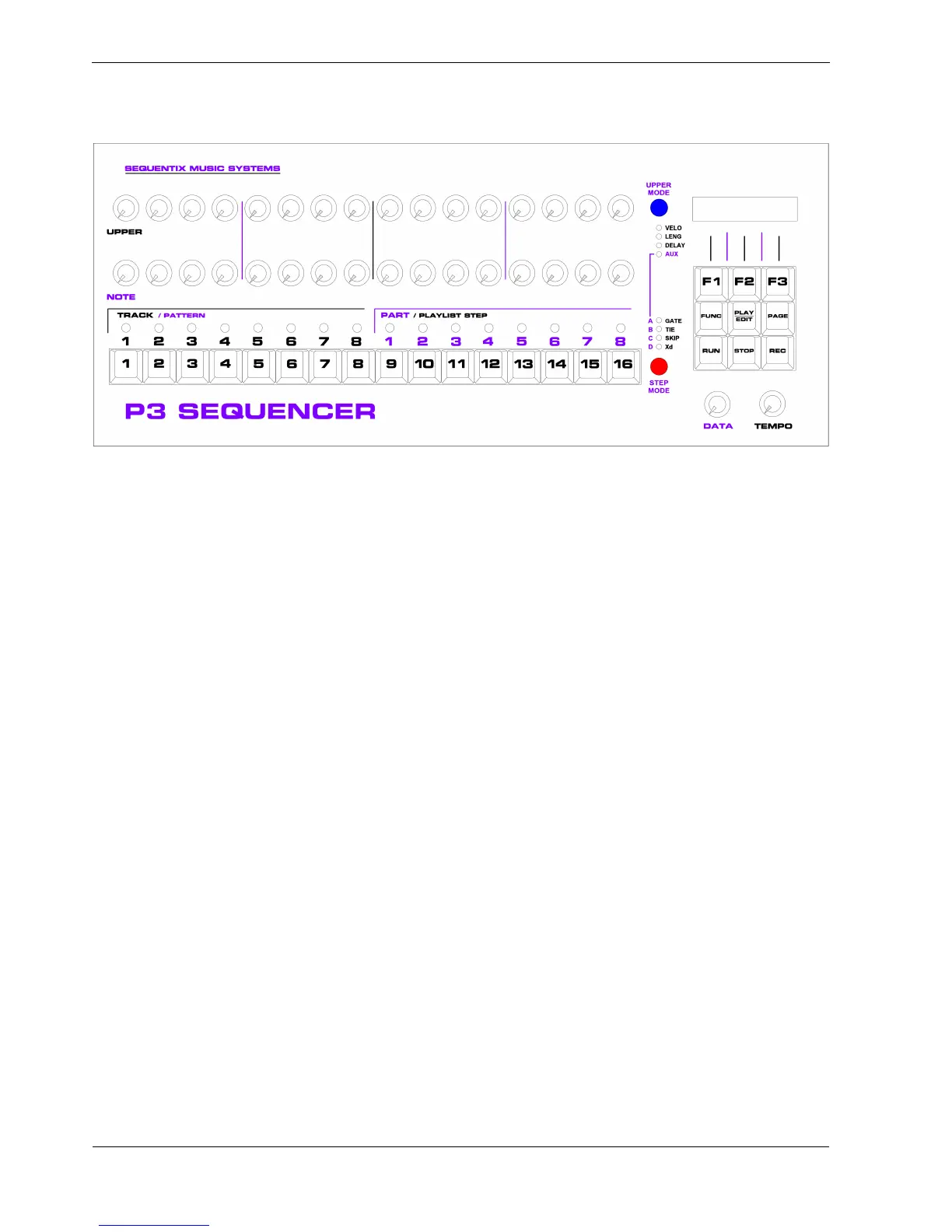
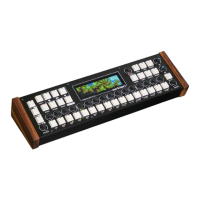
The P3 Sequencer is a modern take on the analogue sequencer, but it takes the concept much further.



 To Next Page