
 Need help?
Do you have a question about the Sun Microsystems SPARC classic and is the answer not in the manual?
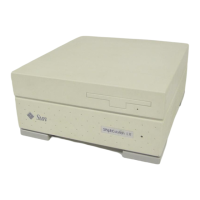
Overview of the system unit and its core components like the main logic board and power supply.
Details on system peripherals including types of video monitors, keyboards, and mice.
Information on available external storage options for expanding system capacity.
Illustrates how the main system components are interconnected for operation.
Explains the diagnostic roles and sequences during the default system boot process.
Details diagnostics stored in the Open Boot PROM, including POST and On-Board Diagnostics.
Describes the initial POST checks performed during system power-up via keyboard LEDs.
Summarizes available diagnostic tools and their appropriate usage scenarios.
Describes the core hardware evaluation performed automatically at system power-on.
Explains the system behavior during normal operation without diagnostic testing.
Details the mode for comprehensive hardware and SBus module testing.
Describes a brief, silent POST run initiated under specific conditions.
Explains how keyboard LEDs indicate POST status and diagnostic failures.
Outlines essential safety measures to protect personnel and equipment.
Defines cautionary symbols and their meanings related to hazards.
Lists precautions for qualified personnel and adherence to local/national regulations.
Lists necessary tools and materials for replacing customer replaceable units (CRUs).
Procedures for safely detaching all external cables from the system unit.
Step-by-step guide on how to open the system unit for internal access.
Instructions for properly attaching a grounding wrist strap for static protection.
Procedures for securely reassembling the system unit after service.
Procedures for removing and replacing SBus cards, including installation guidance.
Instructions for removing and replacing DSIMM memory modules.
Detailed steps for removing and installing the main logic board (MLB).
Procedures for removing and replacing the NVRAM chip, crucial for system configuration.
Guide on how to access and initiate on-board diagnostic tests via the Forth Toolkit.
Explains how to run specific device self-tests using commands.
Commands to query SCSI devices and host adapters for identification.
 General
| Brand | Sun Microsystems |
|---|---|
| Model | SPARC classic |
| Category | Desktop |
| Language | English |




 To Next Page