
 Need help?
Do you have a question about the Sun Microsystems SPARCstation 5 and is the answer not in the manual?
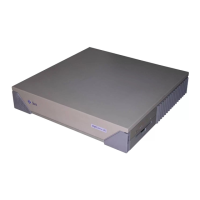
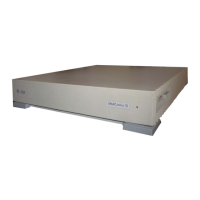
Describes system's core functionalities and included hardware.
Lists major internal hardware parts of the system.
Provides a visual overview of the system's internal layout.
Details the connectors and ports on the system's rear panel.
Lists optional hardware that can be installed inside the system.
Lists optional peripheral devices that can be connected externally.
Explains diagnostic roles during boot under OpenBoot PROM control.
Details POST initiation conditions and OBP initialization sequence.
Summarizes diagnostic tools and their usage.
Lists and describes specific on-board diagnostic tests.
Describes the FORTH Monitor utility for system interface and diagnostics.
Discusses SunDiag and SunVTS for real-time system diagnostics.
Explains POST conditions, modes, and failure indicators.
Describes system operation without diagnostic testing.
Details conditions for running full diagnostics.
Explains silent POST and tip connection setup.
Describes how POST error messages are displayed.
Explains LED indicators for system status and errors.
Provides steps to resolve no video output issues.
Details troubleshooting steps for power-on failures.
Lists disk drive error conditions and corrective actions.
Explains how to identify DSIMM errors using memory addresses.
Outlines general safety guidelines for servicing.
Explains warning and caution symbols used in the manual.
Lists precautions for service personnel.
Lists essential tools and materials for CRU replacement.
Details measures to prevent damage from static electricity.
Describes orderly shutdown procedures.
Steps to halt a normal system.
Procedure for halting a hung system.
Steps to power on the system safely.
Steps to remove the system unit cover.
Instructions for properly attaching an antistatic wrist strap.
Steps to put the system cover back on.
Procedures for removing and replacing the power supply.
Procedures for removing and replacing the speaker/LED assembly.
Steps for removing and replacing the internal speaker.
Procedures for removing and replacing the SCSI backplane.
Information on removing and replacing hard disk drives.
Procedures for removing and replacing the CD-ROM drive.
Steps for removing and replacing the diskette drive.
Procedures for removing and replacing the internal SCSI data cable.
Steps for removing and replacing the DC power harness.
Procedures for removing and replacing the diskette data cable.
Steps for removing and replacing the CD-ROM audio cable.
Precautions to avoid damaging the system board.
Guidelines for safely handling boards and components.
Illustrates major components on the system board.
Lists components on the system board that can be replaced.
Procedures for removing and replacing SBus cards.
Steps for removing and replacing the S24 frame buffer card.
Procedures for removing and replacing DSIMMs (memory modules).
Steps for removing and replacing the system board.
Procedures for removing and replacing the NVRAM chip.
Shows diagrams of key customer-replaceable units.
Lists part numbers for CRUs and miscellaneous items.
Details system dimensions and weight.
Specifies power consumption and voltage requirements.
Lists operating and non-operating environmental conditions.
Pinout and illustration for the external SCSI port.
Pinout and illustration for the parallel port.
Pinout and illustration for the AUI port.
Pinout and illustration for the Ethernet port.
Pinout and illustration for serial ports.
Pinout and illustration for the keyboard/mouse port.
Details and signals for audio connectors.
Pinout and illustration for the video connector.
Table of SCSI device targets for Solaris 1.x.
Table of SCSI device targets for Solaris 2.x.
Steps to enter and use FORTH diagnostics.
Explains the 'test' command for specific devices.
Describes testing all devices with a self-test program.
Explains the test for the real-time clock.
Describes Ethernet packet monitoring tests.
Explains commands to inquire about SCSI devices.
Command to report system CPU information.
Describes the memory testing command.
 General
| Manufacturer | Sun Microsystems |
|---|---|
| Model | SPARCstation 5 |
| Category | Desktop |
| FPU | Integrated |
| Memory Type | SIMM |
| Release Date | 1994 |
| CPU | MicroSPARC II |
| CPU Type | RISC |
| Storage | Internal SCSI hard drive |
| Graphics | 8-bit |
| Ports | 2 Serial, 1 Parallel, SCSI, Ethernet |
| Operating System | Solaris |



 To Next Page