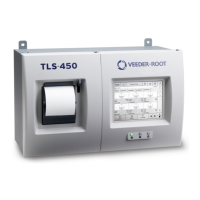
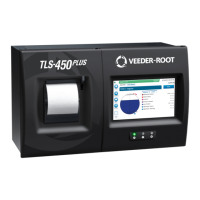
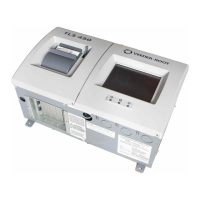
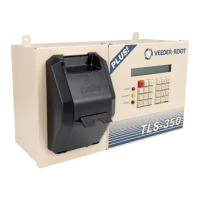
The Veeder-Root TLS2P Console is a touch-screen monitoring system designed for underground storage tanks, offering comprehensive setup, operation, and reporting functionalities. It is equipped with Ethernet, USB, and three COM ports for versatile communication and connectivity.
Function Description:
The TLS2P Console serves as an Automatic Tank Gauge System, capable of monitoring up to six magnetostrictive probes. Its primary functions include inventory status tracking, in-tank leak detection, and alarm/warning notifications. The console features a front panel touch screen display, a dual-purpose Alarm/Normal LED, and an audible beeper for immediate alerts. An output relay is provided to trigger external alarm devices when an alarm condition is detected.
Important Technical Specifications:
- Monitoring Capacity: Monitors up to six magnetostrictive probes.
- Leak Detection Performance:
- With 0.2 gph (0.76 lph) (Mag 2) probes: Detects 0.2 gph leak with >95% probability of detection [P(D)] and <5% probability of false alarm [P(FA)]. Meets federal U.S. E.P.A. performance standards.
- With 0.1 gph (0.38 lph) (Mag 1) probes: Detects 0.1 gph leak with >95% P(D) and <1% P(FA). Meets Volumetric Tank Tightness Testing Method standards and federal U.S. E.P.A. performance standards.
- Water Measurement: Measures water in the bottom of a tank to the nearest 1/8 inch (3.2 mm).
- Communication Options:
- RS-232
- RS-422
- RS-485 (2-wire or 4-wire)
- External modem support
- Serial remote printer interface
- USB (DEVICE ONLY)
- TCP/IP
- Display: Front panel touch screen.
- Alarm Indicators: Dual-purpose Alarm/Normal LED, audible beeper.
- Output Relay: Provided for external alarm devices.
- Software Version: 5
- Manual Number: 577013-960 Revision: D
Usage Features:
The console's operation is primarily through its touch screen interface, organized into System Setup, Tank Setup, Reports, and Diagnostic screens.
-
System Setup Screens:
- Language and Units: Allows selection of system language (English, French, Spanish, German, Portuguese, Polish, Swedish, Finnish, Russian, Chinese) and units (Metric or U.S.). Serial language can also be set. An ISO Country Code can be entered for international options.
- Station Header: Configures up to four lines of alphanumeric text for report headers.
- Time/Date: Sets current date, time, and time/date format (DD-MM-YY-HH-MM, YY-MM-DD-HH1-MM, MM-DD-YY-HH2-MM-xM).
- Shift Close Times: Defines automatic (Timed) or manual (Snapshot) shift close methods, including timeout periods and inventory log intervals.
- Daylight Savings Time: Enables automatic adjustment for daylight savings, with configurable start and end dates/times.
- Communication Ports (COMM 1, 2, 3): Configures serial port settings including Comm Type (None, Serial, Modem, Printer), Handshaking (Hardware, XON/XOFF, None), Baud Rate (300-9600), Parity (None, Odd, Even), Data Length (7 or 8), and Stop Bits (1 or 2).
- Modem Setup: For COMM 1, allows selection of modem type, dial type (Pulse or Tone), and answer-on rings. Advanced settings include Dial In and Dial Out user configuration strings.
- TCP/IP Setup: Configures network settings including Host IP, Subnet Mask, Gateway IP, and Host Port. Supports Static IP addresses and DHCP mode. Includes "Get" and "Set" buttons to interact with the Lantronix server for parameter updates.
- USB Port: Displays read-only USB port configuration parameters (Baud Rate, Parity, Data Length, Stop Bits, Handshaking). Requires a standard USB printer cable and a VCP driver (e.g., from www.silabs.com) for PC communication.
- Auto-Dialout System Setup: Configures automatic dial-out for alarms via Modem, TCP/IP, or Email.
- Modem: Sets phone number, retries, and retry delay.
- TCP/IP: Configures Remote IP, Remote Port, Push Site ID (Enable/Disable), and Site ID for polling servers.
- Email: Configures Recipient Email Addresses (1 and 2), "From" name, and Mail Server IP address.
- Autodial Alarm Setup: Programs the system to dial out on specific alarm conditions for each tank, including Max Product, Overfill Limit, Delivery Needed, Low Product, High Water, Gross Test Fail, Periodic Test Fail, Annual Test Fail, Invalid Fuel Height, Probe Out, Low Temperature, Shift Close Event, and Density Warning.
- Alarm Relay Setup: Selects activation mode for the remote beeper relay (None, Overfill, All Alarms).
- Temperature Setup: Configures Temperature Compensation (TC) Reference, Print TC Volume (Yes/No), and TC Density (Yes/No).
- EuroProtocol and Stick Offset Setup: Sets H-Protocol Format (Height/Volume), Euro Protocol Prefix (S/'d'), Stick Height Offset (Enabled/Disabled), and Leak Test Format (Normal/Enhanced).
- About TLS2P Screen: Displays software revision level, part number, creation date, and installed system features.
-
Tank Setup Screens:
- Password Protection: Access to Tank Setup requires a 6-16 character alphanumeric password if enabled in System Security Setup.
- Tank Setup Menu: Provides access to Tank Setup, Tank Alarm Limits, and Tank Test Setup.
- Tank Configuration: Configures each tank as Enabled or Disabled, sets a Product Label (up to 20 alphanumeric characters), and defines Manifold Status (numbers of manifolded tanks).
- Tank Physical Properties: Enters tank Diameter, Full Volume, and Tank Profile (Linear, 1 point, 4 points, 20 points). For 4-point or 20-point profiles, users must enter corresponding volumes from a tank chart.
- Thermal Coefficient: Enters the product's thermal coefficient for accurate temperature compensated volume conversions.
- Tank Tilt: Adjusts for differences in fuel height due to tank tilt, allowing entry of a positive or negative value.
- Float Size: Enters the Mag probe float size installed on the tank's probe.
- Stick Offset: Allows entry of an offset value to match probe height readings with stick gauge readings (for operator convenience, no bearing on volume calculations).
- Density Code: Enters a unique 14-character alphanumeric density code from the float to accurately compute fuel density.
- Tank Alarm Limits: Sets thresholds for various tank alarms:
- Max Product: Volume limit to trigger alarm.
- Overfill Limit: Percentage of full volume to warn of potential overfill.
- Delivery Needed: Product level to indicate need for delivery.
- Low Product: Product level to trigger alarm.
- High Water: Water level height to trigger alarm.
- Delivery Delay: Time delay between delivery completion and report generation.
- Ann Leak Test Min: Minimum tank volume for annual leak test.
- Per Leak Test Min: Minimum tank volume for periodic leak test.
- Gross Test Fail: Enables/disables alarm for 3 gph leak test failure.
- Periodic Test Fail: Enables/disables alarm for 0.2 gph leak test failure.
- Annual Test Fail: Enables/disables alarm for annual leak test failure.
- Density High/Low Limit: Sets high and low limits for density warnings.
- Tank Leak Test Setup: Configures automatic leak tests, including Test Rate (0.2 gph or 0.1 gph), Early Stop (Enabled/Disabled based on conditions like volume, temperature, or delivery), and Test Duration (0-24 hours). Allows applying settings to all tanks.
- Leak Test Frequency: Sets frequency for leak tests (On Date, Annually, Monthly, Weekly, Daily) and specifies Date/Day and Time.
-
Manually Closing a Shift: Allows manual closure of shifts for individual tanks or all tanks, generating a shift report.
-
Manually Starting/Stopping Tank Leak Tests: Provides options to manually start or stop leak tests for single or all tanks, with configurable test method (Single Tank/All Tanks), control (Timed Duration/Manual Stop), rate, and duration.
-
Reports:
- System Reports: Accesses Inventory, Hourly Inventory, Delivery, and Power Outage Delivery Reports.
- Inventory Report (Non-Density Probe): Fuel Volume, TC Fuel Volume, Ullage, Fuel height, Water Height, Fuel Temperature.
- Inventory Report (Density Probe): Fuel Volume, Mass, Density, Fuel height, Water Height, Fuel Temperature.
- Hourly Inventory Report: Date, Hour, Volume, Height, Water, Temp.
- Delivery Report (Non-Density Probe): Start/End Date/Time, Volume, TC Volume, Water Height, Fuel Temp, Fuel Height, Increase Volume Amount, TC Volume Amount.
- Delivery Report (Density Probe): Start/End Date/Time, Volume, Mass, Density, Water Height, Fuel Temp, Fuel Height, Increase Volume Amount, Mass Amount.
- Power Outage Delivery Report: Start/End Date/Time, Volume, Amount.
- Environmental Reports: Displays Current Test Results (Test Type, Start Date/Time, Test Result, Hours Run, %Volume in Tank at Time of Test) and Fullest Last Pass Report.
- Alarm Reports: Displays Active Alarm Status, Inventory Alarm Report, Environmental Alarm Report, and Tank Equipment Alarm Report.
- High Priority Alarm Report: Device number, Alarm Type, Date, Time, status of last 50 high priority alarms (Max Product, Overfill, Low Product, High Water, Gross Test Fail, Periodic Test Fail, Annual Test Fail, Probe Out, Autodial Failure).
- Low Priority Alarm Report: Device number, Alarm Type, Date, Time, status of last 50 low priority alarms (Delivery Needed, Invalid Fuel Height, Low Temperature).
-
Diagnostic Screens:
- Function Test Menu: Provides various console test functions: Test Alarm (beeper), Test Relay (activates relay), Printer (prints test line), Red LED (turns on), Green LED (turns on), LCD Off (turns off backlight), LCD Test (video test pattern), Touch (LCD touch test).
- Probe Diagnostic Screen: Displays detailed information about configured probes, including software version, probe type, serial number, ID, length, gradient, number of samples, samples read/used, and reference distance. Also shows temperature data for each probe.
Maintenance Features:
- Contractor Certification: Veeder-Root requires specific training certifications (Installer Level 1, ATG Technician Level 2/3 or 4) for installation and setup to ensure proper functioning and compliance.
- Warranty Registrations: Submitted by selected Distributors.
- Troubleshooting Support: Contact TLS Systems Technical Support for additional troubleshooting.
- Damage Claims/Lost Equipment: Procedures for examining components upon receipt, reporting damage/shortages, and handling claims with preferred or customer's carriers.
- Return Shipping: Follow "General Returned Goods Policy" for parts return, requiring a Return Goods Authorization (RGA) number.
- Alarm Investigation: Prompt investigation of any alarm conditions is crucial.
- Returning to Normal State: Alarms automatically clear when out-of-limit conditions are corrected or faulty devices are replaced. Failed leak test alarms require a passing leak test to clear.
- Web Server Access: The TLS2P web server can be accessed via a Wide Area Network (WAN) or by direct laptop connection for remote monitoring and management. This includes viewing Home, Inventory Report, Delivery Report, and Alarms Report pages. It also allows executing RS-232 commands and resetting the communication port.

 Need help?
 General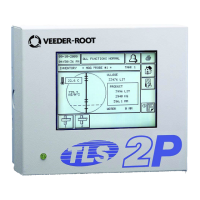

 To Next Page