76 service@zcorp.com
Once the de-gassing is complete; pour the silicone mixture slowly
into the mold box, letting it run smoothly around the pattern. Take
your time to decrease the chance of air being trapped anywhere.
Best practice is to de-gas the mold after the silicone has been
poured to remove any air that was introduced.
Manufacturers of Vacuum Chambers and Casting Systems
BJB Enterprises (www.bjbenterprises.com/equipment)
Innovative Polymers (http://www.innovative-polymers.com/)
MCP Equipment (www.mcp-group.com)
Removing the Master Pattern and Creating the Parting Line
Remove the mold box from around the mold. Using a razor blade or
scalpel, begin to cut the mold open at the gate and vent. This will begin
to create the parting line for the mold. Cutting in a smooth zigzag
motion will make the mold halves easier to re-assemble in preparation
for urethane casting. Slowly cut deeper to the edge of the pattern.
Keep in mind where the mold parting line will be on the pattern. The
parting line should be placed on an edge of the part to avoid witness
lines (flash
1
from the cast urethane).
When the cut is finished, the mold halves should easily separate and
the master pattern can be removed.
Mold Preparation and Casting
Spray mold release onto all areas that will be exposed to the casting material and place the mold halves together.
Use tape, rubber bands, or clamped boards to hold the mold
together, preventing the cast urethane from leaking through
the parting line. Do not squeeze a soft mold too tightly as the
mold cavity may flex or distort. A cup or sprue is usually placed
at the gate of the mold as a receptacle for pouring or injecting
the casting material.
Preparation and dispensing of the casting materials varies.
Two-part urethanes are typically packaged in cartridges and
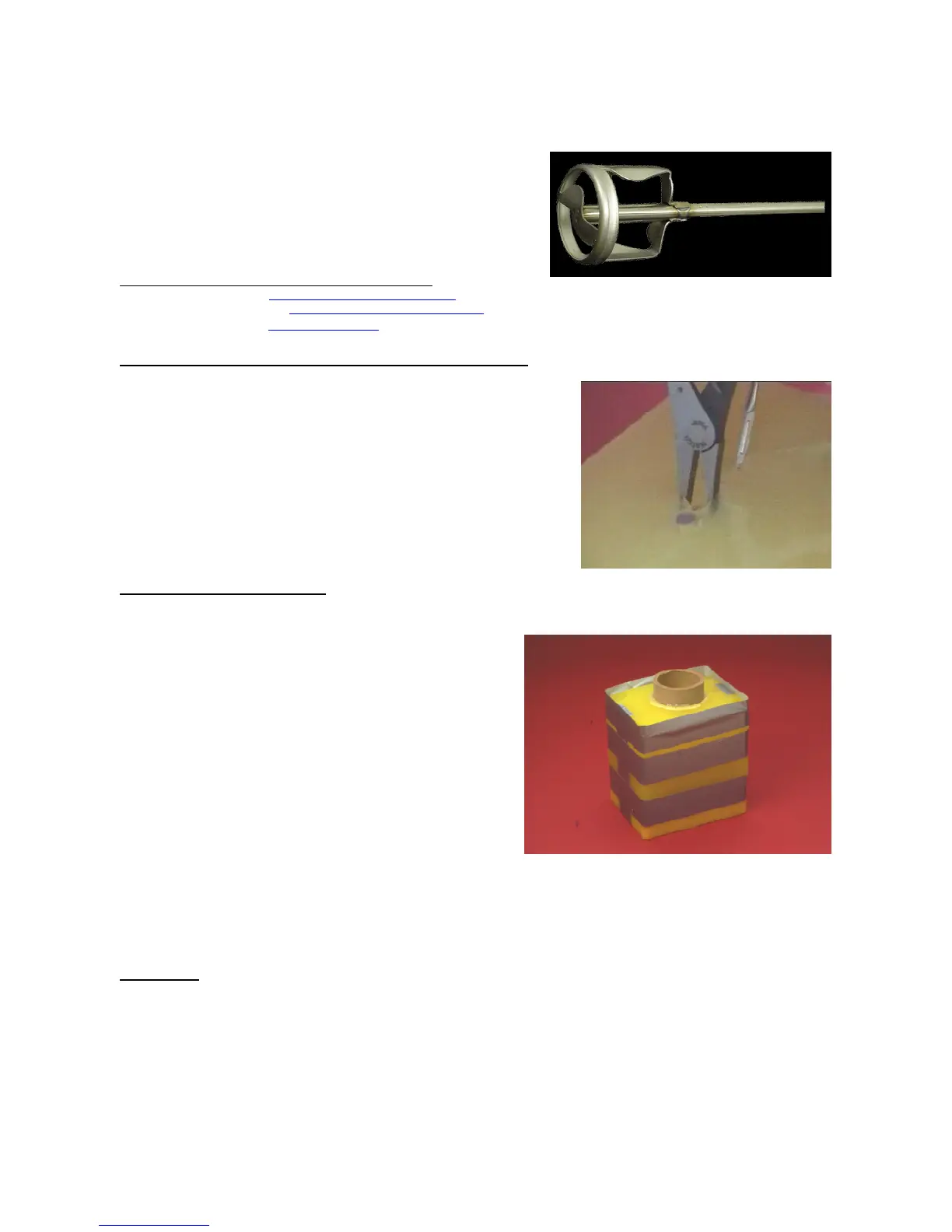
dispensed through a handheld pneumatic static mixer for
smaller scale applications. Automated meter mix dispense
equipment is usually used by small production facilities. The
use of hand pumping static mix dispensers is not recom-
mended, as they tend to produce off ratio mixtures.
Placing the mold in pressure pot after material has been cast
into it to minimize any bubbles present is a common practice. This will reduce the effects trapped air will have on
the final part.
Follow the cure cycle of the cast material before attempting to de-mold the cast part.
Conclusion
RTV molding is an extremely efficient method of generating multiple parts with thermoplastic properties. There is
no faster method of generating the master pattern than with a Z Corp. 3D Printer, which will reduce the overall
time it takes to get your final cast part. Whether a Z Corp. 3D Printer is your complete prototyping solution or just
a piece of it, there is no tool more valuable at saving the things most valuable, your time and money.
1
Flash – Cast material that has squeezed into the space between mold halves, typically at the parting line.


 To Next Page