73www.zcorp-users.com
RTV MOLDING
Room Temperature Vulcanization (RTV) molding, also known as Silicone Rubber Molding
(SRM), is an inexpensive soft molding solution for creating dozens of prototypes
accurately. The benefit of RTV molding is that anyone can do it because of its simplicity.
Factors such as draft
1
, complex parting lines
2
and undercuts
3
are not factors in building
effective molds as they are when using hard tooling. Additionally, hard tooling may not
be practical during the design process due to cost, production time, and likelihood of
design changes. RTV molding effectively bridges the gap between one off prototypes
and hard tooling in a fraction of the time.
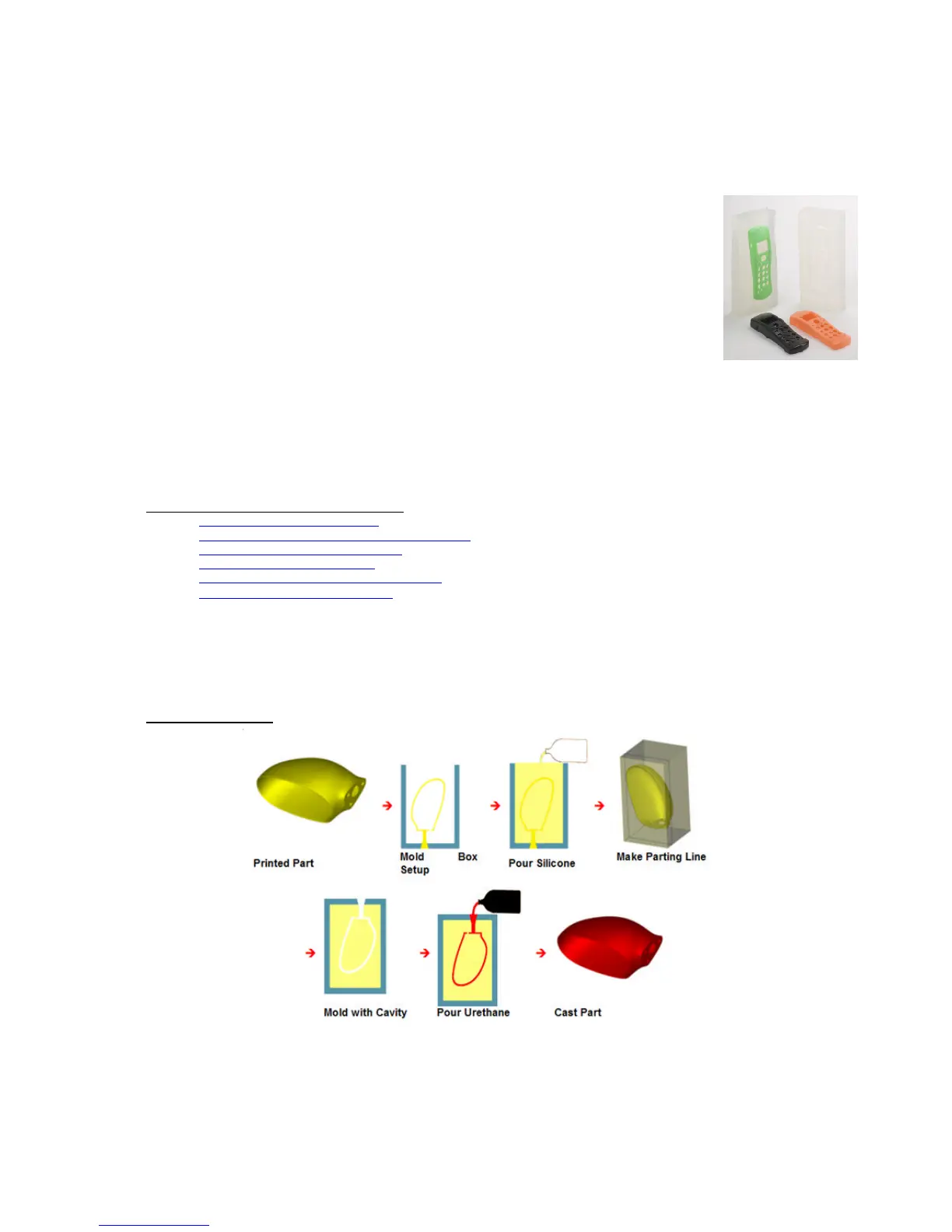
RTV molding requires the production of a single master pattern, which is encased in low
durometer
4
silicone rubber. Using a part printed on a Z Corporation 3D Printer is the fastest and least expensive
method for creating a pattern for RTV molding. Once the silicone rubber, encasing the pattern, cures (2 – 48
hours depending on chosen material) the master is cut out, leaving a cavity. The cavity is used as a soft rubber
tool for molding investment casting wax, epoxy, foam, or in most cases polyurethane or a similar thermoset
material that has physical properties similar to injection-molded themoplastics. Cast prototypes will have the
look and feel of a production piece.
Additional Resources for the Novice Mold Maker
www.build-stuff.com/002book.htm
www.bare-metal.com/articles/gremlins_how_to.htm
www.smooth-on.com/moldmaking.htm
www.eagerplastics.com/intro.htm
www.theminiaturespage.com/ref/fgmolds.html
www.micromark.com/part_mold.html
The quality of the pattern directly affects the quality of the part from the RTV mold because RTV rubber molds
will pick up details as fine as a fingerprint from the master pattern. Master patterns are classically sanded and
polished regardless of the method of their production. This makes parts printed using Z Corporation technology
a perfect fit due to the ease in which their surface finish can be enhanced.
Process Overview
1
Draft Angle – A slight taper to the shape of a cast part to allow it to be easily removed from its mold. Draft angles should be used on interior or exterior part walls in the
direction of draw. A minimum 1° draft angle per side is recommended for parts having no textured surfaces. Textured surfaces need additional draft to easily release the part,
and eliminate drag marks or scuffing of the part surface.
2
Parting Line – Line in which two halves of a mold will separate. Parting lines should be located to provide good part appearance and function.
3
Undercut – A protuberance or indentation that impedes withdrawal from a two-piece rigid mold.
4
Durometer – The hardness of a material. RTV molds typically use a material with a Shore A hardness <50.


 To Next Page