PowerWave Operator’s Manual 4-15
Linearity Test
The linearity of the reader also can be tested by preparing a series of solutions
of varying absorbances.
The absorbance of a solution is a function of how much light is absorbed by
that solution when it contains a colored compound. A solution that has twice
as much color as another solution will have twice the optical density. (Any
solution that gives a stable color will suffice. This includes substrates
incubated with an enzyme preparation and then stopped with an acidic or
basic solution.) Some enzyme/substrate combinations are given in Table 4-1.
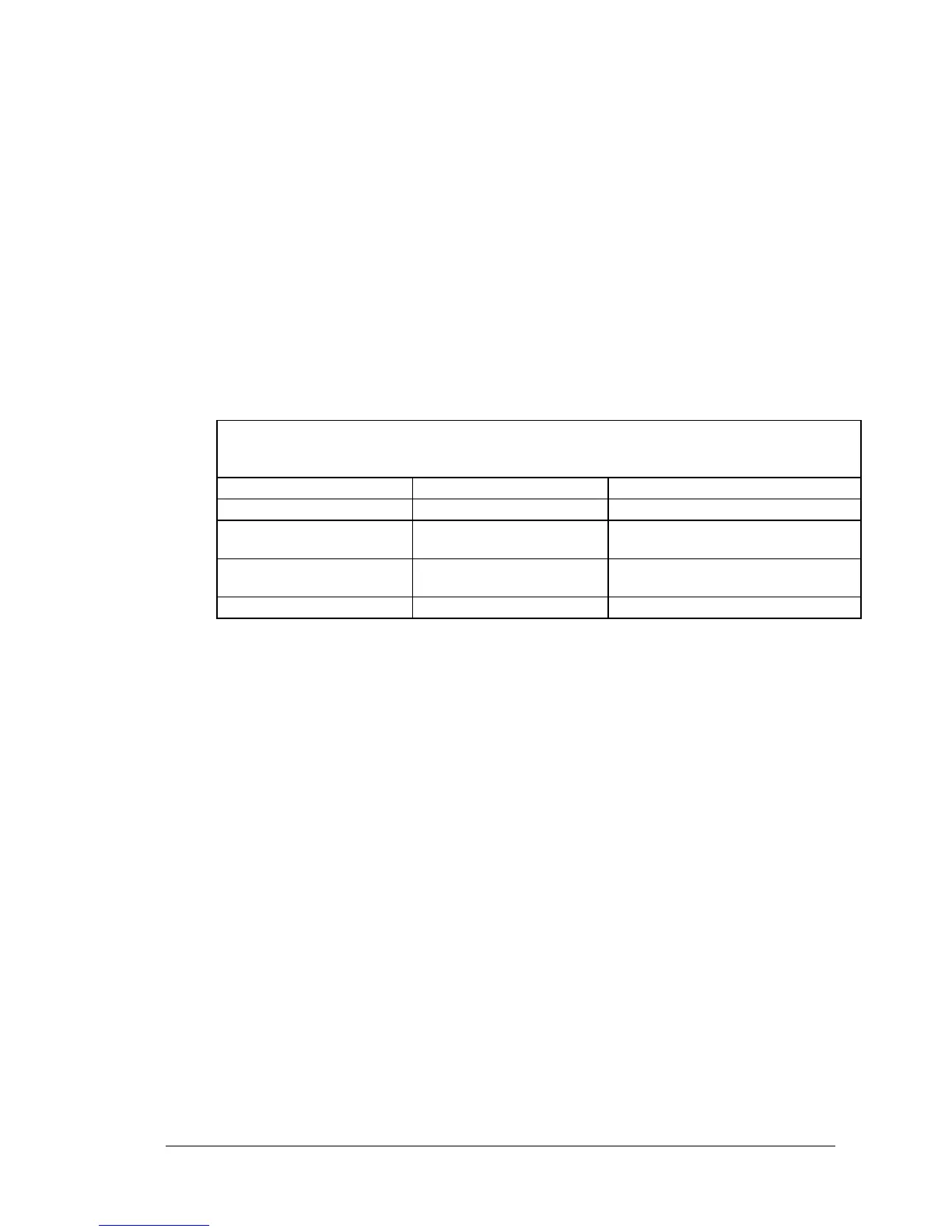
Table 4-1 :
Typical Enzyme-Substrate Combinations and Stopping Solutions
Enzyme Substrate Stopping Solution
Alkaline Phosphate o-nitrophenyl phosphate 3N sodium hydroxide
beta-Galactosidase o-nitrophenyl -beta-D
galactopyranoside
1M sodium carbonate
Peroxidase ABTS 2, 2 Amino-di-(3 ethyl-
[benzthazolin sulfonate]
citrate-phosphate buffer, pH 2.8
Peroxidase o-phenylenediamine 0.03N sulfuric acid
A more basic method is to use food coloring available at supermarkets (e.g.
Durkee
ô food coloring.)
EQUIPMENT REQUIRED:
• Distilled water
• Pipet
• Yellow food coloring (Example: Durkee
yellow food coloring, .3
oz. bottle)
• Flat-bottom microplates (Example: Costar
#3590)
• Tween
20 (polyoxyethylenesorbitan Monolaurate)
• Beakers
• Rack of 10 test tubes (10 ml minimum volume)


 To Next Page