The IQC5000B is an RF Signal Record and Playback System designed to enhance the capabilities of select spectrum analyzers by significantly increasing their signal storage capacity. This allows for long-duration, high-fidelity spectrum recordings, enabling better analysis of complex, wideband, time-spanning, or intermittent waveforms. The device can continuously record and play back full 16-bit I and Q data streams from compatible spectrum analyzers.
Function Description:
The IQC5000B serves as the main system controller during record/playback operations. It initiates and terminates recordings and playback, timestamps and geotags data, writes data to storage, and converts digital data to analog I/Q and RF during playback. It supports both I/Q baseband and RF playback, with I/Q baseband playback intended for normal use and RF playback for testing and system validation only. The system utilizes Low Voltage Differential Signaling (LVDS) for high-speed data transfer and can simultaneously record data from two similar spectrum analyzers at the same sample rate.
Important Technical Specifications:
RF Recording Interface:
- Logic Level: LVDS
- Sample Depth: 16-bit I&Q
- Channels: 2 channels of I&Q, accepting both inputs simultaneously
- Connector: Four 26-pin MDR
- Maximum Data Rate: 600 Mbytes/s per connector
- Minimum Span: 19.531 kHz
- Span Resolution: 19.531 kHz
- Maximum Acquisition Bandwidth:
- 110 MHz (150 Msamples/s, 16 bits, I&Q)
- 160 MHz (200 Msamples/s, 12 bits, I&Q)
- 255 MHz (300 Msamples/s, 14 bits, I&Q)
- Compatible Spectrum Analyzers: Keysight N9010A/B, N9020A/B, N9030A/B, N9040B; Rohde & Schwarz FSV, FSVR, FSW; Tektronix RSA 5100/6100; Anritsu Field Master Pro MS2090A.
Playback Interface (Analog I&Q Outputs):
- Channels: 2 channels operating simultaneously, baseband, analog
- 1-dB Bandwidth: 160 MHz centered at 0 Hz
- Power Level: 0 dBm (fixed)
- Amplitude Flatness across 110 MHz Bandwidth: +/-2 dB
- VSWR: ≤ 1.8:1
- Impedance: 50 ohms
- Connector: SMA Female
Playback Interface (RF Outputs - Channel 1):
- Center Frequency: 2400 MHz
- Information Bandwidth: 160 MHz
- Power Level: 0 to -60 dBm in 1-dB steps
- LO Leakage: -60 dBm
- VSWR: ≤ 1.8:1
- Impedance: 50 ohms
- Connector: SMA Female
General Specifications:
- GPS:
- Protocol: ASCII, 8-bit data, one start and one stop bit, no parity
- Speed: Selectable: 4800, 9600, or 115200 Kb/s
- Active Control Lines: RTS, CTS
- Connector: 9-pin D Female
- IRIG-B:
- Accuracy: IRIG-B122
- Voltage Levels: Amplitude modulated, 3 Vpp, sine wave carrier
- Read Rate: 1/s
- Maximum Number of Time Tags: 100,000
- Connector: SMA Female
- Trigger Functions:
- Number of Inputs: 2
- Voltage Levels: 1 to 3.3 VDC threshold, 5 V maximum
- Impedance: 50 ohms
- Connector: SMA female
- Latency from Trigger Valid to First Sample Write: <1 µs
- Re-Arm Time: <1 ms
- Pre-Record Memory: 10 µs
- Markers:
- Number of Inputs: 2
- Voltage Levels: 1 to 3.3 VDC threshold, 5 V maximum
- Impedance: 50 ohms
- Connector: SMA Female
- Maximum Allowed per Recording: 100,000
- Latency from Marker Valid to Insertion in Recorded File: <1 µs
- Minimum Time between Markers: 1 ms
- Reference Clocks:
- Internal Frequency: 10 MHz, +/-10 ppm
- External Required Level: >0 dBm into 50 ohms
- External Frequency: 10 MHz, +/-10 ppm
- External Connector: SMA Female
- External Signal Type: Square or Sine
- Waveform Storage:
- Internal Solid State: NAND Flash
- Internal Size (TBytes per unit (ME2)): 2, maximum 2 units
- External Rotating Magnetic: RAID 0
- External Size (TBytes): 8, 15
- PCIe (Data Offload):
- Specification: 2.0
- Lanes – IQC-MEM: 8
- Environmental:
- Temperature: 0° C to +50° C operating, -20° C to +71° C storage. 95% relative humidity (non-condensing)
- Vibration: Sinusoidal: 5 to 55 Hz, 0.33 mm amplitude. Random with solid-state drives installed: in conformance with MIL-PRF-28800F Class 3
- Shock (non-operating): 30g
- Power:
- DC: 12 VDC, 6 A maximum (72 W)
- Dimensions:
- Width x Height x Depth: 12 x 3.5 x 10.5 inches (305 x 89 x 266 mm)
- Weight: 8.5 lbs (3.85 kg)
Usage Features:
The IQC5000B is primarily controlled via the IQC Control Software User Interface on a computer workstation, offering full control over recording, playback, file manipulation, offload, and upload. A Command Server/API is also available for programmatic interfacing.
- Recording: Supports various start/stop methods including Manual, Time of Day, Trigger (TTL-level inputs with rising/falling edge detection), and Duration. It can record to internal removable SSDs (IQC5000B-ME2) or external RAID0 storage units (IQC5000B-S08, IQC5000B-S15). The IQC-MEM module acts as a storage controller.
- Playback: Offers partial file playback, looped file playback, RF fixed frequency playback at 2.4 GHz, and analog I/Q playback. Playback channels can be selected (CH1 or CH2). The Playback Multiplier feature allows shifting data bits for low amplitude files to optimize dynamic range.
- Markers: Supports time- and location-stamping of recordings using external TTL-level trigger sources or the front panel MARK button. Markers are stored in .xmrk files (XML or BIN2 format).
- Timing: Follows a hierarchy for time sources: IRIG-B (most precise), NMEA-GPS (if IRIG-B is absent), and Workstation Time (if neither is present).
- File Transfer: Data can be offloaded (downloaded) or uploaded via PCIe (faster, up to 450 MB/s) or Ethernet (slower). The IQC5000B-MEM and external storage units can also be directly connected to a workstation for high-speed transfers.
- Front Panel Control: Provides limited control for start, stop, and record functions via membrane switches and a 2-line LCD display. Users can view NIC parameters and set sample rate modes.
- Remote Device Management: The IQC Control UI allows managing compatible spectrum analyzers and auxiliary devices (e.g., DowKey RF Switch) by adding them as remote devices, configuring their IP addresses, and selecting channels.
Maintenance Features:
- Firmware and Software Updates: The IQC Control software and IQC5000 firmware are updated via a single installer, which can also update the IQC5000 firmware over Ethernet.
- RAID Configuration: External storage units come pre-configured as ext2-formatted Linux mdadm software RAID0 arrays. Instructions are provided for rebuilding RAIDs in case of disaster, including formatting as ext2. The system supports Single and Dual RAID modes for different sample rates.
- System Monitoring: The IQC Control software displays system temperatures of internal components, with text color changing from blue to red if critically high temperatures are met.
- Routine Cleaning: Recommended every 3 months, involving cleaning air inlets with a gas duster. For external storage units, checking retaining strips and ensuring drives are seated is also part of routine maintenance.
- Sanitization Procedure: Detailed procedures are provided for sanitizing nonvolatile memory components (FLASH partitions) on the IQC5000B and IQC5000B-MEM, which involves erasing and verifying partitions, and restoring factory configuration settings. For IQC5000B-ME2, IQC5000B-S08, and IQC5000B-S15 solid-state devices, non-destructive sanitization is not provided; physical destruction by smelting at 1600ºC is recommended.

 Need help?
 General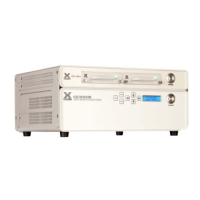

 To Next Page