CESSNA SECTION 7
MODEL
2088
(675 SHP) AIRPLANE AND SYSTEMS DESCRIPTION
INTRODUCTION
This section provides description and operation of the airplane and its
systems. Refer to Section
9,
Supplements for details of other
supplemental systems and equipment.
WARNING
COMPLETE FAMILIARITY
WITH THE AIRPLANE AND
ITS SYSTEMS WlLL NOT ONLY INCREASE THE
PILOT'S PROFICIENCY AND ENSURE OPTIMUM
OPERATION, BUT COULD PROVIDE A BASIS FOR
ANALYZING SYSTEM MALFUNCTIONS IN CASE AN
EMERGENCY IS ENCOUNTERED. INFORMATION IN
THIS SECTION WlLL ASSIST IN THAT
FAMILIARIZATION. THE RESPONSIBLE PILOT WlLL
WANT TO BE PREPARED TO MAKE PROPER AND
PRECISE RESPONSES IN EVERY SITUATION.
AIRFRAME
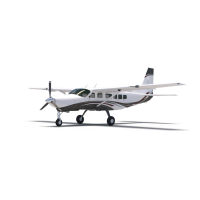
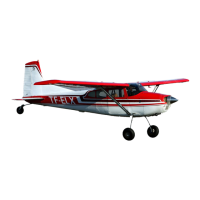
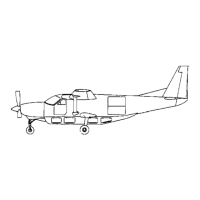
The airplane is an all-metal, high-wing, single-engine airplane equipped
w~th tr~cycle landing gear and designed for general utility purposes. The
construction of the fuselage is a conventional formed sheet metal
1.'
bulkhead, stringer, and skin design referred to as semimonocoque.
Major items of structure are the front and rear carry-through spars to
which the
wlngs are attached, a bulkhead and forg~ngs for maln land~ng
gear attachment and a bulkhead w~th attaching plates at
its
base for the
strut-to-fuselage attachment of the wing struts
The externally braced wings, having integral fuel tanks, are constructed
of a front and rear spar with formed sheet metal ribs, doublers, and
stringers. The entire structure is covered with aluminum skin. The front
spars are equipped with wing-to-fuselage and wing-to-strut attach
fittings. The aft spars are equipped with wing-to-fuselage attach fittings.
The
integral fuel tanks are formed bv the front and rear spars, upper
and
lowe) skins, and inboard and outboard closeout ribs. Extens ve use
of bonding is employed in tne fuel tank area to reduce fuel tank
sealng.
I
Revision
23
-
-
(Continued Next Page)
U.S. 7-7



 To Next Page