-
SECTION
4
CESSNA
-.
NORMAL PROCEDURES
MODEL 2088 (675 SHP)
NOISE CHARACTERISTICS
Increased emphasis on improving the quality of our environment
requires renewed effort on the part of all pilots to minimize the effect of
airplane noise on the public.
We, as pilots, can demonstrate our concern for environmental
,:
improvement, by application of the following suggested procedures,
and thereby tend to build public support for aviation:
1. Pilots operating aircraft under VFR over outdoor assemblies of
persons, recreational and park areas, and other noise-sensitive
areas should make every effort to fly not less than 2000 feet
above the surface, weather permitting, even though flight at a
lower level may be consistent with the provisions of government
regulations.
2. During departure from or approach to an airport, climb after
takeoff and descent for landing should be made so as to avoid
prolonged flight at low altitude near noise-sensitive areas.
NOTE
The above recommended procedures do not apply where
they would conflict with Air Traffic Control clearances or
instructions, or where, in the pilot's judgment, an altitude of
less than 2000 feet is necessary for him to adequately
exercise his duty to see and avoid other aircraft.
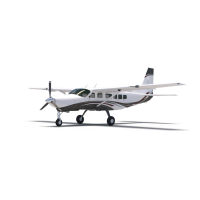
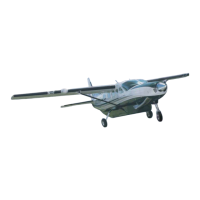
The certificated noise level for the Model 2088 at 8750 pounds
maximum weight is 80.1
dB(A) when a Hartzell propeller is installed
and 82.7
dB(A) when a McCauley propeller is installed. The noise level
measurements were made based on a takeoff profile for both
~rooellers. No determination has been made bv the Federal Aviation
~dminisrraton that the noise levels of tnis airpiane are or snould be
acceprable or unacceprable for operation at.
.nro, or out of, any airport.
1
4-64
U.S.
-
Revision 23
.-



 To Next Page