-
SECTION
7
CESSNA
AIRPLANE AND SYSTEMS DESCRIPTION MODEL
2088
(675
SHP)
CABIN WINDOWS
The airplane is equipped with a two-piece windshield reinforced with a
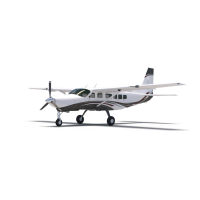
metal center strip. The passenger version has sixteen cabin side
windows of the fixed type including one each in the two crew entry
doors, two windows in the cargo door upper section, and one window in
the upper section of the passenger entry door. The side window
installed adjacent to the pilot's position incorporates a small triangular
foul weather window. The foul weather window may be opened for
ground ventilation and additional viewing by utilizing the twist latch
which is integral to the window. The cargo version has two cabin side
windows, one in each crew entry door.
CONTROL LOCKS
A control lock is provided to lock the aileron and elevator control
surfaces to prevent damage to these systems by wind buffeting while
the airplane is parked. The lock consists of a shaped steel rod and flag.
The flag identifies it as a control lock and cautions about its removal
before starting the engine. To install the control lock, align the hole in
the right side of the pilot's control wheel shaft with the hole in the right
side of the shaft collar on the instrument panel and insert the rod into
the aligned holes. Installation of the lock will secure the ailerons in a
neutral position and the elevators in a slightly trailing edge down
position. Proper installation of the lock will place the flag over the left
sidewall switch panel.
Earlier serial airplanes are equipped with a rudder lock which is
operated by a spring-loaded, pull-type T-handle located on the bottom
of the instrument panel to the right of the control pedestal. The handle
is labeled RUDDER LOCK-PULL, and when pulled out, locks the
rudder in the neutral position. An interlock between the rudder lock and
the fuel condition lever prevents locking the rudder when the fuel
condition lever is in any position other than CUTOFF. Should the rudder
lock T-handle be
left in the locked position inadvertently, moving the
fuel condition lever out of cutoff, such as during the engine starting
sequence, will automatically release the T-handle to the unlocked
position. The T-handle is normally released from the locked position by
rotating it 90" and allowing it to retract forward to the unlocked position.
NOTE
The control lock, rudder lock, and any other type of locking
device should be removed or unlocked prior to starting the
engine.
1
7-44
U.S. Revision
23



 To Next Page