Operation
6-26 Operator's Manual
Note:
Physiological alarms and technical alarms related to the sensor (POOR SIGNAL QUALITY, EXCESSIVE LIGHT,
INTERFERENCE DETECTED, SENSOR NOT CONNECTED, REPLACE SENSOR, SENSOR UNUSABLE) may be
delayed by up to 5 seconds. PREAMP NOT CONNECTED, USB STORAGE FULL, USB STORAGE ERROR, COM
PORT UNAVAILABLE, and PRINTER UNAVAILABLE have no inherent delay. AUTO BASELINE SET occurs after
5 minutes of monitoring without a baseline; there is no additional delay to generate the alarm. BATTERY
LOW is based on a measurement of battery voltage, which depends on the age and condition of the
battery; there is no additional delay once the condition is detected.
Physiological Alarms
Physiological alarm conditions arise from a change in the patient’s condition. Upon an alarm, the
patient should be profiled immediately.
The following alarm conditions are physiological (medium priority):
• High rSO2: the rSO
2
value in any channel is at or above the upper limit
• Low rSO2: the rSO
2
value in any channel is at or below the lower limit
When the rSO
2
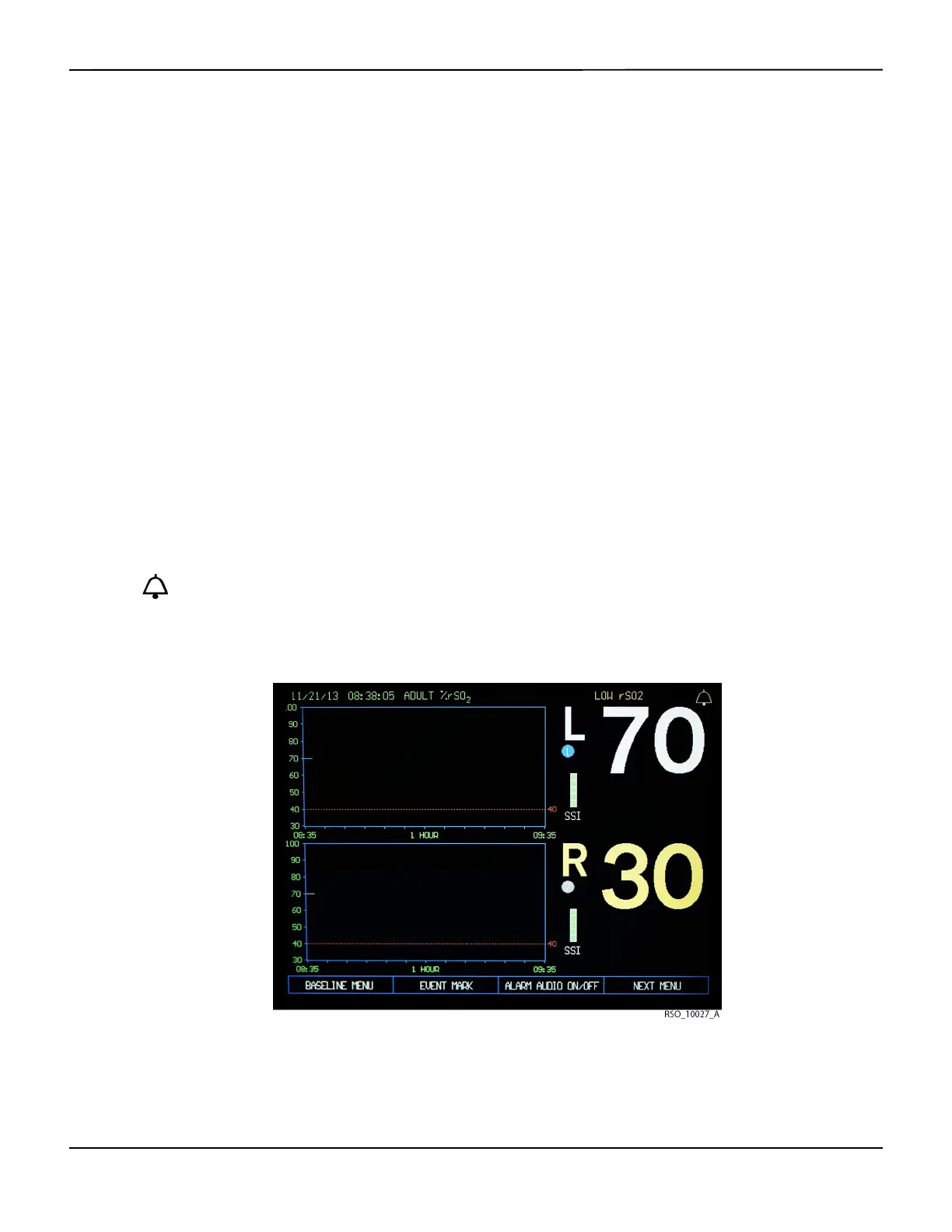
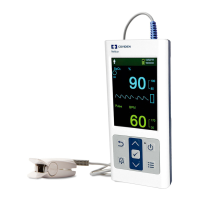
exceeds the upper or lower alarm limits, the INVOS™ system alerts the operator to
this condition. Physiological alarms are presented by flashing the channel label, displaying a bell
symbol in the upper right corner, and indicating the alarming rSO
2
value in yellow, as shown
in Figure6-2.
Figure6-2.rSO
2
Alarm Indicated




 To Next Page