MAINTENANCE 10
AXH1157-UK (ENG) L3500 L4700 F7000 [FPT S3A] 105
10.5 - Fuel
DANGER
Never add different types of fuel such as petrol or
alcohol to diesel.
It is forbidden to refuel while the engine is
running.
It is forbidden to smoke when refelling.
DANGER
Inhale diesel fumes for the least time possible as
they are dangerous carcinogens for your health.
Before handling fuel and filling the tank, comply with
the following regulations:
• Clean the area around the fuel cap. Refill the fuel
tank at the end of every day to reduce
condensation when the vehicle is at rest.
• Water and sediments must be removed before
they reach the engine.
• Do not use antifreeze to remove water from
diesel fuel.
• Do not rely on a filter to remove water from
diesel fuel.
• Never leave the tank without a cap and always
lock it. Should you lose the original cap, replace it
with an original spare. Not just any cap is suitable.
• Keep the fuel pump gun under control while
filling the tank.
• Do not inspect the tank with a flame.
• Do not fill up the tank completely. Leave room for
expansion and immediately clean any spillage.
• In the event of fuel leaks due to breakage, stop
the leak as quickly as possible, do not use the
vehicle and contact DIECI customer service.
10.5.1 - Specifications for
recommended fuel
NOTE
To achieve good performance, see the engine
manual of the vehicle to know the best features.
10.5.2 - Cleaning and storing fuel
It is important for the fuel to be kept clean.
The advice provided below will help maintain fuel
quality.
• Never use zinc-coated containers.
• Never clean the inside of containers or power
supply system components with cloths that may
leave deposits.
• The cistern capacity must allow intervals between
refueling not to be too long. A capacity of 3000
liters is sufficient for an average sized company.
• The storage cistern must be covered and placed
on a support that is high enough to allow
refueling by means of gravity. A large basin must
be placed under the cistern in case of fuel
leakage in order to collect it. The cistern must
have an opening large enough to allow someone
to access it for cleaning purposes.
• The delivery tap must be larger at the bottom in
order to trap any deposits; it must also be
equipped with a removable filter. The cistern
should be tilted 40 mm per meter towards the
sedimentation drain plug.
• The fuel barrels must be covered when stored to
prevent water infiltration. The barrels should be
slightly tilted slightly, so that any water will run to
the upper rim. The fuel barrels should not be
stored for too long before being used.
• If the barrels are kept outside, their caps must be
tightly closed to prevent water from seeping in.
• After refueling the storage cisterns or barrels, it is
recommended to allow the fuel to set for at least
two hours, thereby allowing any sediment of
water and impurities to be deposited before the
fuel is used.
10.5.3 - Refueling
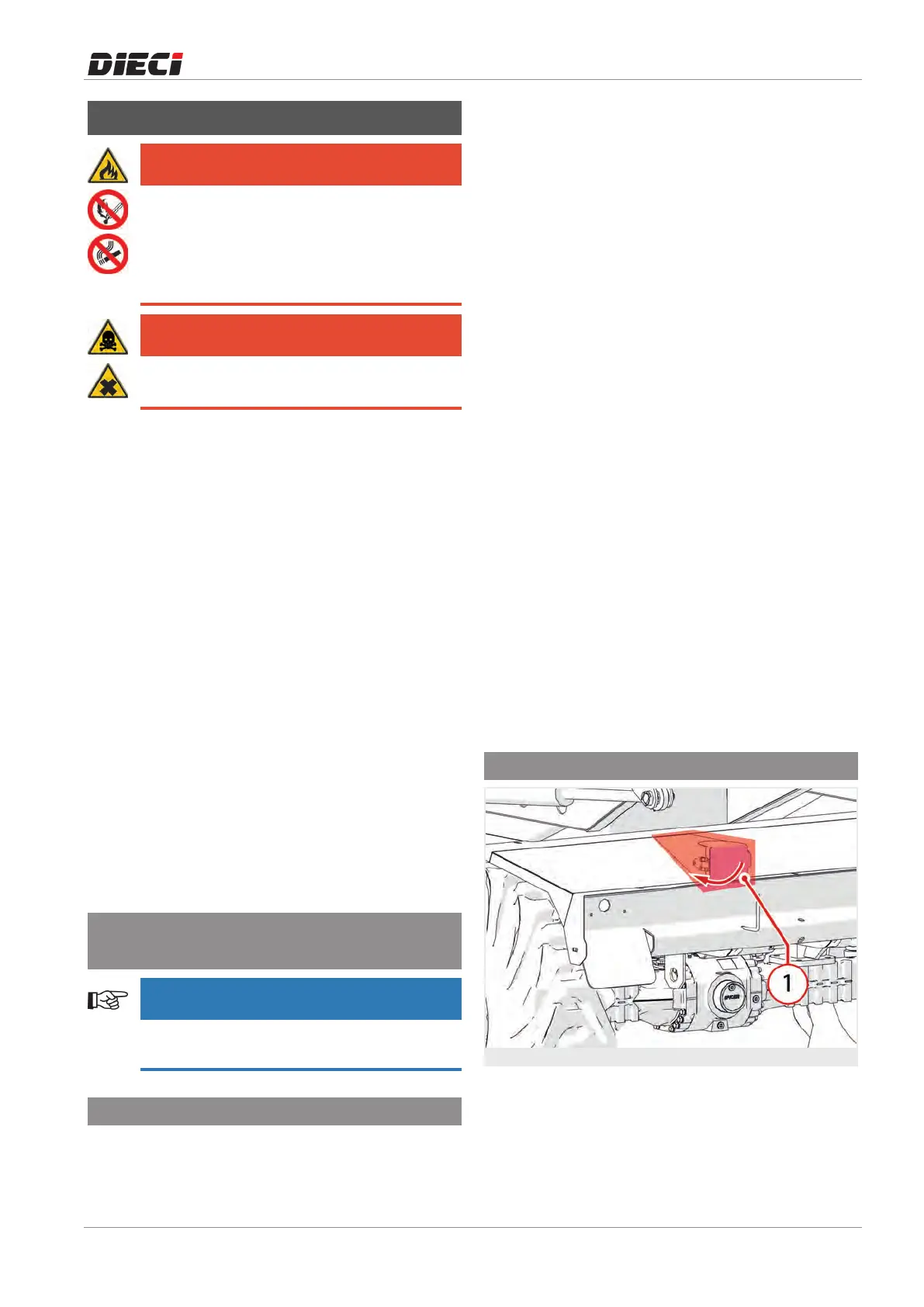
Figure: 150724-1
When refueling (fig. 150724-1) it is necessary to:
• Park the vehicle and turn off the engine
• Open the fuel tank cap
• Open the fuel cap
• Refuel


 To Next Page