17.7 Checking the Lower Plate/Raise Weight mode
a) If the plate lowers when and as it should, but the weight cannot be raised or slides down
again after raising, then the most likely reason is a leak in (one of) the A/B valve(s) due
to a stuck plunger. If so, it may help to press a rod into the A solenoid(s) to return the
plunger.
b) If the PL LED turns off BEFORE the PH LED turns off, then the LP/RW button must
become inactive. This will normally ONLY happen, if it is attempted to lower the plate
with the transport locks in the locked position. (“lock error”). So, if for some reason the
PH LED should turn on (e.g. due to a defective PH sensor or wiring) after the plate has
been lowered (PL LED off), then LP/RW button will be disabled.
c) Furthermore, if the TG LED turns off BEFORE the PL LED turns off, then the LP/RW
button will also be disabled. This is to ensure that the weight cannot be raised if the
plate is not low, i.e. not resting on the ground surface (“plate not low error”). So, if for
some reason TG should turn off before the plate has reached the ground (e.g. due to a
defective TG sensor or wiring), then the LP/RW button will be disabled. NOTE that for
smaller weight set-ups, the weight MAY start raising (slowly) during lowering of the
plate using the LP/RW button. If this causes TG LED to turn off before the PL LED,
then it will not be possible to raise the weight. In that case, press the LC button to lower
the weight (so that trigger is activated) and try again.
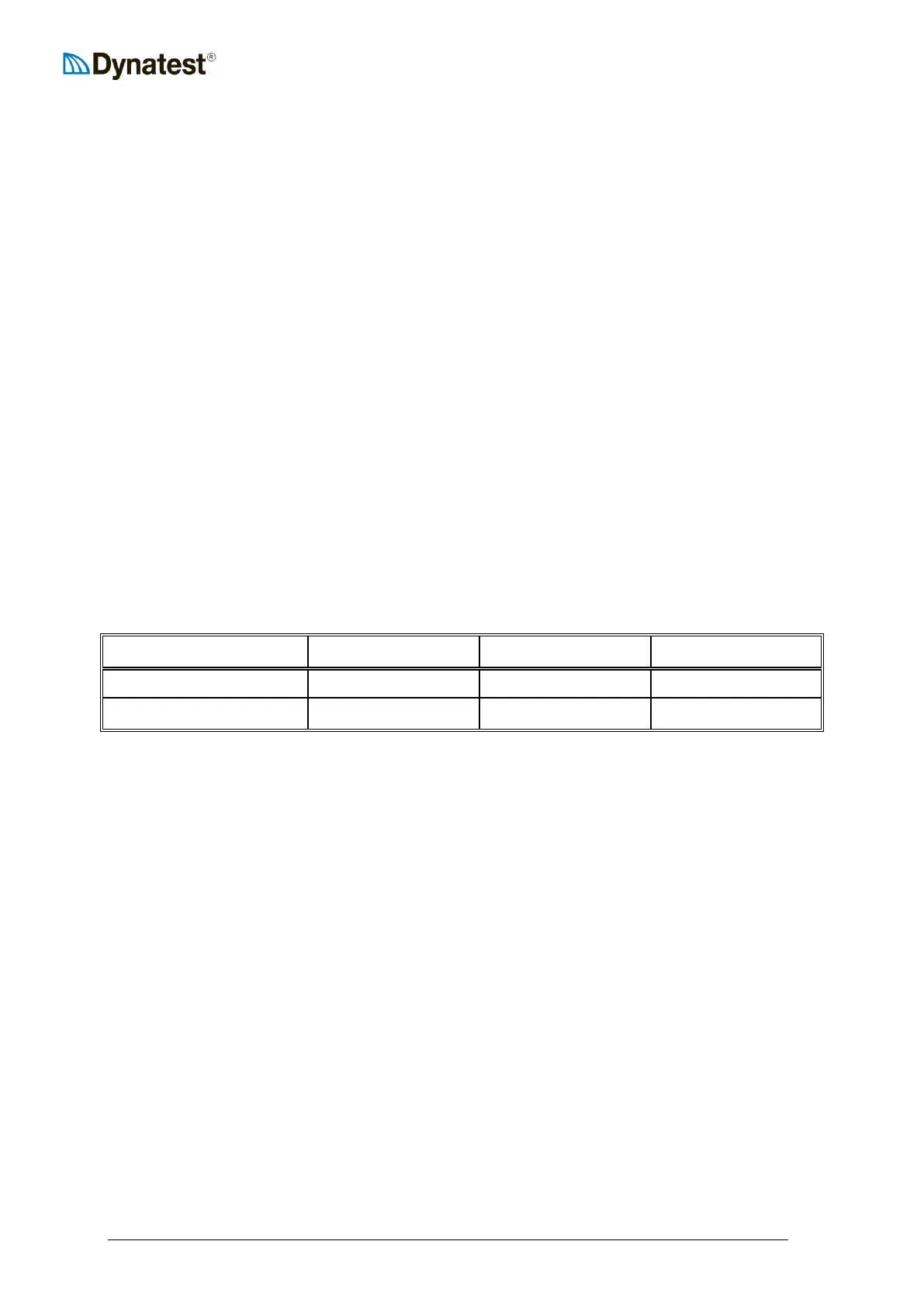
So, if the LP/RW button will not work, then always check that PH, PL and TG LEDs do NOT
fulfil any of the following combinations (“x” means do not care):
17.8 Checking the DROP mode
To check the DROP mode, raise the weight to any height well below maximum and check
that the PH, PL and TG LEDs are ALL off.
If TG LED is not off, raise weight a few cm. If still not off, check trigger sensor (see 16.10).
If PH and/or PL LED(s) is/are not off, check these sensors too (see 16.10).
Now press the LP/RW AND the red button until the weight drops (red button first in, last
out). If it took more than 2 seconds to get the weight to drop, then the raise weight cylinder
may need bleeding. (Refer to bleeding instructions in Chapter 11.3 FWD/HWD Hydraulics,
the paragraph “Bleeding the Hydraulics”).
If the DROP activation caused the catch to raise without releasing the weight (unless full
height was reached), then check the hyd. valves etc. as explained in Note 7 (especially the C
valve).
If the catch raised less than 1 cm (1/2”) or so but still did not release, then it may need
cleaning. Spray all inner catch parts with a not too aggressive degreaser, like e.g. “Heavy
Duty Engine Degreaser” from “STP” or “Engine Clean” from “Holts”. Press in (upwards) the
release ring in the catch (like for bleeding - refer to bleeding instructions in section 3) and
spray again. Rinse with pressurized (preferably hot) water while rotating the catch and then
dry with compressed air (preferably hot). After drying, spray all inner catch surfaces with a
penetrating dry spray lubricant, preferably a “Teflon” type.



 To Next Page