3.2.5. TABLE B - Conversion wind speed
For operating heights over 10 metres related to the wind gust speed (in 3 seconds).
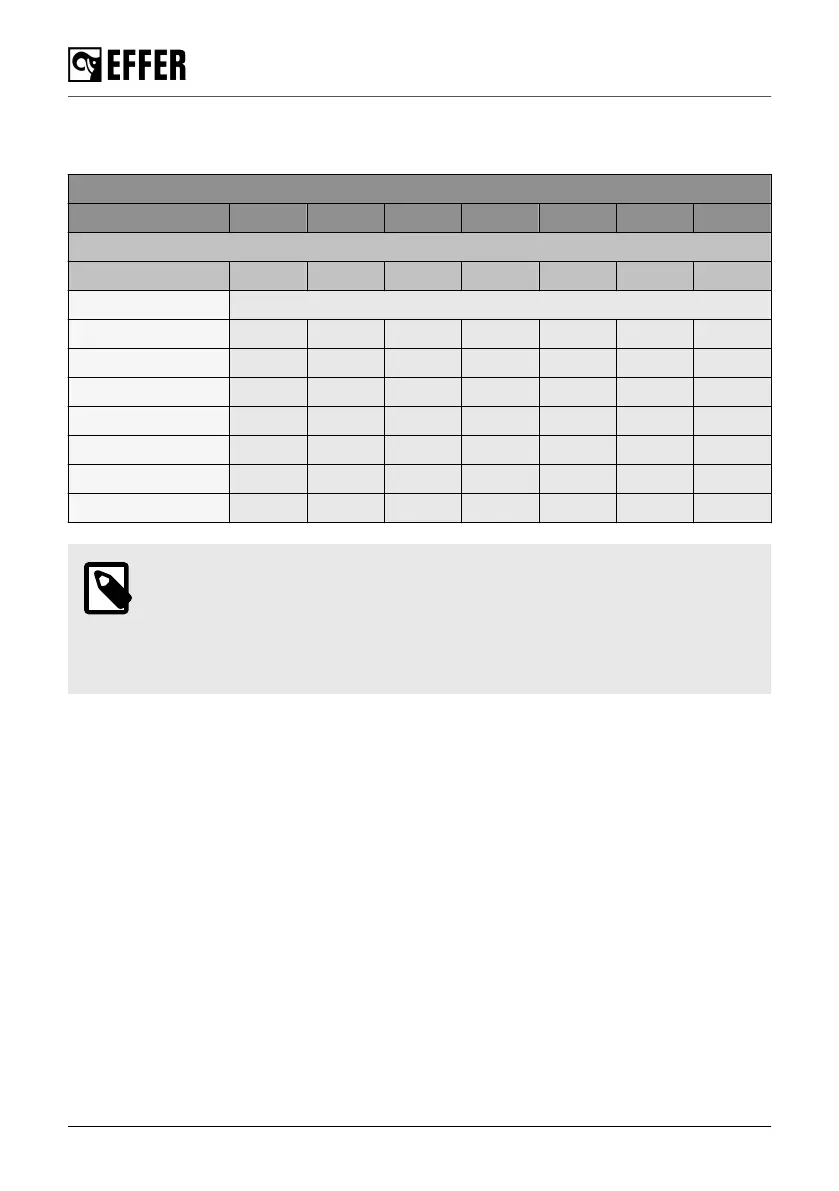
WIND SPEED AS A FUNCTION OF ELEVATION
Beaufort grade 0 1 2 3 4 5a 5 (*)
Average wind speed (km/h) (over 10 minutes at a height of 10 metres)
1 5 11 19 28 36 38
Height Wind gust speed (km/h) (in 3 seconds)
10 1.0 7.6 15 27 39 50 53
20 1.1 8.1 17 29 42 54 57
30 1.1 8.5 17 30 44 56 60
40 1.2 8.7 18 31 45 58 61
50 1.2 8.9 18 31 46 59 63
60 1.2 9.1 19 32 47 61 64
70 1.2 9.3 19 33 48 62 65
NOTE
• (*) Wind condition only for the boom system below 45º (Y area).
• Conversion to different measurement units:
◦ 1 km/h = 0.2778 m/s
◦ 1 km/h = 0.6214 mph
3.3. Definition of this loader crane
Usage of the crane
The EFFER loader crane is used to lift and move loads in the working area permitted by the load
plate and the load diagram. The cranes are normally mounted on a vehicle but they can also be
mounted with an appropriate basement and derating. The crane can be equipped with a number of
accessories.
Loader cranes are designed for loading and unloading the vehicle, as well as for other duties as
specified:
Permitted duties:
• Loading and unloading cargo from/to a vehicle
• Lifting of loads from the ground/vehicle to a higher place
• Installation work (beams, concrete plates, windows...) in building constructions
• Lifting construction material (wall boards, bricks, blocks…) on a pallet fork to a building, taking
the material from the vehicle on which the crane is mounted, from another vehicle or from the
ground
• Hoisting, e.g. beams, concrete plates and any other material and equipment used in building
construction
Safety precautions and warnings
26 EFFER 265-315-395-525 Progress 2.0 CE



 To Next Page