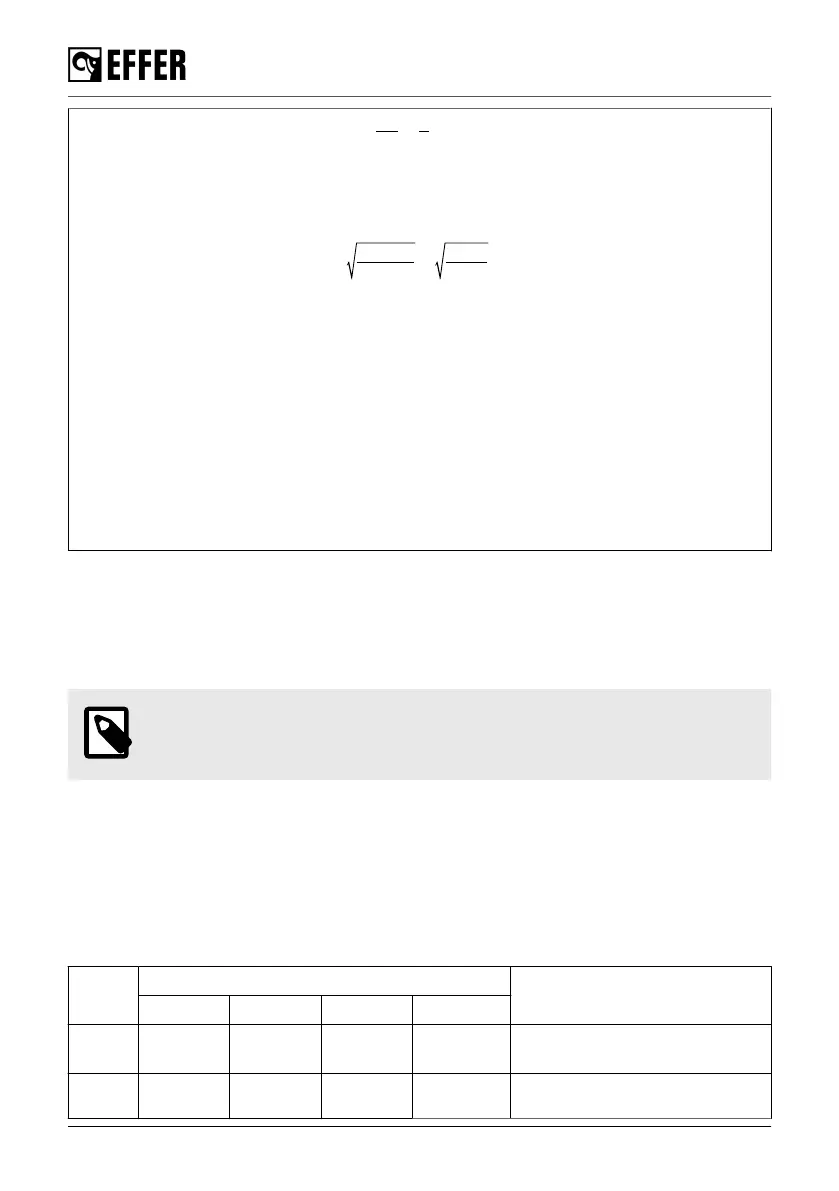
P
Ap
=
2
9
= 0.2
As it is less than 2, go to the next step.
2. Calculate the wind speed reduction coefficient (Cr):
Cr =
P ⋅ 1.2
Ap ⋅ Cw
=
2 ⋅ 1.2
9 ⋅ 1
= 0.5
As it is less than 1, go to the next step.
3. You must decrease the permissible wind speed value ('V
table
'), shown in TABLE A and
TABLE B, by multiplying it by the reduction coefficient (Cr).
• Average speed:
Vmax = V
table
* Cr = 0.5 * 36 = 18 km/h
• Gust speed:
Vmax = V
table
* Cr = 0.5 * 50 = 25 km/h
Conclusion:
The maximum average speed and gust speed to lift the load to the desired height must be less
than the values shown in TABLE A and TABLE B.
3.2.3. Working height (H)
The wind speed increases according to the height (H).
To avoid exceeding the maximum permitted wind speed at the operating height desired, refer to
TABLE B to know the maximum permitted ground wind speed.
NOTE
Use an anemometer to know the real speed on the ground below 10 m.
Example:
If the maximum permitted wind gust speed cannot exceed 25 km/h and the operating height is 50
meters, the maximum wind speed measured on the ground (below 10 meters) must not exceed 17
km/h.
3.2.4. TABLE A: Beaufort scale
Permitted wind speed for operating heights below 10 m
Wind
Force
Average wind speed (*)
Characteristics
m/s km/h mph Wind type
0 0.0 - 0.2 < 1 < 1 Calm
Calm, smoke rises vertically or nearly
vertically.
1 0.3 - 1.5 1 - 5 1 - 3
Slight
breeze
Wind direction recognisable from smoke
plumes. The wind begins to be noticeable
Safety precautions and warnings
24 EFFER 265-315-395-525 Progress 2.0 CE



 To Next Page