______HSD Technological equipment for Automation _____________________________________
5801H0017 Rev. 02 _________________________________________________________ 12/98
6.4 GLOSSARY
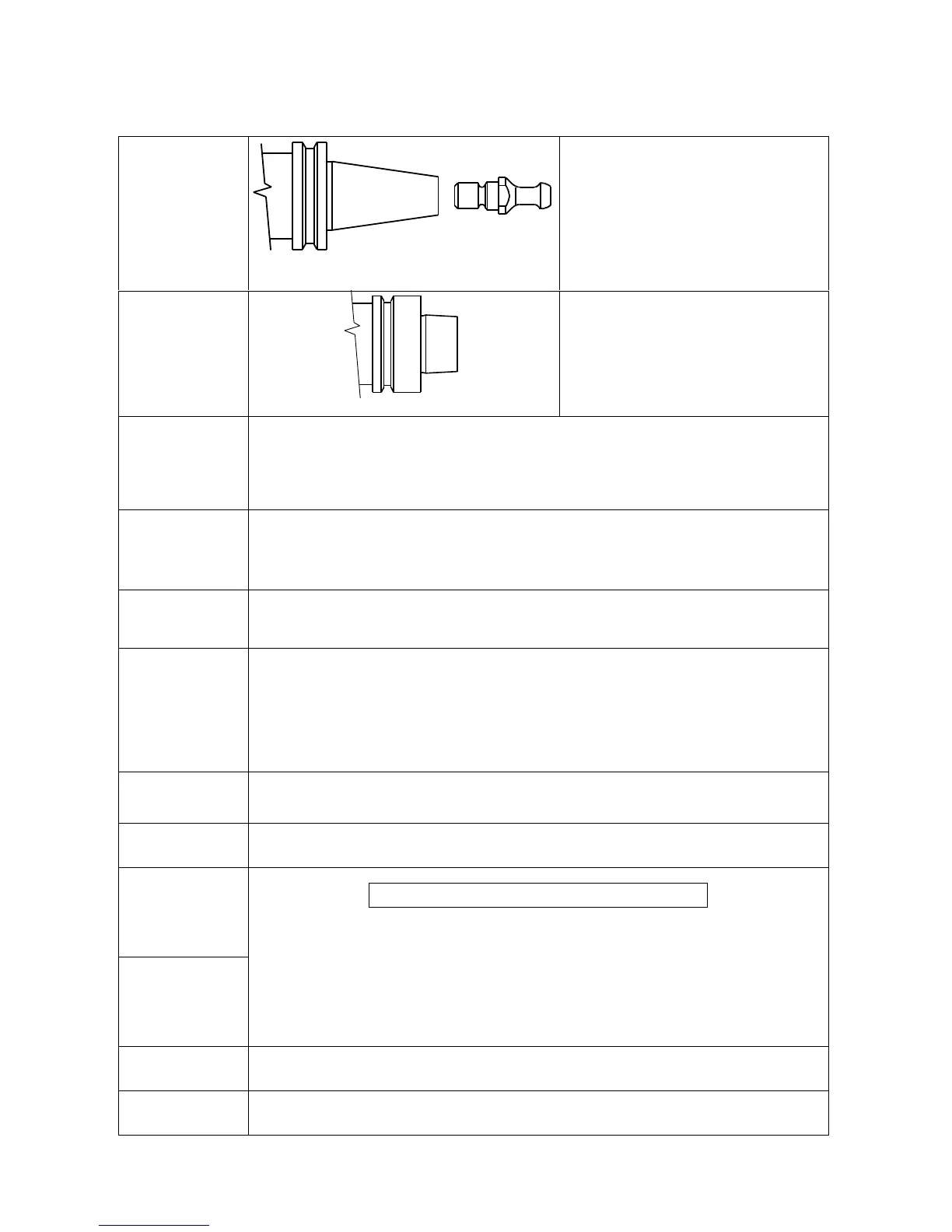
ISO 30
ISO30, DIN69871 CONE
HSD PULL STUD
0804H0009
The locking system for the tool holder
cone complies with DIN standard 69871.
The electro-spindle has a label showing
the type of tool holder mechanism (ISO
or HSK), bearing a symbol like that
shown at left.
HSK
DIN69893 HSK F63 CONE
The locking system for the tool holder
cone complies with DIN standard 69893.
The electro-spindle has a label showing
the type of tool holder mechanism (ISO
or HSK), bearing a symbol like that
shown at left.
Dynamic
balancing
class
The degree of balancing of a rotating object according to ISO standard 1940/1, defined
as the G rating.
Low G values mean better balancing. G = 0.4 specifies maximum balancing precision.
G assumes discrete values that increment in multiples of 2.5 (G=0.4 , G=1 , G=2.5 ,
etc.).
Scheduled
maintenance
Actions required to maintain the electro-spindle in the original condition, as specified by
HSD S.p.a..
Maintenance can include scheduled adjustments, repairs and part replacements.
Duty type S1
Functioning at constant load for enough time to bring the electro-spindle to a state of
thermal equilibrium.
Abbreviated as S1.
Duty type S6
A sequence of identical operating cycles, each comprising a period of functioning at
constant load and a period of functioning at no load but at the same rotation speed,
without any intermediate rest times.
Abbreviated as S6 followed by the percentage ratio between the period of functioning
under load and the duration of the cycle.
Example: S6 40%.
(40% functioning under load, 60% no load rotation).
Rated voltage
The maximum voltage permissible for electrical power to the electro-spindle.
Rated
frequency
The minimum frequency at which power at rated voltage must be delivered.
Torque
Power
..Torque (Nm) = [ 60 · power (W) ] : [ 2 · Π · rpm]..
Precise definition of torque and power goes beyond the scope of this manual.
Nevertheless, torque can be adequately understood as being related to the force with
which the tool bites into the work piece. (For the same torque, force increases as tool
diameter decreases.) Power on the other hand is proportional to torque and rotation
speed. Power limits the maximum machining speed (within the limits dictated by tool
performance, the characteristics of the material being machined, and the type of
machining involved).
Ratings
The set of rated values declared at rated frequency.
Coolants
Liquids or gases (including air), used as the medium for transferring heat from the
spindle into the environment.



 To Next Page