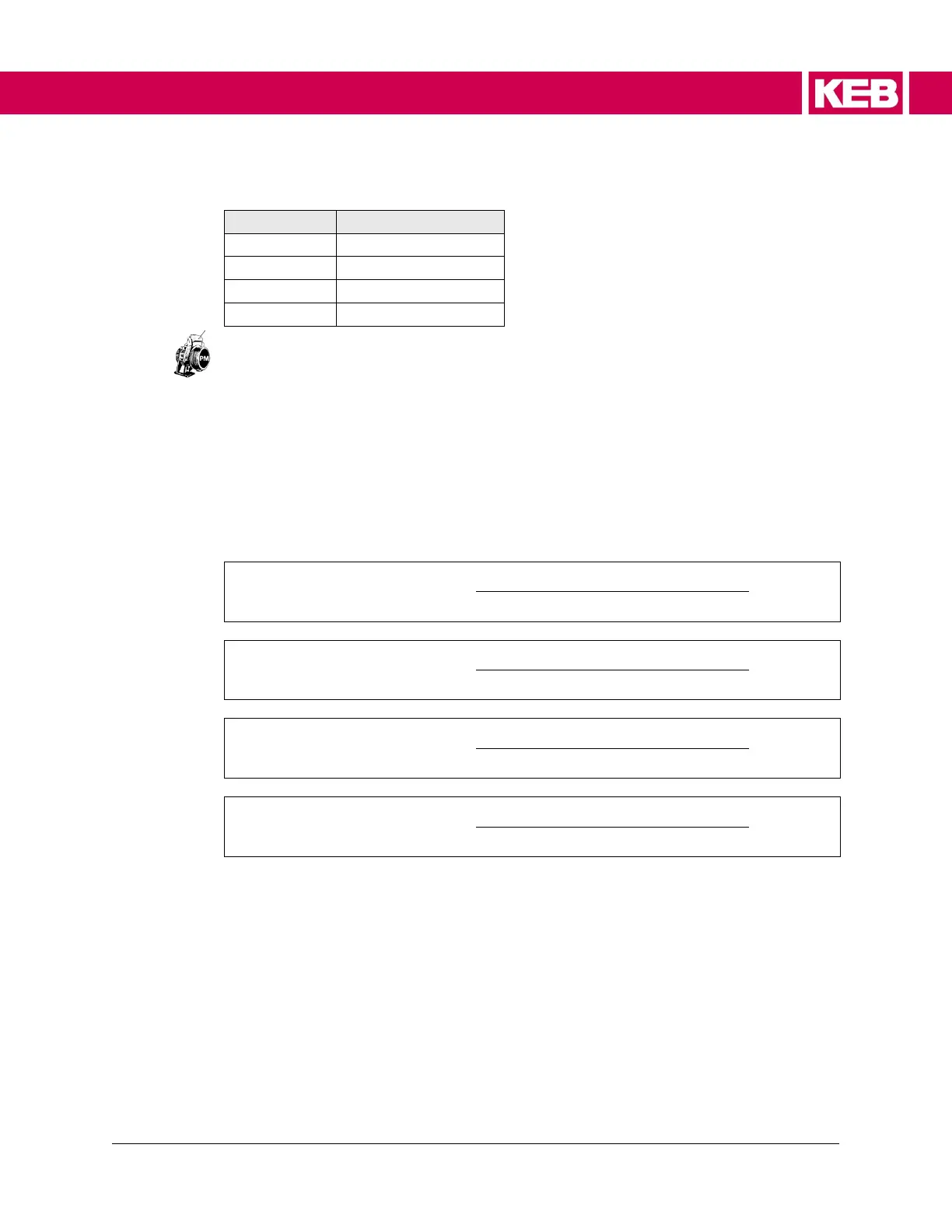
The following shows the valid adjustment range of 60Hz motors:
For PM Synchronous Motors, the relationship between the rated motor speed, rated
motor frequency and the number of motor poles MUST NOT include any slip.
For a given number of motor poles, the rated motor speed or frequency should be verified
against the nameplate values and changed accordingly in the drive, as rounding may
occur on the nameplate. The number of motor poles will always be an even, whole
number. If it is not known, then it may be obtained from the motor manufacturer based on
frame model of the motor.
The following equations are used to estimate the number of motor poles. If the following
equations yield a result near an odd number, contact the motor manufacturer to
determine the correct number of motor poles.
Rated Motor Frequency (Hz) * 120
Rated Motor Frequency (Hz) * 120
Once the correct number of motor poles has been determined as a whole, even number,
then the equation can be rearranged to solve for either the rated motor speed or rated
motor frequency, according to the equations above.
It is not important whether the rated motor speed or rated motor frequency is changed to
accurately reflect the number of motor poles, as long as the equation holds true. It may
be best to keep the rated motor speed fixed to reflect the actual motor speed at high
speed and solve for frequency. It is recommended to perform this calculation to verify no
rounding has occurred for these values on the nameplate motor data. If this equation
does not hold true, the result may be higher current draw to produce a given torque.



 To Next Page