EasyManua.ls Logo

LACO Technologies TITAN VERSA C - Gas Flow Conversions; Leak Flow Regime; Helium Leak Rate Vs. Other Gases

LACO Technologies TITAN VERSA C
181 pages
Print Icon
To Next Page IconTo Next Page
To Previous Page IconTo Previous Page
Loading...
10 APPENDIX
170 TITAN VERSA Operations and Maintenance Manual LACO Technologies
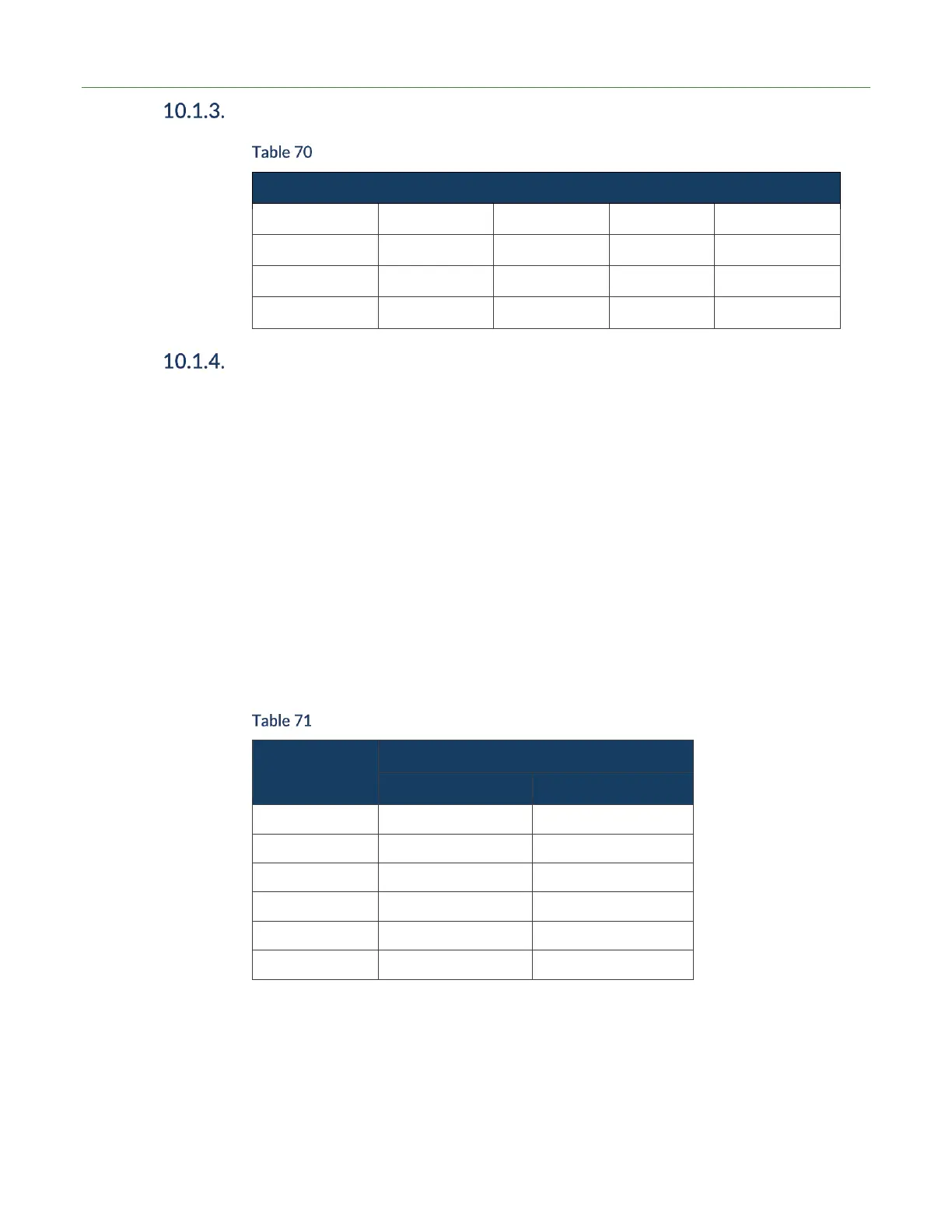
Gas Flow Conversions
To Convert From
m
3
/sec
Liter/sec
m
3
/hr
CFM (feet
3
/min)
m
3
/sec
1
1.000
3,600
2.12 x 10
3
Liter/sec
0.001
1
3.6
2.12
m
3
/hr
2.78 x 10
-4
0.278
1
0.589
CFM (feet
3
/min)
4.72 x 10
-4
0.47
1.70
1
Leak Flow Regime
10.1.4.1. Viscous vs. Molecular Flow Leaks
The flow regime encountered in leak testing is often difficult to determine. It can,
however, be estimated by calculating the average mean free path of the gas
molecule (l) divided by the estimated leak path diameter (d). Use the following
guidelines to determine the flow regime.
Viscous Flow leaks typically occur in systems leaking at atmosphere or larger
pressures (l/d < 0.01). Viscous leaks are typically larger than 10-5 atm-cc/sec, but
can occur at lower leak rates.
Molecular Flow leaks typically occur under vacuum conditions (l/d > 1.00).
Molecular leaks are typically smaller than 10-5 atm-cc/sec.
Transitional Flow occurs between viscous and molecularow regimes (0.01 < l/d <
1.00).
Helium Leak Rate vs. Other Gases

Convert to
Multiply Helium Leak Rate by:
Viscous Flow
Molecular Flow
Argon
0.883
0.316
Neon
0.626
0.447
Hydrogen
2.23
1.41
Nitrogen
1.12
0.374
Air
1.08
0.374
Water Vapor
2.09
0.469

Table of Contents

Related product manuals