Page 148 of 254
Part No. 96000001
The CTD and Time of Flight probes store the data internally. The data is downloaded to a computer
after the probe is recovered.
8.5.1 CTD Probes
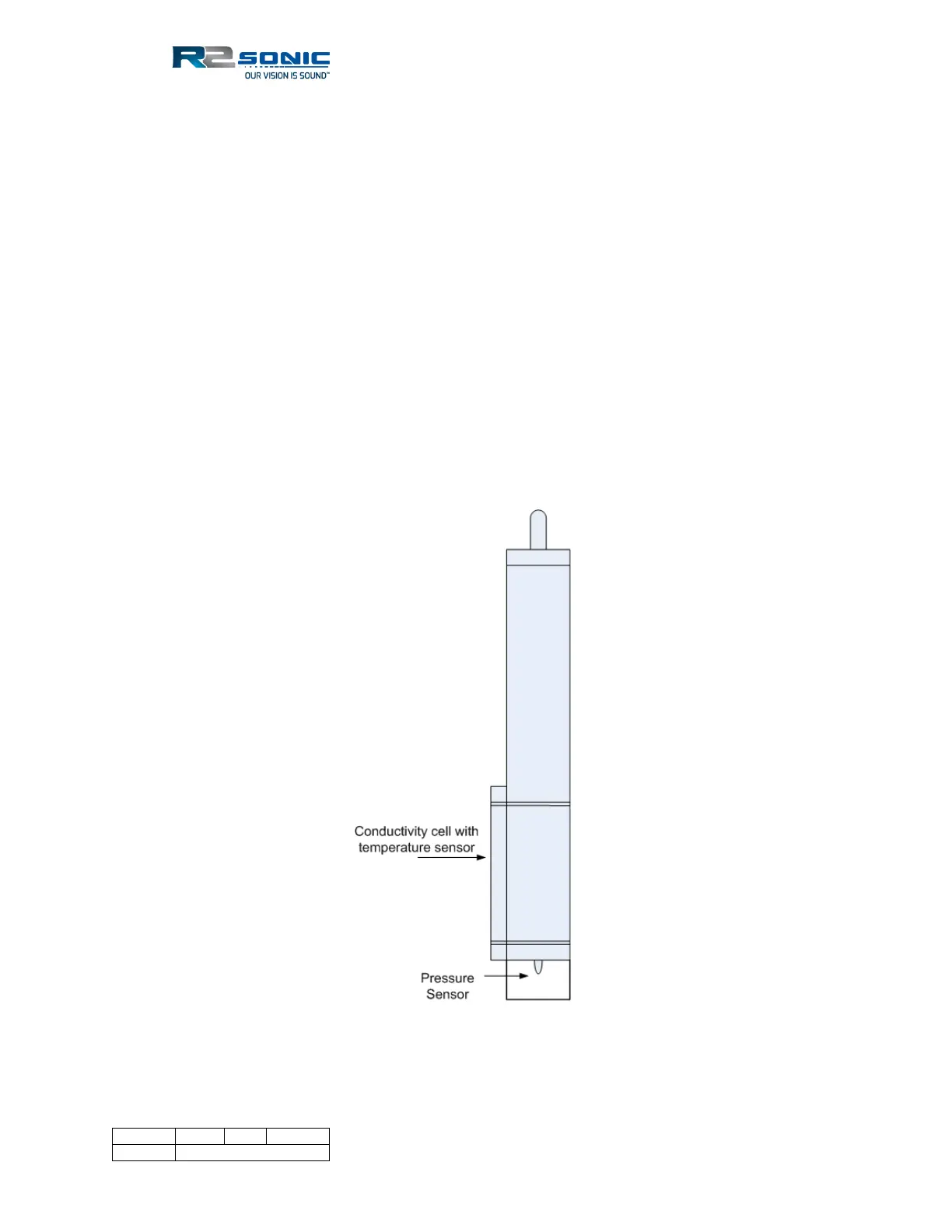
The CTD probe type of sound velocity probe has instruments to measure the conductivity of the
water, water temperature, and a pressure sensor to measure depth. The CTD probe is a good choice
if any of this information is also required; to obtain a sound velocity, a formula must be used.
There are various formulae available that are based on the parameters that are recorded by the
CTD. The UNESCO algorithm is considered a universal standard and was put forth by C-T. Chen and
F.J. Millero in 1977. The Chen-Millero (and Li) equation is complex as is Del Grosso’s (1974) and
have been termed Refined. Simple formula, such as Mackenzie’s (1981), also yields good results.
When using a CTD, it is very important that the probe be allowed to sit, fully submerged, in the
water for a few minutes prior to deploying it; this is to allow the probe to reach equilibrium with the
water temperature It is also important that the tube, through which the water flows past the
sensors, is checked for obstructions or marine growth.
Figure 170: CTD Probe


 To Next Page