Page 50 of 254
Part No. 96000001
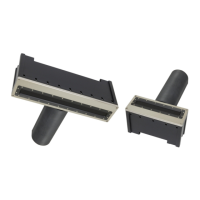
Figure 36: Removal of trim to expose securing holes
4.1.2 Electrical and Interfacing
The SIM has four DB-9 male connectors on the front. The label, on the top, clearly shows all
connections. Beginning on the left front, the connections are: GPS, Motion, Heading, and Sound
Velocity. At the present time the GPS time message (for time stamping), sound velocity, and motion
(for roll stabilisation) inputs are enabled. Next to each DB-9 are two vertical LEDs; the top LED
responds to the input data: Green – receiving data that is being decoded; Red – no connection;
Orange – receiving data that cannot be decoded (wrong baud rate or format setting in the Sonic
Control Sensor Settings menu). There is also a LED next to the on/off rocker switch, which is the
head connection indicator: Green – head on, Red – head power off or not connected, Orange –
problems with communications or if the sonar head current draw is below expected limits.
On the second row up are three BNC connections as well as three Ethernet connections. The BNC,
which is above the GPS DB-9, receives the one Pulse Per Second (PPS is for clock synchronisation)
from the GPS receiver. The PPS, along with the GPS time information, is used to time stamp and
synchronise all data.
The two BNC connections, to the right of the Ethernet connectors, are used to receive and send
synchronisation triggers to and from other systems.
Mains voltage (90 – 260VAC) is input via the IEC connector. Above the connector is a rocker switch
which turns on the system.
The SIM outputs the data (from the sonar head), via Ethernet, on any of the three RJ45 connections.
The front panel RJ45 jacks are routed to the SIM’s internal Gigabit Ethernet switch. The Gigabit
switch is self-sensing; Ethernet cross-over cables are not required.


 To Next Page