Page 200 of 254
Part No. 96000001
13.9.2.2 Dual Head – Same Frequency – Alternating ping
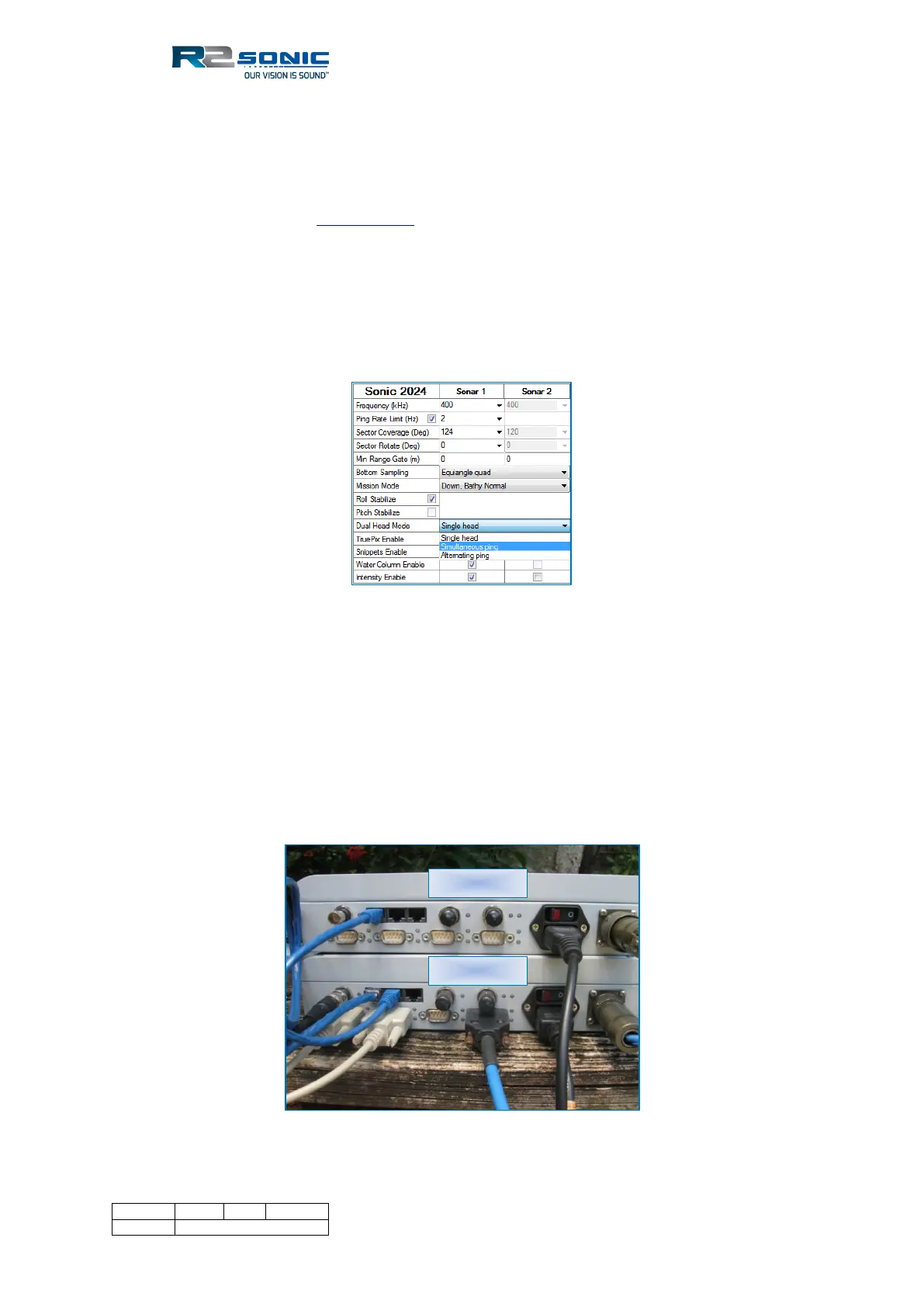
To operate the dual sonar heads on the same frequency, it is necessary to coordinate the transmit
and receive periods, so there is no interference. Operating in the ‘Ping-Pong’ mode will halve the
ping rate for each head, but the user gains identical acoustic resolution (such as backscatter) for
both sonar heads. Please see Section 5.5.10 for head synchronisation settings.
13.9.2.3 Dual Head – Dual Frequency – Simultaneous ping
Offsetting the operating frequencies, of both heads, allows the user to ping both heads
simultaneously. The amount of frequency separation depends mostly on how the sonar heads have
been installed and, to a lesser extent, environmental factors. Usually, the maximum separation
required is 40 – 80 kHz and can be less.
Figure 211: Dual-sonar head ping modes
13.9.2.4 Dual Head with Two SIM Boxes
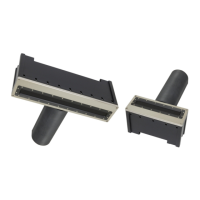
If two SIM boxes are used, only one is the master or primary (SIM1). SIM1 will be the SIM to take in
all of the serial data as well as the PPS; SIM2 only provides power to the second sonar head. SIM2 is
connected to SIM1 via an Ethernet cable to one of the RJ45 ports on SIM1. In the figure below, the
bottom SIM is the primary SIM1, which takes in all of the serial data as well as timing data. The
upper SIM is the secondary SIM2 that provides power to the sonar head and passes data to the
primary SIM. Do not use two SIMINS in a Dual Head Dual SIM configuration. The SIMINS has to be
with Sonar 1, and a standard SIM for Sonar 2.
Figure 212: Dual Head - Dual SIM external interfacing


 To Next Page