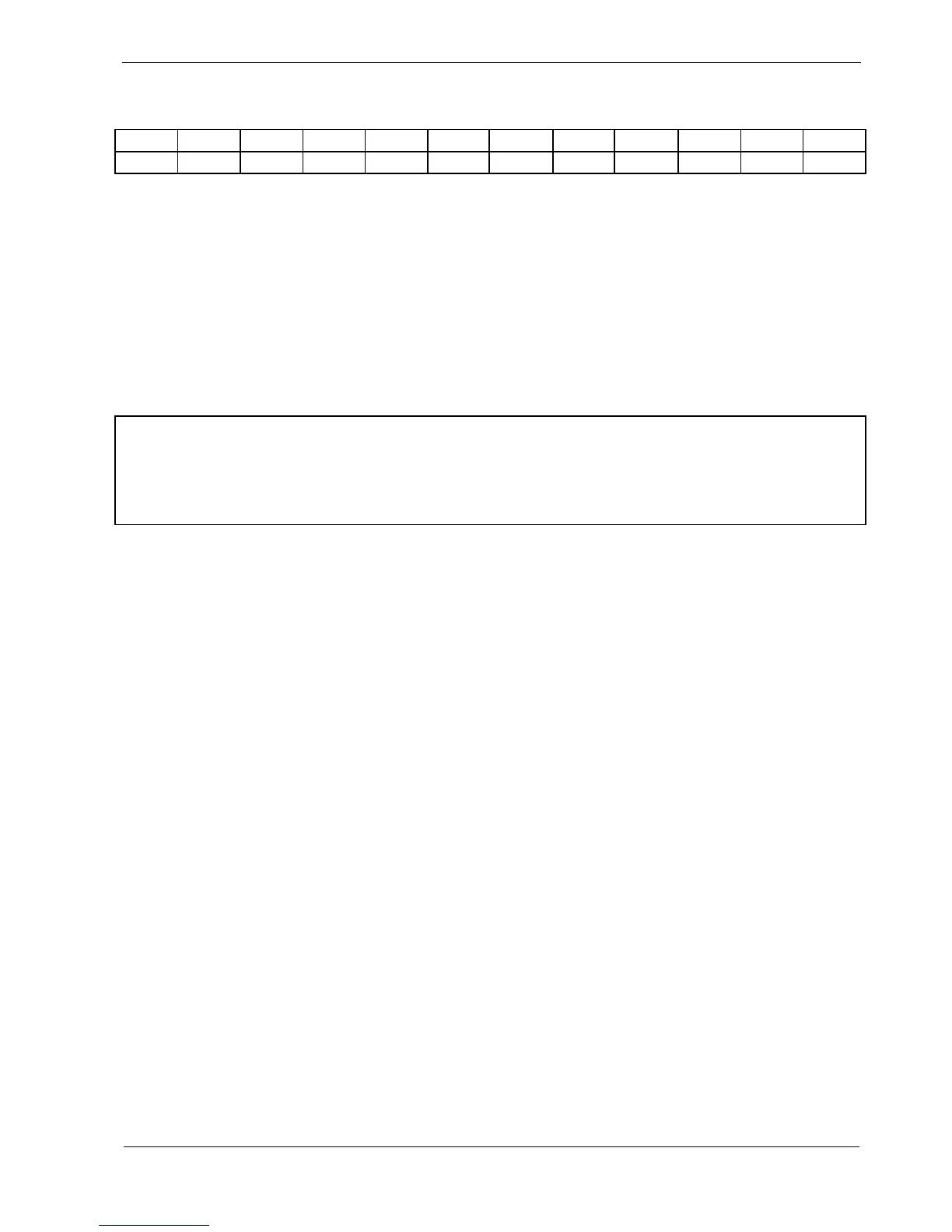
For a root of C, the notes will match those for root note selection:
1 2 3 4 5 6 7 8 9 10 11 12
C C# D D# E F F# G G# A A# B
As you toggle each note on or off, the note name will appear in the top left of the display.
This makes it easy to see which notes are in the scale, regardless of a change in root note.
FTS Scale Edits
Changes to the FTS scale apply immediately.
As patterns play, any note that is not in the FTS scale is moved to the nearest note that is.
*TIP FTS looks for the nearest note in alternating directions.
If a note is not in the scale, P3 will test if the note one semitone below is.
If that note is not, it will test the note one semitone above.
It will continue in this way, two below, two above, three below, etc, until it finds a note in the FTS
scale.
There are three ways to leave the FTS Scale Edit page, via the soft-keys:
• press “save”, F1, to store the scale definition and return to play mode – note that preset scales
do not save permanently
• press “exit”, F2, to leave the modified scale active, without saving the changes permanently,
and return to play mode
• press “lose”, F3, to restore the previous scale definition and return to play mode
Remember all scales can be edited, but changes to the preset scales will be lost when a new scale is
selected.
For the 9 user defined scales, “save” stores the changes permanently.
F3 - Tune
The tune soft-key can be used to send a middle C note-on message on all currently active tracks.
This is useful for testing your MIDI connections, or for tuning unstable analogue synths in variable
temperature environments.
Press the soft-key again to send note-offs, if you ever get that minimoog tuned.



 To Next Page