3-1
Introduction to Table Operator Manual 056404-443
3.1 General Description
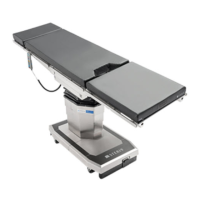
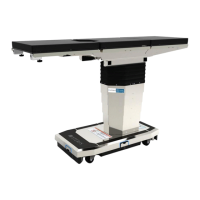
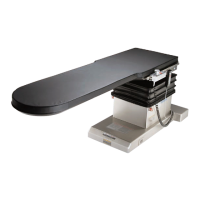
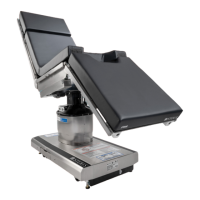
The mobile and electro-hydraulically operated surgical table is specifically designed to provide the complete
tabletop articulation flexibility required for modern surgical care facilities. It features powered lateral tilt,
Trendelenburg/Reverse Trendelenburg and adjustable height functions.
Additional features include:
• 1100 lbs. (499 kg) Load, Normal and Reverse Patient Position; without tabletop articulation (no tabletop
articulation or slide).
• 1000 lbs. (454 kg) Load, Normal and Reverse Patient Position; includes all tabletop articulation except
tabletop slide.
• 600 lbs. (272 kg) Load, Normal Patient Position; includes all tabletop articulation and full tabletop slide, (also
includes Reverse patient slide toward patient feet but not patient slide toward patient head).
• 575 lbs. (260 kg) Load, Normal and Reverse Patient ; includes all tabletop articulation and full tabletop slide,
including reverse patient slide toward patient feet and toward patient head).
• constructed of aluminum alloy, stainless steel and other high quality materials.
• equipped with a large sliding table top providing unrestricted radiological access without patient reversing.
• powered by either internal battery or facility electric through use of the patent-pending INTELLIPOWER
®
dual
power system.
The table accepts positioning commands from three sources:
1. A universal hand control, detailed in Section 5.3, Universal Hand Control.
2. An optional physician-controlled foot control (which includes Trendelenburg Tilts, Lateral Tilts and Height
functions). Refer to S
ECTION 5.8, OPTIONAL FOOT CONTROL OPERATION.
3. An Auxiliary Control System permits table operation in the event of primary control malfunction (refer to
S
ECTION 5.9, BACKUP (OVERRIDE) CONTROL SYSTEM.
CAUTION – POSSIBLE EQUIPMENT DAMAGE: Appropriate components of this surgical table
have been tested and found in compliance with IEC 60601-1-2: Edition 4 2014-02, Medical
Electrical Equipment – Part 1; General Requirements for Safety; Electromagnetic Compatibility
(EMC). There is, however, a potential for electromagnetic or other interference between this
equipment and other devices. Should user experience interference, relocate this device or
minimize the use of the affected equipment while this device is in operation.
INTRODUCTION TO TABLE




 To Next Page