1-1
Safety Precautions Operating Manual 056404-443
1
1.1 Introduction
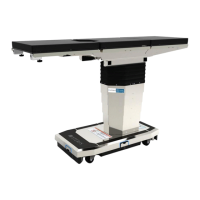
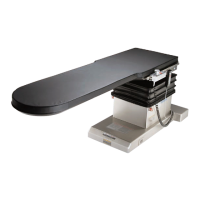
The following Safety Precautions must be observed when operating or servicing the surgical table. WARNING
indicates the potential for personal injury and CAUTION indicates the potential for damage to equipment. For
emphasis, certain Safety Precautions are repeated throughout the manual. It is important to review ALL Safety
Precautions before operating or servicing the unit.
1.2 Warnings and Cautions
WARNING – PERSONAL INJURY HAZARD AND POSSIBLE REGULATORY VIOLATION:
WARNING – PINCHING HAZARD:
WARNING – TIPPING HAZARD:
Any alteration of the surgical table not authorized or performed by STERIS which could affect its
operation will void the warranty, could adversely affect operator safety and could violate national, state
or local regulations.
Pinch points are created during tabletop articulation. Become familiar with all pinch points prior to
operating the table.
To avoid serious injury, keep limbs, fingers and other body areas clear of all pinch points when
positioning the table.
When manually positioning table sections, stay clear of potential pinching hazards.
Do not place patient on the table unless floor locks are engaged.
The table is not to be used to transport patients. With exception of slight repositioning, as detailed in the
operating instructions, never disengage floor locks when patient is on table. Failure to heed this warning
can result in injury to both the patient and the operating room staff.
Do not use this table for patients exceeding the maximum patient weight of:
• 1100 lbs. (499 kg) Load, Normal and Reverse Patient Position; raise or lower only (no tabletop
articulation or slide).
• 1000 lbs. (454 kg) Load, Normal and Reverse Patient Position; raise or lower; includes all tabletop
articulation except tabletop slide.
• 600 lbs. (272 kg) Load, Normal Patient Position; raise or lower; includes all tabletop articulation and
full tabletop slide, (also includes Reverse patient slide toward patient feet but not patient slide toward
patient head).
• 575 lbs. (260 kg) Load, Normal and Reverse Patient; raise or lower; includes all tabletop articulation
and full tabletop slide, including reverse patient slide toward patient feet and toward patient head.
Center tabletop over column before applying chest compressions.
SAFETY PRECAUTIONS AND PINCH POINTS
1




 To Next Page