SECTION 2
2-52
SEAT BELT
Check periodically the seat belt and all its securing
elements. If you notice that the seat belt and its
securing elements are damaged or some of them
missing, perform immediately repair or replacement
of parts. Seat belts damaged or worn because of an
accident, they have to be replaced.
The seat belt buckle must not be clogged, for
instance from paper or other objects, otherwise the
hooking tongue does not lock. Never run belt over
rigid or fragile objects such as bunches of keys or
spectacles. In this way your body could get injured
in case of accident. The operator’s seat is fitted with
a lap-type seat belt. The belt tensioning roller is
incorporated on the left side of the seat.
FASTEN SEAT BELT
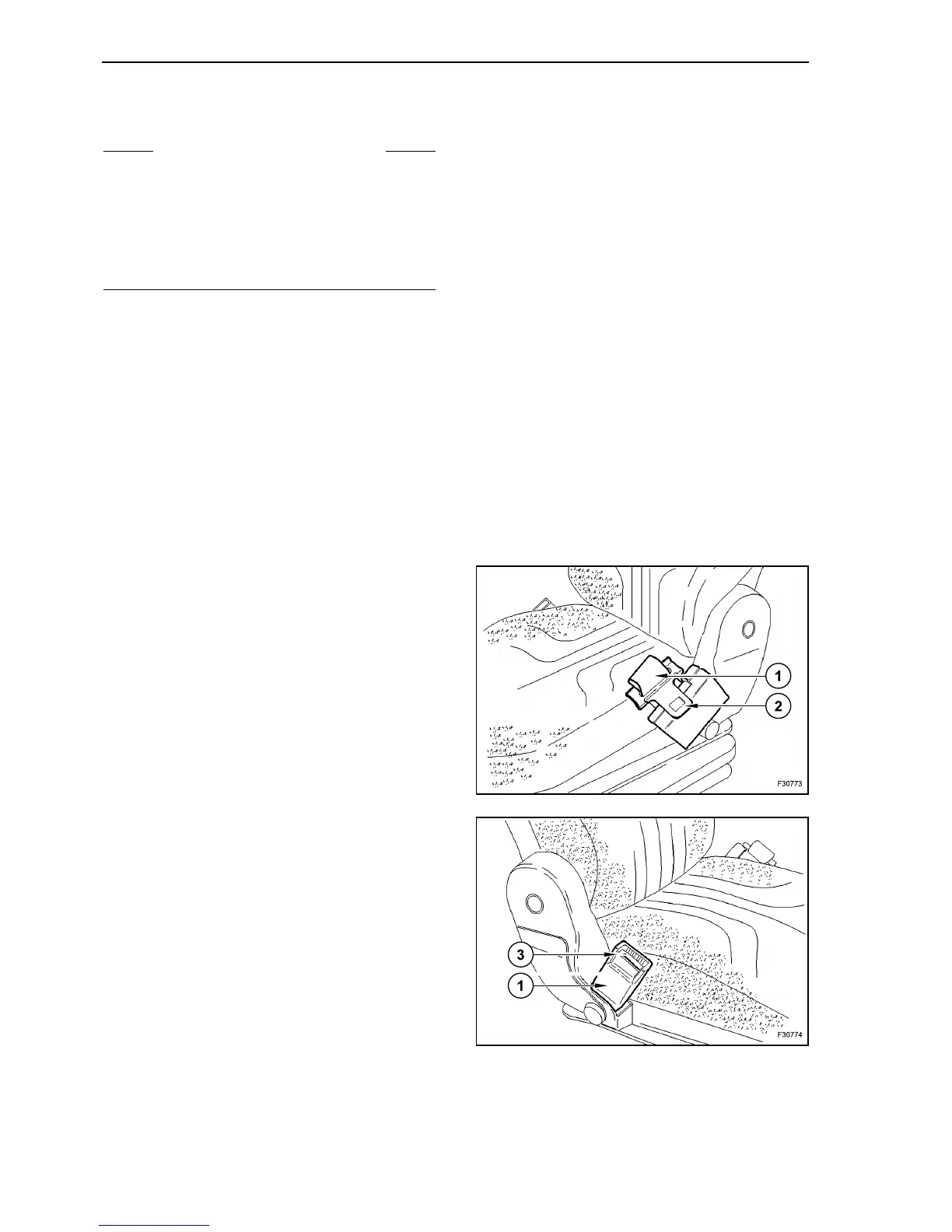
Insert the hooking tongue (2) in the buckle (1). Pull
the tongue against the buckle to check if the seat
belt is well secured.
The belt should not be entangled or rolled.
RELEASE SEAT BELT
Press the lock (3) of the buckle (1) and take out the
hooking tongue.
The belt rolls in automatically.
S WARNING S
Always fasten your seat belt before starting the
engine. The machine is equipped with a roll over
protection system (ROPS) which ensures your
safety. The seat belt will protect you efficiently if you
attach it correctly and if you always wear it. The
seat belt must not be too loose. It must not be
twisted or caught in the seat.
69
70


 To Next Page