INTRODUCTION
Page 13
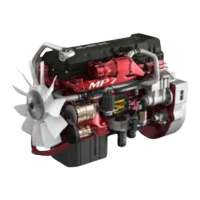
The MP7 uses unit injectors. The unit injector
incorporates the pump, valve and injector. Its
internal solenoids permit fast, precise control of
fuel delivery into the cylinder. The unit injectors
are under the valve cover and not exposed to the
heat of exhaust system components.
Fuel passes through two filters, one of which
separates water from the fuel. The primary filter
can be mounted on the engine or on the chassis.
Fuel pressure in the unit injectors is augmented
via the rocker arms with roller followers in
constant, direct contact.
Removing injectors for service requires a new
technique, and installation requires that the
EECU be programmed to recognize replacement
injectors. Cleaning injector bores requires a
special tool.
The standard MP7 is equipped with an engine
compression brake to assist deceleration and
vehicle braking. PowerLeash™, the engine
compression brake, includes a different bridge
over the two exhaust valves, an electronic control
valve and a wiring harness that includes the
control valve. The exhaust valves are adjusted
with shims.
Unique colors and the appearance of the valve
cover, filters and logo labels distinguish the MP7
from other engines in the MACK line.
Preventive maintenance is important to get the
most from the MACK MP7 engine and to ensure
many years of reliable, trouble-free operation.
Repair Instructions sections in this manual deal
with removal, installation, disassembly, assembly,
setup and adjustments of MP7 components.
There are restrictions concerning the reuse of
certain fasteners. Refer to current specifications
bulletins and the SPECIFICATIONS section of
this manual for detailed information.
Service Precautions Summary
Following is a summary list of the DO and DON’T
issues applying to MP7 engine service:
1. DO NOT machine the cylinder head for
clean-up since this will change injector tip
protrusion, thereby affecting emissions. It
will also upset the ability to correctly adjust
timing gear backlash.
2. DO NOT grind the injector copper sleeves.
3. Critical fasteners that can be used four times
include main bearing cap bolts, connecting
rod bolts, flywheel bolts, turbocharger bolts,
injector hold down bolts and camshaft
bearing housing bolts.
4. Install the crankshaft main bearing caps
according to marked assembly number.
Correct alignment is also critical and is aided
by the following:
앫 Two casting nipples, located in the
cylinder block and on the respective
bearing cap, eliminate incorrect
assembly.
앫 Sleeves pressed into the cylinder block
guide the bearing caps into position for
proper alignment.
5. Connecting rod caps MUST BE mated to
their respective connecting rods due to the
“fractured manufacturing” process used.
Also, the rod caps can be installed only one
way because of the difference in spacing
between screw holes at each side of the
cap.
6. DO NOT use the lifting eye on the flywheel
housing when tilting the engine/transmission
assembly to an angle greater than
15 degrees.


 To Next Page