Page 46
Operation
optoNCDT 1700
6.9 Frequency and Output Rate
The measurement frequency defines the number of measurements performed by the sensor per second. The
measurement frequency may be 2.5 kHz, 1.25 kHz, 625 Hz or 312.5 Hz. Details of how to change the
measurement frequency, see Chap. 6.5.
The output rate gives the actual number of measurement values at the sensor output per second. The
maximum output rate can never exceed the measurement frequency.
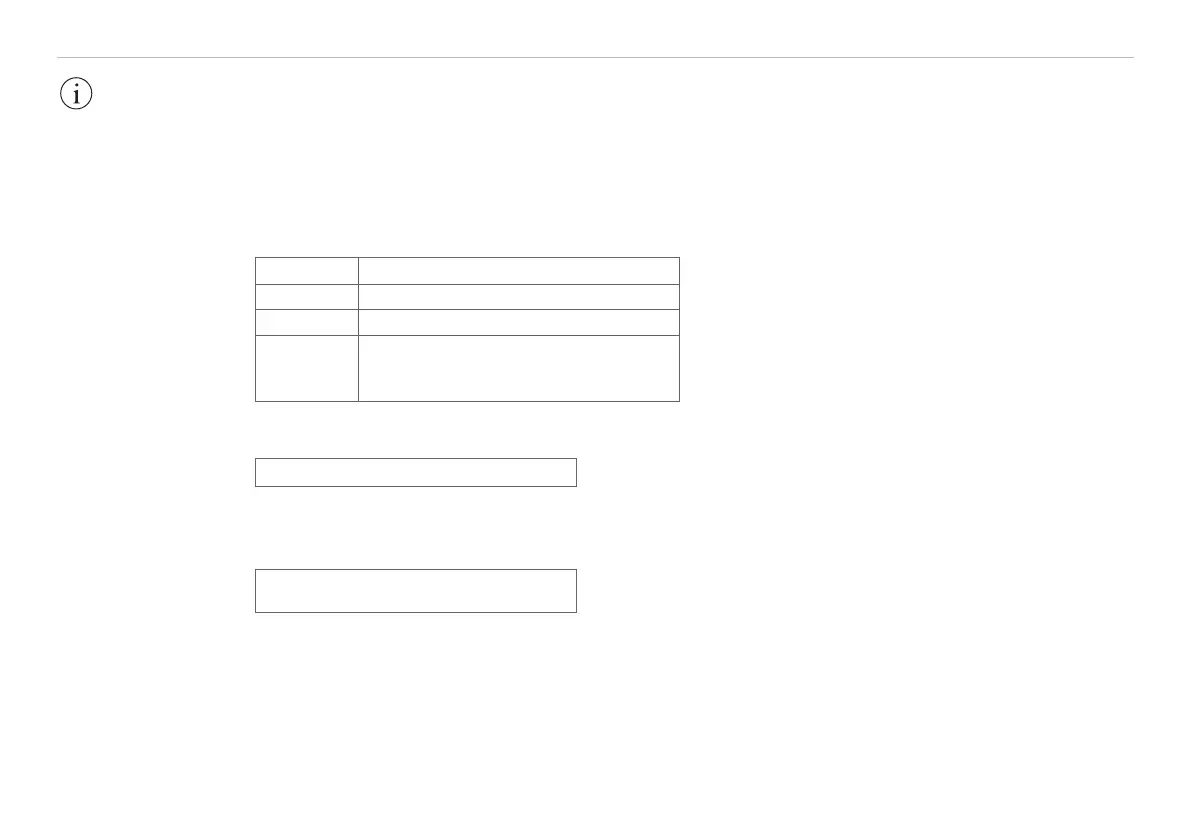
Output Maximum output rate
The sensor continues to measure internally but holds
back the output until the last measurement value has
been issued in full. The next measurement value is
the last valid value, with other values between being
lost.
Fig. 26 Output rates for the output types
Current Measurement frequency
Voltage Measurement frequency
RS422
Output rate Measurement frequency;
Dependent on the transmission rate
(baud rate) and data format (ASCII-Code).
Calculation of the output rate using the RS422 serial interface:
Output rate = Measuring frequency n
Abbreviations used:
n = Partial factor
int = Integral part of ( )
b = Byte/measurement value
(binary format b=2, ASCII b=6))
MR = Measurement frequency [Hz]
BR = Baud rate [Baud]
n = int (b * 11 * MR / BR) + 1
The values are summarized, see Chap. A 3.
Example:
Measurement frequency = 1250 Hz, ASCII-Format (b=6), Baud rate = 19200 Baud
--> n = int (4.3) + 1 = 5
--> Output rate = 1.25 kHz / 5 = 250 Hz.
IMPORTANT!
Synchronized
sensors must always
be set to the same
measurement
frequency.
Please, see Chap. A 3.
Recommendations:
- Use a high measure-
ment frequency for light
colored and matt ob-
jects to be measured.
- Use a low measure-
ment frequency for
dark or shiny objects to
be measured (e.g.
surfaces covered in
black lacquer), for bet-
ter measurement
results.


 To Next Page