Page 91 of 254
5.8.3.1 TVG Curve
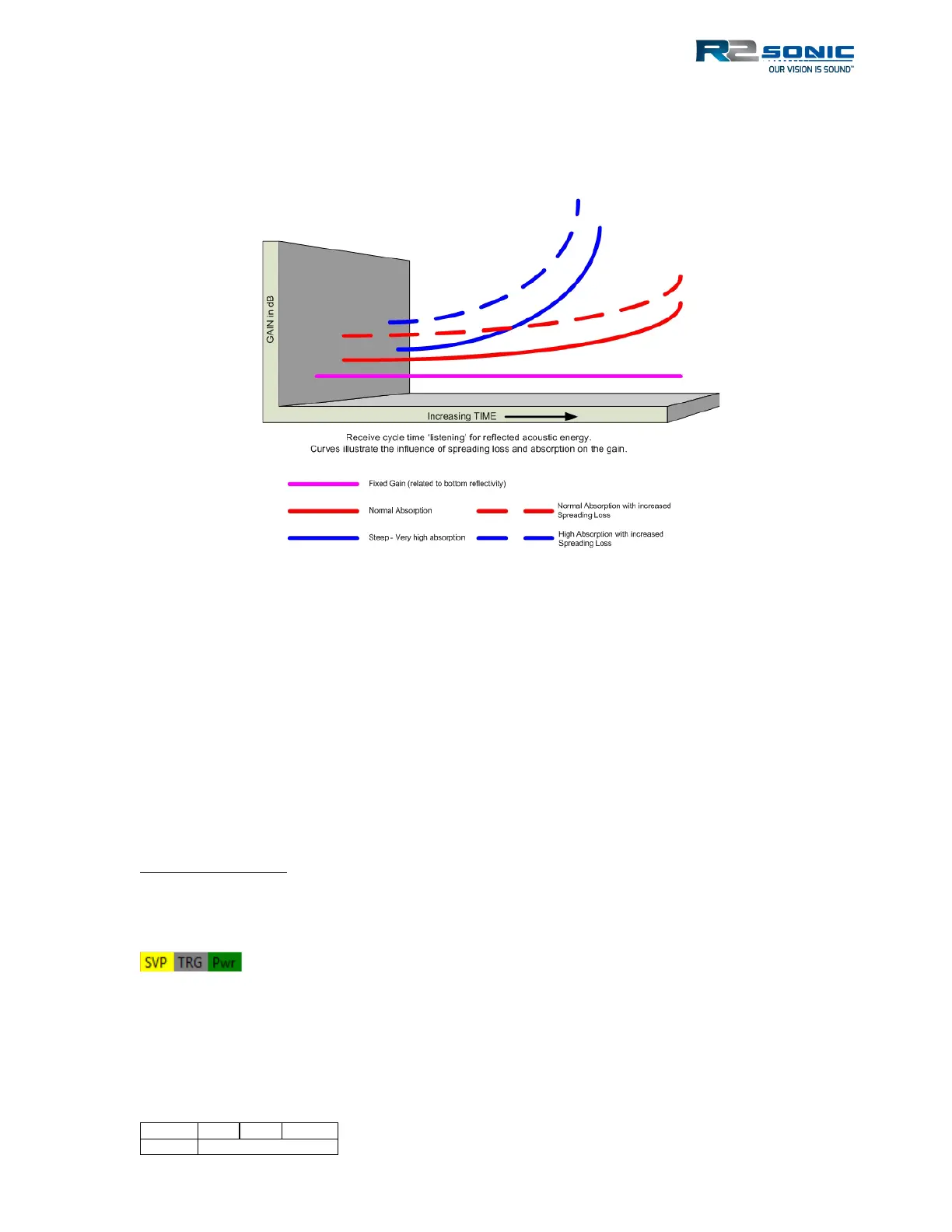
The TVG curve can be either shallow or steep, depending mostly on the Absorption value to define
the shape of the curve. The Spreading Loss will determine the amplitude of the gain.
Figure 95: TVG Curve Concept
5.8.3.2 Sound Velocity
The speed of sound, at the receiver’s face, is required to do the receive beam steering, which is
required for all flat array sonars. The angular acoustic wavefront strikes each receive element, but
at a different time and phase depending on the angle of the return. By introducing a variable delay
to each receive element’s information, the phases can be aligned, and the beam can be ‘steered’ in
the direction of the return. In order to accurately apply the correct delay, three factors have to be
known or measured: The physical distance between each receive element is known, the time of
reception at each receive element is measured, the speed of sound at the receiver face must be
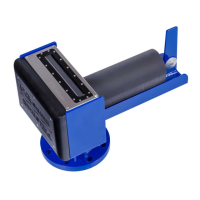
known or measured (for this reason there is a sound velocity probe attached to the mounting
frame).
In case of emergency (SV probe becomes fouled or is erratic) the beam steering can be
accomplished, without a sound velocity probe, by entering in the correct sound velocity for the area
around the sonar head. To manually enter a sound velocity, check the box in the Sound Velocity
row, in the Ocean Settings, and enter a velocity. The SVP indicator, in the GUI, will change to Yellow.


 To Next Page