C-6 Solvent Considerations
For example, some fluorocarbons are immiscible with all the standard
solvents and have M-numbers of 0, 32. Two liquids with dual M-numbers are
usually miscible with each other.
A liquid is classified in the M-number system by testing for miscibility with a
sequence of standard solvents. A correction term of 15 units is then either
added or subtracted from the cutoff point for miscibility.
Buffered solvents
When using a buffer, use a good quality reagent and filter it through a
0.22-µm filter.
Do not leave the buffer stored in the system after use. Flush all fluidic
pathways with HPLC-quality water before shutting the system down and
leave distilled water in the system (flush with 90% HPLC-quality water:10%
methanol for shutdowns scheduled to be more than one day). Use a minimum
of 15 mL for sparge-equipped units, and a minimum of 45 mL for inline
vacuum degasser-equipped units. Some modern systems, such as Waters
Alliance
®
, may require volumes lower than this, depending on inline degasser
volumes and slow-rate operation limits.
Head height
Position the solvent reservoirs at a level above the HPLC equipment or on top
of the pump or detector (with adequate spill protection).
Solvent viscosity
Generally, viscosity is not important when you are operating with a single
solvent or under low pressure. However, when you are running a gradient, the
viscosity changes that occur as the solvents are mixed in different proportions
can result in pressure changes during the run. For example, a 1:1 mixture of
water and methanol produces twice the pressure of either water or methanol
alone.
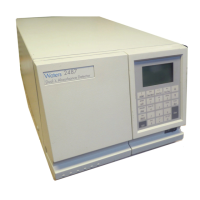
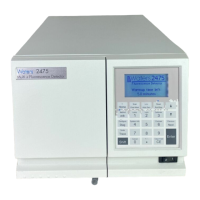
Warning: Since the 2475 detector contains a high voltage power
source, all solvents should be isolated from the detector.


 To Next Page