1-20 Theory of Operation
After you run the Auto-Optimize Gain diagnostic function, the detector
displays recommended gain values.
Tips:
• The previous table contains the best gain values optimized with a 2×
margin for error that holds half its capacity in reserve for unanticipated
fluorescence signal fluctuations.
• The magnitude of emission units is independent of the gain, so changing
gain does not affect emission unit values. However, when you use
sample energy units, changing the gain does affect the magnitude of the
output signal.
Ensuring gain optimization for each peak of interest
Refer to the figure “Gain optimized chromatogram” on page 1-19. If you use
only one timed event (wavelength pair change at 2 minutes for peaks 3 and 4),
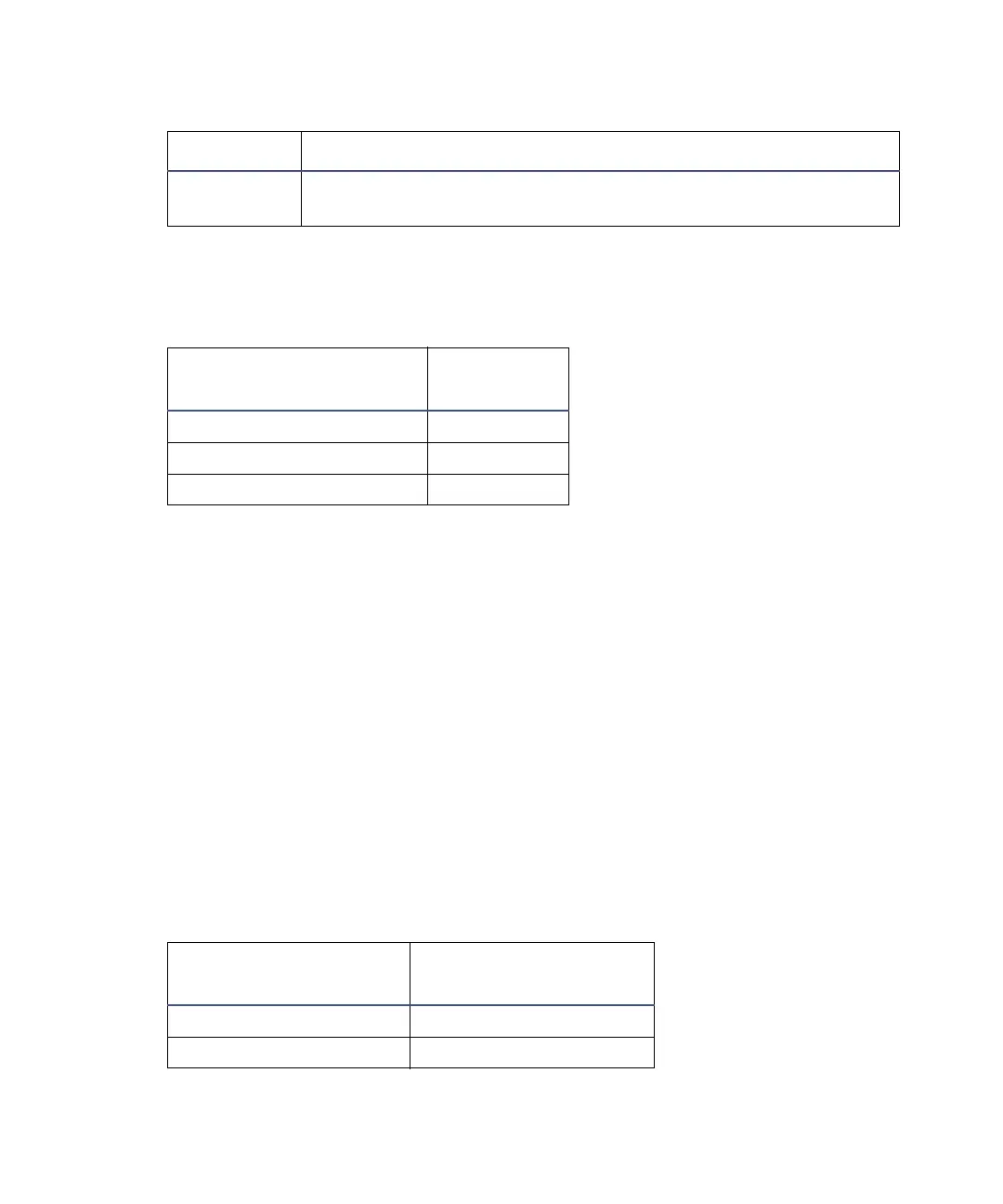
the recommended gain table is as follows.
2.0 Excitation = 375 nm, Emission = 410 nm (no need to change
gain here)
Recommended gain values
EUFS: 2000
event time (min.)
Best gain
0.0 (Initial) 10
1.5 1000
2.0 5
Recommended gain values with a single timed event change
EUFS: 2000
event time – min.
Best gain
0.0 (Initial) 10
2.0 5
Example of method development (Continued)
Time (min) Event


 To Next Page