Need help?
Do you have a question about the Microplex SOLID 50 A3 - 3 and is the answer not in the manual?
Describes the printer's electrophotographical base, resolution, speed, paper handling, and integrated controller.
Explains symbols and text conventions used in the manual for clarity and ease of understanding.
Declares compliance with EU directives and lists applied harmonized standards for EMC and low-voltage.
Provides warnings about high frequency energy radiation and laser safety for Class 1 products.
Lists essential items included with the printer and advises on checking for transport damages.
Provides step-by-step instructions for safely unpacking the printer and its components.
Guides the user through initial setup steps, including opening doors and preparing the drum cartridge.
Details requirements for printer placement, environment, power connection, and space.
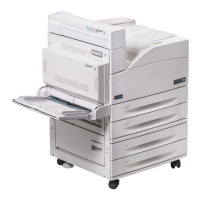
Identifies and labels the main physical components of the SOLID 50 A3 - 3 printer.
Explains how to load various paper sizes into cassettes and the multipurpose feeder.
Step-by-step guide on how to properly load paper into the standard printer cassettes.
Instructions for loading print media into the printer's multipurpose feeder.
Describes the standard output bin and optional finishing/stacking units for collected printouts.
Details how to set the paper size for different cassettes and feeders, including a supported sizes table.
Provides instructions and warnings for replacing the toner cartridge and notes on refilled cartridges.
Guides the user through the process of replacing the drum cartridge, including handling and storage precautions.
Instructions for connecting the printer to a computer or network, ensuring devices are off.
Details the procedure for connecting power and turning the printer on, including warm-up messages.
Illustrates the printer's control panel, identifying key elements like display, LEDs, and keys.
Explains the functions of the display, ON LINE LED, DATA LED, and ERROR LED on the control panel.
Describes the purpose and operation of each key on the printer's control panel.
Explains how to change printer settings via the control panel, temporary vs. permanent changes.
Presents a detailed diagram of the printer's menu structure, showing different levels and functions.
Explains how to interpret diagrams used to describe control panel functions and key sequences.
Details how to generate a status sheet containing printer configuration, fonts, and options.
Guides on printing a list of all installed fonts, including demo prints and PCL commands.
Explains how to select print resolution (e.g., 300 dpi or 600 dpi) and save it as a setup.
Describes how to activate Hexdump-Mode for error diagnosis by printing raw interface data.
Explains how to resume normal printing from Hexdump-Mode and perform a FORM FEED.
Details how to cancel a print job and clear the printer's input buffer, useful after interruptions.
Provides instructions for printing a survey of available panel functions, recommending large paper.
Guides on generating test prints for error analysis without sending data to the printer.
Enables user to select a specific paper feeder (cassette) for printing, with notes on format check priority.
Allows selection of the output stacker for print jobs, including standard and optional stackers.
Explains how to choose between single-sided (simplex) and double-sided (duplex) printing.
Details how to select the print page size from standard options or set custom sizes.
Describes how to enable or disable automatic format checking to prevent printing on undersized paper.
Allows selection of print orientation (portrait, landscape) for the entire printout.
Guides on setting interface parameters, including SIA timeout for managing multiple interfaces.
Explains how to select the printer emulation mode (e.g., PCL 5) for compatibility.
Allows selection of the display language for messages, status sheets, and font lists.
Explains how to configure the transparent code for initiating IDOL commands with printable characters.
Details how to allocate RAM between the input buffer and macro/download memory.
Guides on resetting all printer configurations back to their original factory default settings.
Explains how to select the active font by choosing a font number from the available list.
Allows selection of text orientation (portrait, landscape) for text elements on the page.
Guides on selecting the active symbol code for character representation.
Explains how to set text margins (left, right) in dots relative to the paper edge.
Allows shifting the print image horizontally (crosswise to print direction) by adjusting X-position.
Allows shifting the print image vertically (along the print direction) by adjusting Y-position.
Sets the number of lines per inch, affecting line spacing, primarily for line printer emulation.
Sets character spacing (CPI) for line printer emulation, affecting horizontal spacing.
Allows adjustment of print density to reduce toner usage and printing costs.
Guides on configuring network parameters like IP address, subnet mask, and gateway for Ethernet connection.
Provides safety precautions and general instructions for cleaning the printer's exterior and interior.
Explains when and how to replace the transfer roller and fuser as part of the maintenance kit.
Addresses issues where the printer is not working or experiencing repeated paper jams.
Covers defects causing light printouts or toner residues on the back of printouts.
Provides examples of warnings and error messages displayed on the control panel.
Details error messages related to missing paper or inappropriate paper size in feeders.
Lists error messages indicating issues with paper transport, such as full trays or paper jams.
Explains error messages that require contacting a service engineer, providing status codes.
Provides guidance on avoiding and clearing paper jams, including general printer jam removal.
Offers tips on proper storage and handling of print media to prevent paper feeding problems.
Details steps for removing paper jams from the printer, with safety warnings about hot components.
Step-by-step instructions for clearing jams in Cassette 1 and the toner cartridge area.
Guides on clearing paper jams specifically within Cassette 2, including paper visibility checks.
Provides instructions for clearing jams from optional Cassettes 3 and 4.
Details how to remove paper jams that occur within the multipurpose feeder itself.
Guides on clearing paper jams that occur within the printer's duplex unit.
Lists common paper feed symptoms, their causes, and solutions for prevention.
Explains the automatic page reprint function after errors and how to disable it.
Provides essential steps and precautions for safely repacking the printer for transport or return.
Lists technical specifications of the SOLID 50 A3 - 3 printer, including print technology, speed, and interfaces.

 To Next Page
 General