6
Reference Manual
00809-0100-4108, Rev CA
Configuration
March 2017
Configuration
2.4 Transmitter overview
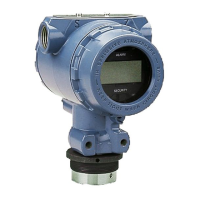
The Rosemount
™
2088, 2090F, and 2090P are offered for Gage Pressure (GP) and Absolute
Pressure (AP) measurements. The Rosemount 2088 utilizes piezoresistive sensor
technology for AP and GP measurements.
The major components of the Rosemount 2088, 2090F, and 2090P are the sensor module
and the electronics housing. The sensor module contains the oil filled sensor system
(isolating diaphragm, oil fill system, and sensor) and the sensor electronics. The sensor
electronics are installed within the sensor module and include a temperature sensor, a
memory module, and the analog to digital signal converter (A/D converter). The electrical
signals from the sensor module are transmitted to the output electronics in the electronics
housing. The electronics housing contains the output electronics board, the optional
external configuration buttons, and the terminal block. The basic block diagram of the
transmitter is illustrated in Figure 2-3 on page 7.
When pressure is applied to the isolating diaphragm, the oil deflects the sensor which then
changes its capacitance or voltage signal. This signal is then changed to a digital signal by
the Signal Processing. The microprocessor then takes the signals from the Signal Processing
and calculates the correct output of the transmitter. This signal is then sent to the D/A
converter, which converts the signal back to the analog signal, then superimposes the HART
signal on the 4–20 mA (1–5 Vdc) output.
An optional LCD display can be ordered that connects directly to the interface board which
maintains direct access to the signal terminals. The display indicates output and
abbreviated diagnostic messages. A glass display cover is provided. For 4-20 mA HART
output, the LCD display features a two-line display. The first line displays the actual
measured value, the second line of six characters displays the engineering units. The LCD
display can also display diagnostic messages.
Note
LCD display utilizes a 56 character display and can display output and diagnostic
messages. The LOI display uses an 86 character display and can display output, diagnostic
messages, and LOI menu screens. The LOI display comes with two buttons mounted on the
front of the display board. See Figure 2-2.



 To Next Page