This document provides operating instructions for the Sartorius Cubis® MCE series of semi-micro, analytical, and precision balances.
Function Description
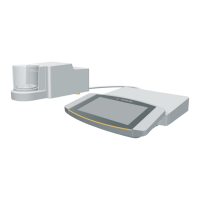
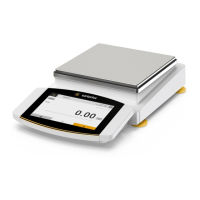
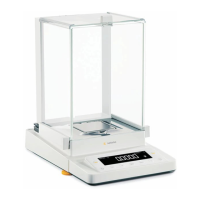
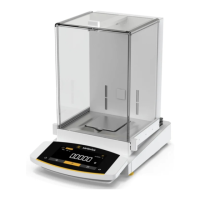
The Cubis® MCE series balances are high-resolution weighing devices designed for use in laboratories. They are capable of determining the mass of materials in liquid, paste, powder, or solid form. These devices are suitable for a wide range of applications, including semi-micro, analytical, and precision weighing. Some models feature a motorized draft shield and an ionizer. The balances are designed for stand-alone operation or can be connected to a PC.
Important Technical Specifications
The Cubis® MCE series offers various models with different weighing capacities and resolutions. Key technical specifications include:
Dimensions (L x W x H):
- Weighing module: 404 x 240 x 373 mm (with manual or motorized draft shield)
- Electronics module: 211 x 240 x 56 mm
- Weighing pan size: 85 x 85 mm (semi-micro and analytical balances), 140 x 140 mm (precision balances)
Weight (approx.):
- Semi-microbalance: 10.15 kg (manual draft shield), 11.65 kg (motorized draft shield)
- Analytical balance: 8.2 kg (manual draft shield), 10.0 kg (motorized draft shield)
- Precision balance: 5.9 kg (frame draft shield), 7.5 kg (flat glass draft shield), 9.4 kg (manual analytical draft shield), 10.2 kg (motorized analytical draft shield)
Power Supply Unit (YEPS03-15V0):
- AC voltage: 100 – 240 V (±10%)
- Frequency: 50 – 60 Hz (±5%)
- Current consumption, maximum: 1.0 A
- DC voltage at 2 A output current: 14.25 – 15.75 V
- Power, maximum: 30 W
- Protection class: I (according to IEC 62368-1)
- Pollution level: 2 (according to IEC 61010-1)
- Overvoltage category: II (according to IEC 60664-1)
- Installation site, maximum altitude above sea level: 3000 m
Ambient Conditions:
- Temperature in operation: +5 – +40 °C
- Temperature during storage and transport: -20 – +60 °C
- Relative humidity: 80% at temperatures up to 31°C, then linear decrease from 80% at 31°C to 50% at 40°C.
- isoCAL function ambient temperature: +10 – +30 °C (with isoCAL function), +17 – +27 °C (without isoCAL function).
Materials:
- Housing: Die-cast aluminum, plastic PBT, Optiwhite float and stainless steel 1.4401|1.4404, PA handles, aluminum trim.
- Control unit: Plastic PBT, float glass and stainless steel 1.4301.
Integrated Clock:
- Maximum deviation per month (RTC): 30 seconds.
Backup Battery:
- Lithium battery type: CR2032
- Service life at room temperature, minimum: 10 years.
Metrological Data (examples for MCE225S | MCE225P | MCE125S | MCE125P):
- Scale interval (d): 0.01 mg
- Maximum capacity (Max): 220 g (MCE225S/P), 120 g (MCE125S/P)
- Repeatability at 5% load: 0.015 mg (standard deviation), 0.0065 mg (typical value)
- Repeatability at approx. maximum capacity: 0.025 mg (standard deviation), 0.02 mg (typical value)
- Linearity deviation: 0.15 mg (tolerance), 0.1 mg (typical value)
- Deviation when load is off-center, positions according to OIML R76: 0.15 mg (tolerance), 0.1 mg (typical value)
- Test weight: 100 g (MCE225S/P), 50 g (MCE125S/P)
- Tare-maximum capacity: Less than 100% of maximum capacity.
- Accuracy class according to Directive 2014/31/EU: I
- Verification scale interval (e) according to Directive 2014/31/EU: 1 mg
- Minimum load (Min) according to Directive 2014/31/EU: 10 mg
- Minimum initial weighing according to USP (United States Pharmacopeia), Chap. 41: 8.2 mg (optimum), 13 mg (typical)
- Typical stabilization time: 2 seconds
- Typical measurement time: 6 seconds
Recommended Calibration Weight:
- External test weight: 200 g (MCE225S/P, MCE524S/P, MCE224S/P, MCE3203S/P, MCE623S/P), 100 g (MCE125S/P, MCE124S/P), 500 g (MCE5203S/P, MCE323S/P), 1000 g (MCE2203S/P), 2000 g (MCE3203S/P, MCE623P), 3000 g (MCE3203S), 5000 g (MCE5203P, MCE5202S)
- Recommended accuracy class: E2
isoCAL Function:
- Triggered by: Temperature change (1.5 K), time interval (12 hours), successful leveling.
Interfaces:
- COM-RS232 Interface: Serial interface, full duplex, RS232 level, D-sub connector, 9-pin, max cable length 10 m.
- USB-A Interface: USB host (master), for Sartorius printers, USB sticks with software update.
- USB-B Interface: USB device (slave), virtual serial interface (virtual COM-port, VCP) and "PC direct" communication.
Usage Features
The Cubis® MCE balances offer a user-friendly interface with various operating modes and settings.
Operating Display:
- The display shows the selected application, weight value, metrological data, weight units, visual touch-feedback, and the operating area.
- Symbols indicate leveling status, weighing in percent, calculation, animal weighing, net-total, totalizing, density determination, statistics, busy status, sign, zero, auto, data output, percent, net, computed value, and unit symbol.
Menu Structure:
- The device features a hierarchical menu structure for settings, calibration, device configuration, data output, and applications.
- SETUP: Balance settings (ambient conditions, application filter, stability range, zeroing and taring, auto zero, unit, calibration/adjustment, isoCAL, calibration unit).
- DEVICE: Communication settings (RS-232, PC-USB), draft shield control (for motorized draft shields), ionizer control, leveling settings, motion sensor settings, and extras (signal, keys, on mode, lighting).
- DATA OUTP.: Data output settings (COM.SBI, PC.DIRECT).
- APPLIC.: Application settings (weighing, counting, reference updating, weighing in percent, net-total, totalizing, animal weighing, calculation, density determination, statistics).
- INPUT: ID number, lot ID, date, time, user password, delete password, service password, calibration weight, interval.
- INFO: Version, serial number, model, APC version, BAC version, MCU version, WPC version, draft shield version.
- LANGUAGE: Menu language selection.
Navigating the Menus:
- Dedicated buttons for accessing the settings menu, scrolling through menus, switching display levels, confirming selections, returning to the previous menu, and exiting settings.
- Specific procedures for selecting reference values and adjusting digits in applications.
Operation:
- Switching On and Off: Connect to power supply, ensure proper temperature, press [On | Off] key.
- Leveling: Use motorized feet or manual adjustment to level the device. The display indicates when leveling is necessary.
- Opening and Closing Motorized Draft Shield: Use the [Change] key to open/close the draft shield doors.
- Preparing Weighings: Level the device, zero it, and calibrate if necessary.
- Weighing: Zero the device, place container, tare, place sample, read measured value.
- Calibration, Adjustment, and Linearization: Daily, after every leveling, after changing ambient conditions, after setting up at a new installation site. isoCAL function for automatic internal calibration. Manual internal and external calibration options are available.
- Adjusting with isoCAL Function: The isoCAL function automatically triggers internal calibration based on temperature changes or time intervals.
- Internally Calibrating and Adjusting the Device: Manual internal calibration and adjustment using the [Adjust] button and menu settings.
- Externally Calibrating and Adjusting the Device: External calibration with user-defined weight values or factory set weight values.
- Printing Results: Print GLP-compliant printouts with calibration data.
- Weighing and Printing with ID Marking: Assign ID numbers to devices and lots for GLP-compliant printing.
- Turning the Ionizer On | Off (Optional): Control the ionizer for semi-microbalances to discharge electrostatically charged samples.
- Running Applications: Execute various applications like "Toggle between weight units" and "Statistics" for specific weighing tasks.
Maintenance Features
Installation:
- Scope of Delivery: Includes device, weighing pan, shield plate, pan support (for models with pan support), power supply unit, USB connection cable, in-use dust cover for control unit, dust cover for draft shield (for models with analytical draft shield), dust cover for weighing module (for models without a draft shield), electronics module with power supply cable (for semi-microbalances), connection cable for electronics module (for semi-microbalances).
- Selecting an Installation Site: Ensure stable, even surface, not exposed to vibrations, sufficient space, and barrier-free access.
- Unpacking the Device: Carefully remove packaging, lift device by its base, and place on its original packaging for return.
- Removing the Control Unit: Detach the control unit from the weighing module for easier setup.
- Preparing Below-cell Weighing: Remove the hook for below-balance weighing from the device base.
- Installing a Device with an Analytical Draft Shield or Flat Glass Draft Shield: Place shield plate, weighing pan, and install draft shield panels.
- Installing a Device with a Frame Draft Shield: Insert pan support, shield plate, weighing pan, and frame draft shield.
- Connecting the Electronics Module (Only for Semi-microbalance): Connect the electronics module to the weighing module, ensuring proper plug connections and cable routing.
- Setting Up the Cable Entry (Only for a Device with a Manual Analytical Draft Shield): Route the connection cable through the weighing chamber.
- Acclimatization: Allow the device to acclimatize for approx. 2 hours at the installation site after being disconnected from the power supply.
Getting Started:
- Connecting Electronic Components: Connect the power supply and other electronic components.
- Installing the AC Adapter: Plug the DC supply cable into the device's "power supply" connection socket.
- Connecting the Power Supply: Check power supply cable for damage, verify country-specific power plug, connect to wall outlet, ensure proper input voltage.
- Attaching the Protective Caps: Ensure all unused connections have been sealed with a protective cap.
Cleaning and Maintenance:
- Preparing a Device with an Analytical Draft Shield or Flat Glass Draft Shield for Cleaning: Turn off and disconnect the device, remove draft shield panels, weighing pan, and associated components.
- Preparing a Device with a Frame Draft Shield for Cleaning: Turn off and disconnect the device, remove draft shield, weighing pan, shield plate, and pan support.
- Cleaning the Device: Use non-corrosive, chloride-containing, or aggressive cleaning agents. Do not use scouring agents or steel wool. Use Sartorius-approved cleaning agents. Check compatibility of cleaning agents. Wipe the balance base, shield plate, weighing pan, and draft shield with a damp cloth. For severe contamination, use a mild soap solution.
- Assembling and Connecting the Device: Re-insert all components into the device and re-connect the power supply.
- Maintenance Schedule: Monthly to every 2 years, depending on operating conditions, contact Sartorius Service.
Performing a Software Update:
- Download software update from the Sartorius website onto a USB mass storage device.
- Insert the USB mass storage device into the device's USB-A connection.
- Access the configuration menu and select "UPDATE" main menu, then "EXECUTE" parameter.
- The display will show "COPYING", "REBOOT", "UNPACK", "RESTART", "CHECK.APC", "PROG OK", "FINISH" messages during the update process.
- The device restarts after a successful update.
Malfunctions and Troubleshooting:
- The manual provides a comprehensive list of status messages, warning messages, and troubleshooting steps, including fault descriptions, causes, and remedies.
- Status Messages: OLDER (software update version is older than the device), LOCKED (software update is installed on a conformity-assessed device), INVALID (no valid manufacturer software updates exist).
- Warning Messages: APP.ERR (invalid weight value), DIS.ERR (value to be output cannot be shown), HIGH (device is overloaded), LEVEL.ERR (device is not leveled), LOW (modulation of weighing converter inside weighing module is too low), ERR 54 (error in weighing system or electronics), CHK.ERR (internal storage medium is faulty), COMM.ERR (no communication between control unit and weighing module), ELISE.ERR (no communication with inclination sensor), MOTOR.ERR (device's incline is too great or motorized foot is defective), PRT.ERR (print key is locked), SYS.ERR (system data is faulty), ERR 02 (device cannot be calibrated), ERR 10 (taring not possible), ERR 11 (weight value cannot be saved), ERR 520 to ERR 527 (component replacement is faulty, software update could not be completed).
- Troubleshooting: Addresses common issues like blank operating display, AC adapter not connected, unstable installation site, displayed weight value changes constantly, foreign object positioned between weighing pan and housing, weight readout displayed wrongly, leveling display flashes, and issues related to conformity-assessed devices.
Decommissioning, Transport, and Disposal:
- Decommissioning the Device: Turn off and disconnect the device, disassemble components (draft shields, weighing pan, below-balance weighing hook, etc.), and place on a level surface.
- Transporting the Device: Exercise caution due to glass components. Only lift by the base, not by the draft shield. Get help for heavy devices. Use suitable conveyance devices.
- Storage and Shipping: Turn off and disconnect the device, clean it, pack it in original packaging.
- Disposal: The device may contain hazardous materials (nuclear, biological, chemical – NBC) and a lithium cell battery. Follow local government regulations for proper disposal. Sartorius provides disposal instructions on their website.

 Need help?

 To Next Page
 General