Date Code 20010731 Front-Panel Interface 9-3
SEL-352-1, -2 Instruction Manual
There are four combinations of these settings that the relay will accept:
NLBn, CLBn, SLBn: function label, OFF, ON
NLBn, CLBn, PLBn: function label, OFF, MOMENTARY
NLBn, CLBn, SLBn, PLBn: function label, OFF, ON, MOMENTARY
All four settings set to NA, or “null”: unused Local Bit
An example of how these settings are used is illustrated by the default LB1 settings stored in the
relay at the factory. A SHO T serial port command reveals that the LB1 settings are:
NLB1 = MANUAL TRIP
CLB1 = RETURN
SLB1 = (null)
PLB1 = TRIP
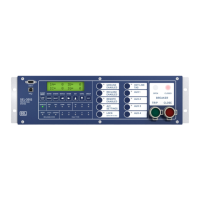
When the CNTRL pushbutton is pushed, the display shows the following:
MANUAL TRIP Ä Å
Position: RETURN
This shows that a Local Bit has been assigned to the trip function, using NLB1 as the label, and
that the bit is presently OFF, using the CLB1 label. The right/left arrows are used to scroll to
other Local Bit functional displays that have been specified.
If the user decides to trip the relay using this Local Bit, he pushes the SELECT button. The
display then changes to:
MANUAL TRIP
TRIP? Yes N
o Ä Å
If Yes, the user employs the left arrow to underline Yes, then the SELECT button to perform the
trip. While the Local Bit is being asserted (pulsed) to perform the trip, the TRIP target lights,
and the display briefly appears as follows:
MANUAL TRIP Ä Å
Position: TRIP
This indicates, using the PLB1 setting, that the bit is being pulsed. After the bit returns to the
OFF state, the display returns to the original display:
MANUAL TRIP Ä Å
Position: RETURN
For tripping or any other function to occur, the LBn Relay Word bit must be assigned to the
appropriate SEL
OGIC control equations for the desired function.
The relay stores the Local Bit states in nonvolatile memory. They will remain intact through loss
of dc power to the relay and through settings changes, provided the settings changes themselves
do not redefine the Local Bits or alter the conditions for operating them.


 To Next Page