5-6 Metering and Monitoring Date Code 20080110
SEL-387E Instruction Manual
Demand Reset Functions (METER RD and METER RP Commands)
The demand ammeter function performs an integration of current over time and contains a
“history” of the currents dating back minutes or hours from the present time. The peak demand
ammeter function maintains registers with the highest recorded demands of each type over a
period of time since the last reset of the registers. For both of these functions, you may want to
erase this “history.”
The
METER RD
(
MET RD
)
n
(Reset Demand) command returns the demand ammeter current
values to zero. This is useful during testing, for example, so that previous test quantities do not
appear as part of the metered values, or in order to check the shape of the rising exponential for a
fixed current over a period of time.
The
METER RP
(
MET RP
)
n
(Reset Peak Demand) command stores the present values of the
demands, along with their associated date/time stamps, in the registers used to store the values of
the peaks. These become the new peaks of record until higher values occur. This function might
typically be performed on a daily, weekly, or monthly basis, to determine a peak demand profile
of the equipment over time.
Both of the reset commands must be followed by a value for “
n
.” A value of 1, 2, or 3 will
produce a reset of all the demand or peak demand values for Winding n. If the letter A is
entered, reset will be done on all of the windings. Failure to enter a value will produce an
“Invalid parameter” response from the relay. For valid
n
values, the relay will ask for a Yes/No
verification of your request to reset. No reports are issued for either command.
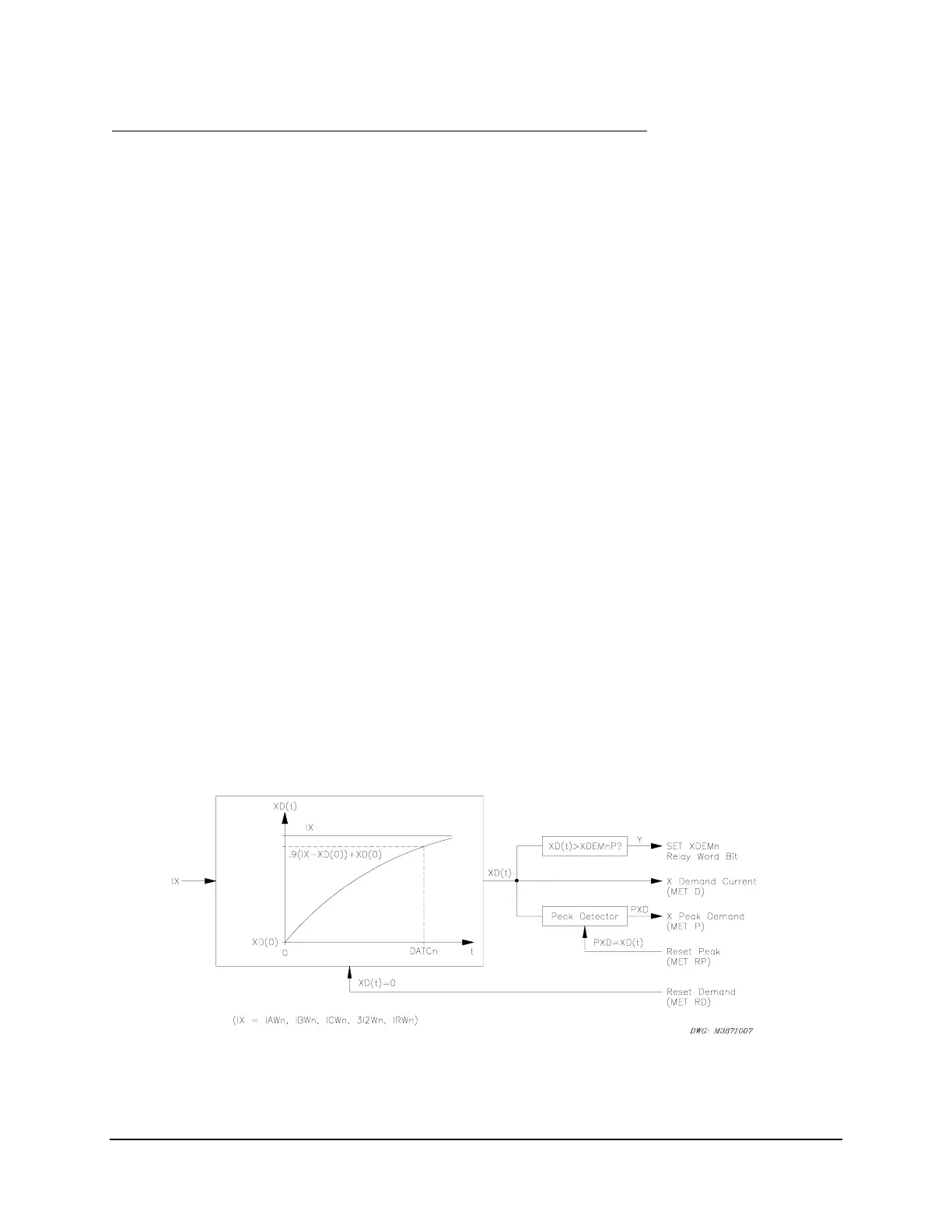
Figure 5.1 is an overall diagram representative of the five demand ammeters for each Winding n,
and the relationship of the four related commands (
MET D
,
MET P
,
MET RD
,
MET RP
). The
currents are indicated generically as IX, the demand of each as XD(t), the peak demand of each
XD(t) as PXD, the three demand alarm thresholds as XDEM
n
P, and the associated Relay Word
bit as XDEM
n
. The greatest of the XD(t) demands for IAW
n
, IBW
n
, and ICW
n
is compared to
the phase threshold PDEM
n
P; if the threshold is exceeded, Relay Word bit PDEM
n
is set.
Negative-sequence current demand is compared to QDEM
n
P, and Relay Word bit QDEM
n
is set
if the threshold is exceeded. Residual current demand is compared to NDEM
n
P, and Relay
Word bit NDEM
n
is set if the threshold is exceeded.
Figure 5.1: SEL-387E Relay Demand Ammeter Functions and Commands


 To Next Page