8-18 Front-Panel Operation Date Code 20080110
SEL-387E Instruction Manual
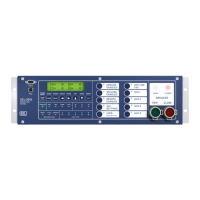
Table 8.3: Front-Panel Button Serial Port Equivalents
Button Similar SEL-387E Serial Port Commands
TARGET RESET / LAMP TEST TAR R
METER MET, MET (D, DIF, P, SEC, RD, RP)
EVENTS HIS
STATUS STA
OTHER DAT, TIM, TAR F, BRE, BRE R, RES
SET SET, SET G, SET P, SHO, SHO G, SHO P, PAS
CNTRL PUL, CLO, OPE
GROUP GRO, GRO n
P
ROGRAMMABLE
LEDA, LEDB, LEDC
Three of the LEDs in the second row may be programmed by the user through use of SEL
OGIC
control equations. These settings appear under the FRONT PANEL section of the GLOBAL
settings, accessible by the SHO G and SET G serial port commands. These settings can neither
be seen nor changed from the front panel itself.
The factory default settings are as follows:
LEDA = OCA + 87E1 LEDB = OCB + 87E2 LEDC = OCC + 87E3
The Relay Word bits OCA, OCB, and OCC indicate selection of Phase A, B or C by the overcur-
rent elements for those respective phases. The Relay Word bits 87E1, 87E2, and 87E3 indicate
trips initiated by differential elements 1, 2, or 3, respectively. These correspond, essentially, to
Phases A, B, and C. Thus, LEDA, LEDB, and LEDC are factory set to indicate either an
overcurrent or differential selection of their respective phases as the ones involved in a fault.
They are therefore labeled as “FAULT TYPE” LEDs.
It is probably best to leave these settings in place when the relay is in service. Otherwise,
observers of the front-panel labels might be confused by seeing the LEDs lit for apparently no
reason; determining why the LEDs are lit would be impossible without a serial port connection
to the relay. For testing or other purposes, however, these programmable LEDs may be very
helpful for identifying conditions, defined by SEL
OGIC
control equations that are of interest to
the user.
P
ROGRAMMABLE
D
EFAULT
D
ISPLAY
P
OINTS
Rotating default displays on the relay front panel replace indicating panel lights. Traditional
indicating panel lights are turned on and off by circuit breaker auxiliary contacts, front-panel
switches, SCADA contacts, etc. They indicate such conditions as circuit breaker open/closed.


 To Next Page