4-8 I/O Communication and Control 5702269-C
Advanced Energy
®
information about this message, refer to section 7-6 of the DeviceNet specification
(revision 2.0 or later). The following table represents the structure of the poll
command message.
Note: In Bit 0 of Byte 4, PO refers to Power On. In this bit, 1 = turns on the unit’s
output; 0 = turns off the units output.
Note: The 16-bit Power Output value (AI/AO) is shifted right four bits, and the
remaining four bits are filled with 0s. This changes the 16-bit AO to a 12-bit AO
with a value of 10 V = OFFF
hex
.
Scaling
Parts of the message structure are based on binary representations of analog voltages.
Thus they have analog scaling associated with them.
The scaling for Power Output is 0 to 10 V, where 10 V = the full rated output power
capability of the Pinnacle Plus+ 300 power system (master and slave units). Do not
reset a value higher than the power system’s maximum output power capability. (Such
requests are always limited to the maximum output power capability of the power
system.) For information about determining your power system’s maximum output
capability, see “Explicit Messaging” on page -10 .
The scaling for the Ramp Rate Set Point (ramping-to-set point rate) is also 0 to 10 V
as follows:
• 10 V = 1 x power output set point per second
• 8 V = 0.8 x power output set point per second
• 5 V = 0.5 x power output set point per second
• 2.5 V = 0.25 x power output set point per second
• 0 V = No ramping rate specified; the Pinnacle Plus+ unit ramps as fast as it can
If you request a ramping-to-set point value that exceeds 10 V, the set point will be
limited to the equivalent of 10 V.
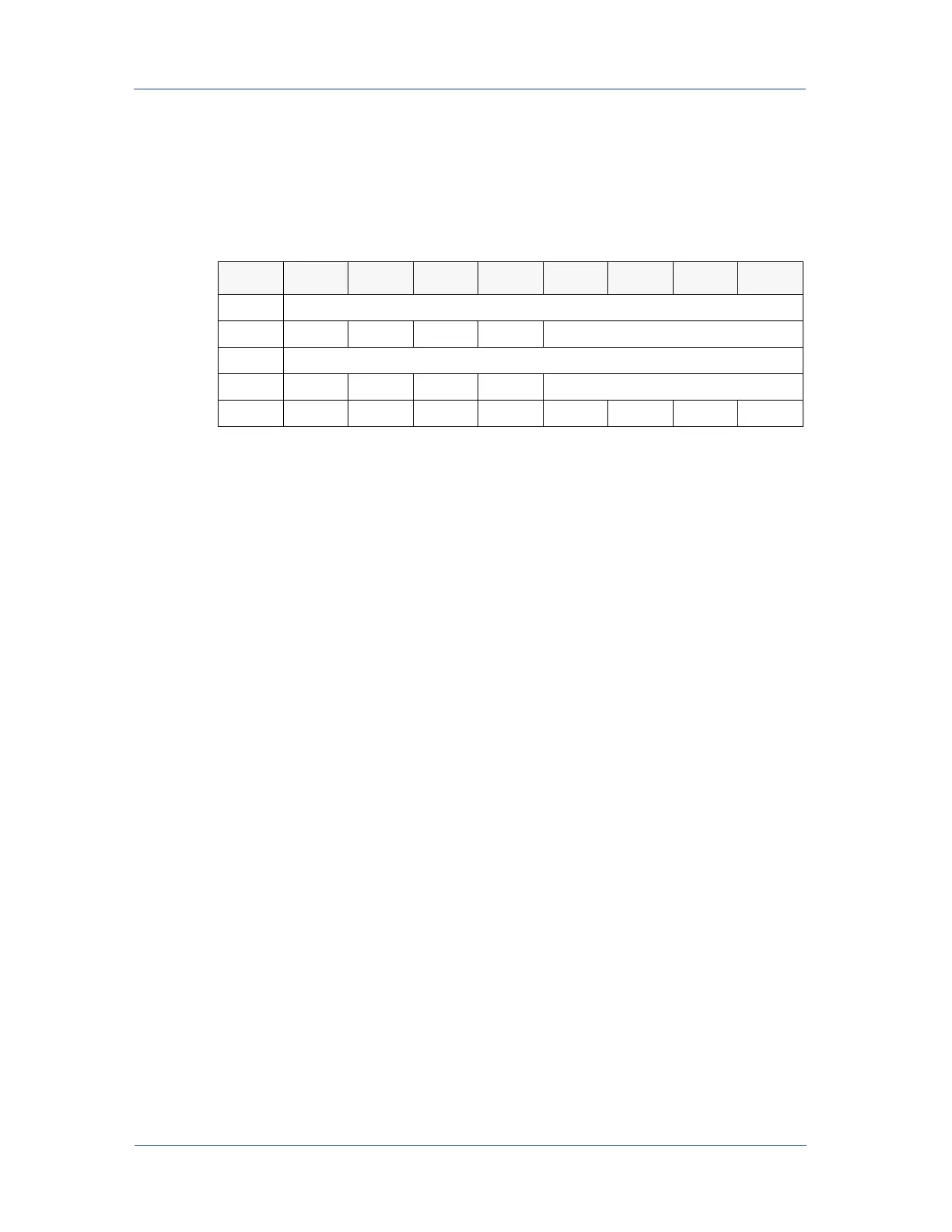
Table 4-3. Structure of the poll command message
Byte Bit 7 Bit 6 Bit 5 Bit 4 Bit 3 Bit 2 Bit 1 Bit 0
0 Power Output Set Point AO (LSB)
1 0* 0* 0* 0* Power Output Set Point AO (MSB)
2 Ramp Rate Set Point AO (LSB)
3 0* 0* 0* 0* Ramp Rate Set Point AO (MSB)
4PO



 To Next Page