Cell Wash | 87
For loosely adherent cells, the best performance was seen by increasing the aspirate
height and using both a standard and secondary (or crosswise) aspiration. Moving the
aspirate tubes from one side of the well to the other prevents a fluid stream from forming
and dislodging the cells. Increased residual in the well means increased cell retention.
Best practice:
l Use the Align tool to determine the optimal X, Y, and Z axis adjustments needed to best
position the manifold above the wells during the wash routine.
l Test the protocol settings by running the protocol using only water and an empty plate
before actually running your assay to make sure the fluid stream hits the wells as
desired.
l Optimal cell wash performance is achieved with BioTek's special CW+ Dispense
Manifold. "CW+ Dispense Manifold" is engraved on the top of these newer manifolds to
make them easy to recognize. If you do not have one of these manifolds you may need
to experiment with the Washer Settings on page 105 (the CW+ Control) to improve the
performance of your cellular assays. Contact BioTek to obtain this special cell wash
manifold.
Delay Aspiration or Vacuum On Volume Control
LHC Users: Open the Wash or Dispense Step>Advanced Options
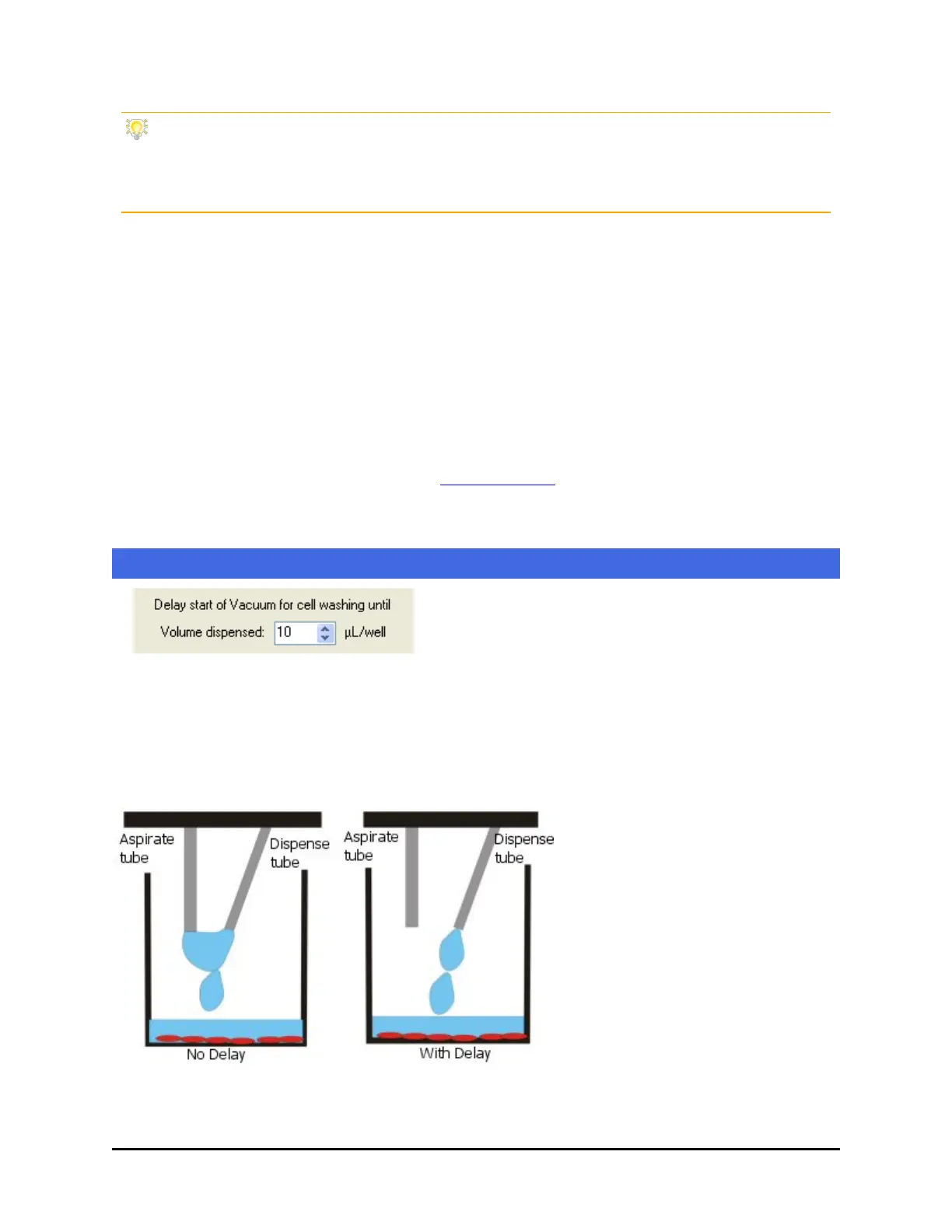
During regular plate washing, aspiration and dispensing occurs simultaneously.
This allows "overflow" dispensing, because the fluid is aspirated before
overflowing the plate. But, the low-flow tubing used in cell wash protocols
dispenses fluid so slowly that aspiration must be delayed to allow the fluid to
reach the well.
BioTek Instruments, Inc.


 To Next Page