Glossary
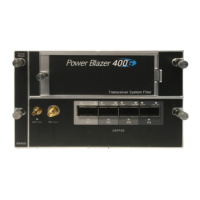
Power Blazer 825
OBSAI
This protocol called Open Base Station Architecture Initiative (OBSAI)
separates a traditional radio base station configuration into two separate
elements: Base Transceiver Station (BTS) and Remote Radio Head (RRH).
The BTS processes the digital baseband radio information and performs
the control of the RRH. The RRH converts the digital radio information into
radio frequency signals transported over the air interface (antenna). The
BTS and RRH are interconnected by a point-to-point link. This link carries
the OBSAI protocol and is known in the industry as the fronthaul as
opposed to the backhaul that is the WAN bringing the network traffic to the
base station.
The OBSAI link can be extended over several kilometers as it uses fiber
optics. In fact it can be deployed up to 40 km although most field
installations at the moment of this writing are below 10 km.
The OBSAI BTS System Reference Document defines multiple Reference
Points. The Reference Point 3 Specification mainly defines the physical to
the application layers providing an opportunity for larger interoperability
between vendors. However, field experience suggests that the
interoperability is pretty much limited to the physical and data link layers.






 To Next Page