52 Mechanical installation
Checking the delivery
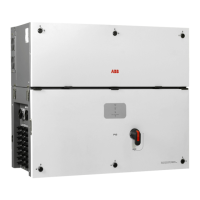
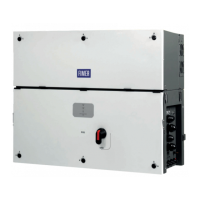
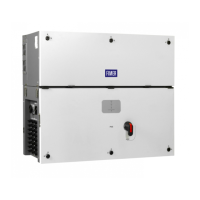
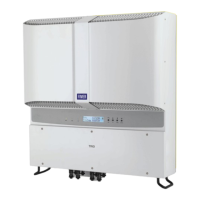
The inverter delivery contains:
• Inverter cabinet
• Optional modules and accessories (if ordered)
• Inverter power module lifting equipment (if ordered)
• Delivery documentation supplied on a USB memory stick and safety stickers
Make sure that the inverter has no signs of damage. Mark and record any damage and
contact your local FIMER representative immediately. Repair damage in the paint surface.
The documentation (on a USB memory stick) and other loose parts are delivered inside
the inverter. Before you install or operate the inverter, read the type designation label of
the inverter to make sure that the delivery is correct. Record any deviations and contact
the local FIMER representative immediately.
Constructing the foundation for the inverter
For detailed foundation drawings, refer to the Dimension drawings on page 117.
When you design and construct the foundation:
• Obey the local rules and laws.
• To prevent the risk of corrosion, install the inverter higher than its surroundings, so that
surface water does not collect around the inverter.
• Tilt the surface of the surrounding ground at least 50 mm per meter (2 in per 40 in).
This makes sure that surface water flows away from the inverter.
• Take into account local conditions, such as the soil type, frost protection, rain amounts,
and so on. Install at least 300 mm + 200 mm gravel under the foundation.
• Take into account the required cable bending radius and installation room. The height
of the foundation depends on actual cable types, but should be at least 475 mm.
• FIMER recommends that the user platform around the inverter is at least one meter
(40 in.) wide to permit service work.
• Check the load carrying capacity of the ground and potential local special
requirements (for example, earthquake or typhoon anchoring) of the construction
area.
• Use materials suitable for the local conditions and requirements.
Construct a proper support for the inverter:
• On sandy soil: Gravel is usually sufficient below the foundation. Fill the foundation
hole with gravel according to normal construction practices. Use geotextile to prevent
mixing of the gravel with the surrounding soil. Start with crushed stone or coarse
gravel and continue with finer material. Compress the filling. Use fine gravel (size
2...5 mm [0.08...0.20 in]) for the surface layer below the foundations. Smooth and
compress the surface before adding or molding the foundations.
• On non-sandy soil: Use the same practices as for sandy soil. Depending on the frost
sensitivity and the load capacity of the base soil, it may be necessary to use a thicker
layer of gravel below the foundations or to build foundations with a larger surface area.
If there is a risk of frost, add insulation around the foundations.



 To Next Page