60 Planning the electrical installation
Compatibility of the solar generator and inverter
Make sure that:
• The current and voltage of the generator match the rated values of the inverter.
• The open circuit voltage of the generator does not exceed the maximum allowed DC
voltage of the inverter.
• The operating range of the generator is within the limits of the maximum power point
tracking (MPPT) function of the inverter control program.
• The grounding requirements of the generator match the inverter.
• By considering the temperature and possible PV panel degradation, make sure that
solar generator voltage levels match the inverter voltage levels for the lifetime of the
whole PV plant.
• The insulation resistance of the PV modules fulfill the minimum insulation resistance
requirements of IEC/UL 61215.
Selecting the power cables
Select the correct DC and AC cables according to the local regulations. The exact cabling
dimensions for the specific installation are to be calculated by the entity designing the
whole PV plant:
• Select the correct dimensions for the cable to carry the inverter input and output
current in the expected environmental conditions. Refer to Technical data on page 93
for the rated currents.
• Select a cable rated for at least 90 °C (194 °F) maximum permissible temperature of
conductor in continuous use. Local regulations and installation conditions may require
a higher temperature rating.
• The inductance and impedance of the PE conductor/cable (grounding wire) must be
rated according to permissible touch voltage appearing under fault conditions (so that
the fault point voltage will not rise excessively when a ground fault occurs).
• Select an AC output cable that is rated for at least 1.8/3.0 kV AC and a DC input cable
rated for at least 1.5 kV DC.
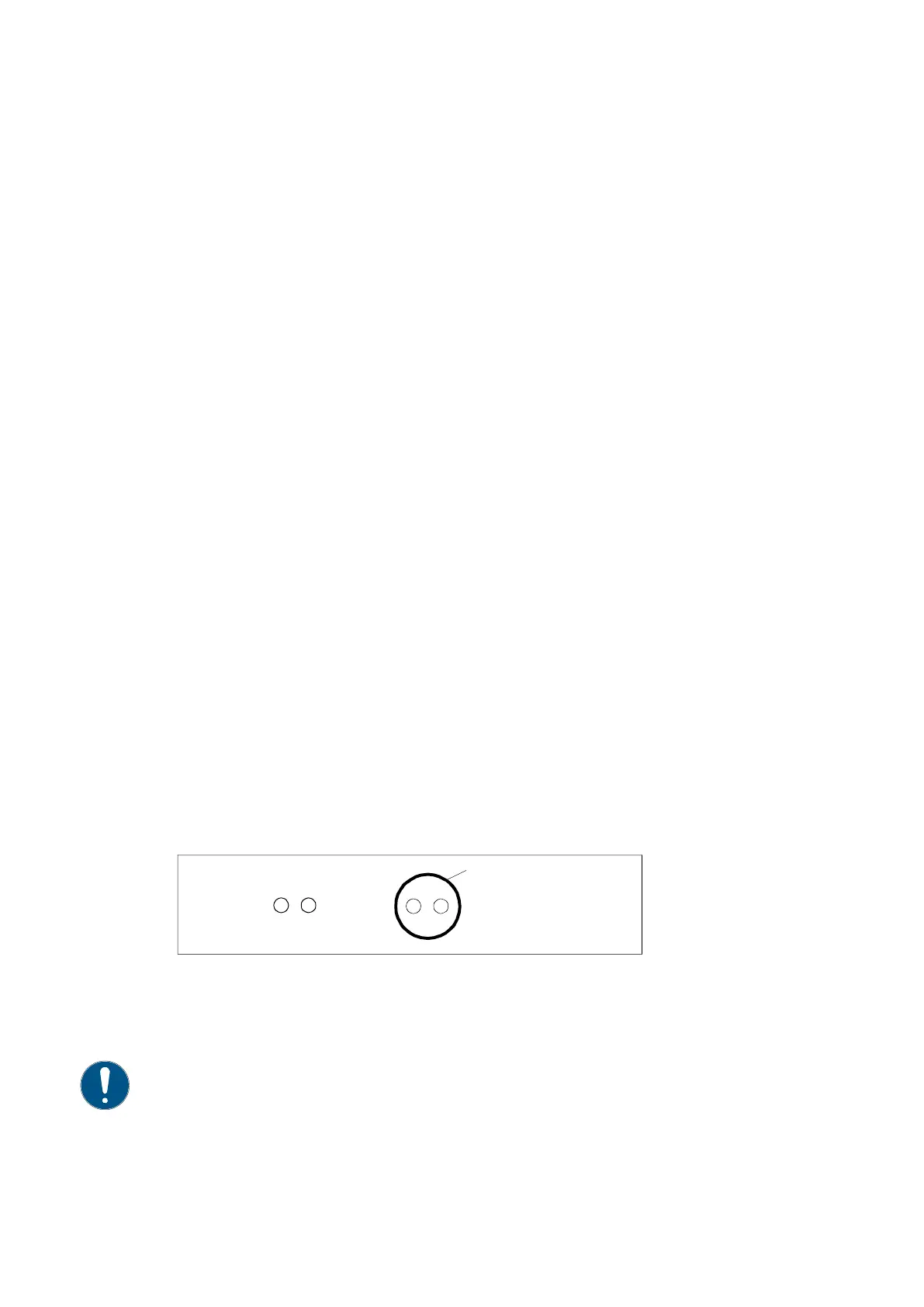
A two-conductor system is allowed for the DC input cabling, but you can also use a
shielded cable.
A symmetrical shielded cable is recommended for the AC output cabling. Refer to
Recommended AC output power cable types on page 62. Compared to a four-conductor
system, the use of symmetrical shielded cable reduces the electromagnetic emissions of
the whole inverter system.
Note: When a continuous metal conduit is employed, a shielded cable is not
necessary. The conduit must have bonding at both ends as with the cable shield.
Shield


 To Next Page