Rev 4/2018
11
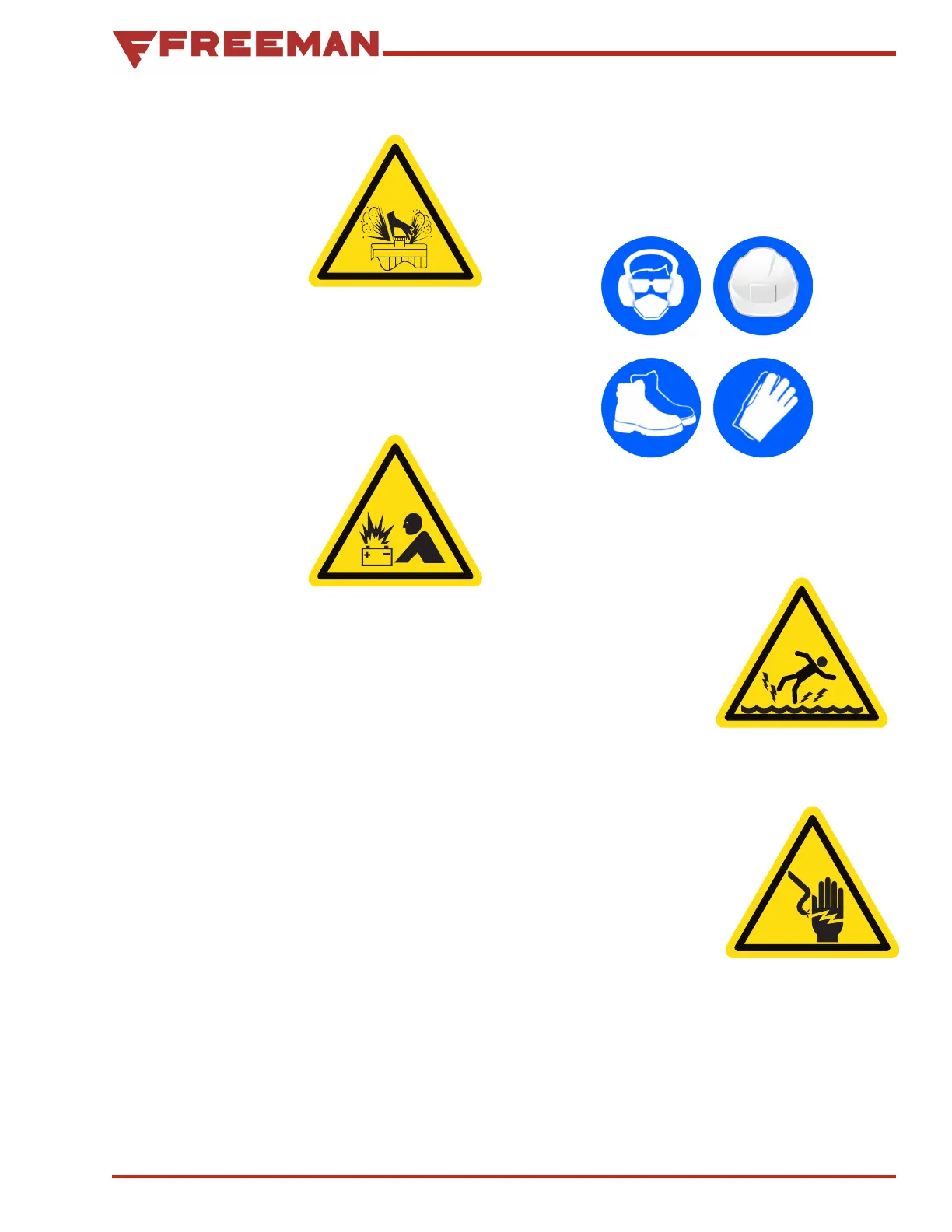
• DO NOT remove the radiator
cap when the engine is hot.
The coolant will be under
pressure and can flash
to steam with explosive
force, causing severe
burns. To prevent
burns, remove the
radiator cap only when the engine is cool.
• Batteries contain sulfuric acid which can cause
severe burns. Avoid contact with skin, eyes or
clothing.
• Batteries produce explosive
gases. Keep sparks, flame and
cigarettes away. Ventilate
when charging or servicing
in an enclosed space.
Always shield your
eyes when working
near batteries. When
removing battery
cables, disconnect the negative (-) cable first.
When installing a battery, always connect the
positive (+) cable first. This procedure will help
to prevent a spark which could cause an explo-
sion.
• Before making adjustments to the engine
or chassis electrical system, disconnect the
battery. An electrical spark could cause a fire,
explosion or severe burns.
Safety Equipment
• Ensure test equipment is in good condition.
• If an instrument must be held while taking
measurements, ground the case of the instru-
ment before energizing equipment.
• Do not touch live equipment or personnel
working on live equipment while holding a
multimeter. Some types of measuring devices
should not be grounded—do not hold such
devices while taking measurements.
• Prevent personal injury or equipment damage
by using a lifting device with a lifting capacity
greater than twice the weight of any equipment
to be lifted.
• Always use personal protective equipment
(PPE) appropriate to the situation. This may
include the use of hearing protection, eye
protection, a respirator, a hard hat, leather
gloves, steel toed boots, etc.
Electrical Hazards
• An electric shock could be fatal. Ensure power
to the baler is “OFF” before opening electrical
panels.
• All electrical cables and
connectors must be in good
condition (free of corro-
sion, damage, etc). Use
caution in wet weather
to avoid danger from
electrical shock.
Never attempt elec-
trical testing or repair while standing in water.
• Do not wear electrically conduc-
tive jewelry, clothing, or other
items while working on the
electrical system.
Hot Oil Hazards
• Burns from hot oil can
be severe—Always
allow lubricating and
hydraulic oil to cool before draining.
Compressed Air Hazards
• When using compressed air to dry parts, pres-
sure should not exceed 30 psi (200 kPa).
• Air pressure penetrating your skin can be fatal.
Never direct compressed air at anyone.


 To Next Page