Issue 08/2013 Page 24
MAPLA- Modular energy supply system for load lifting magnets
iMAPLA system description
Function description
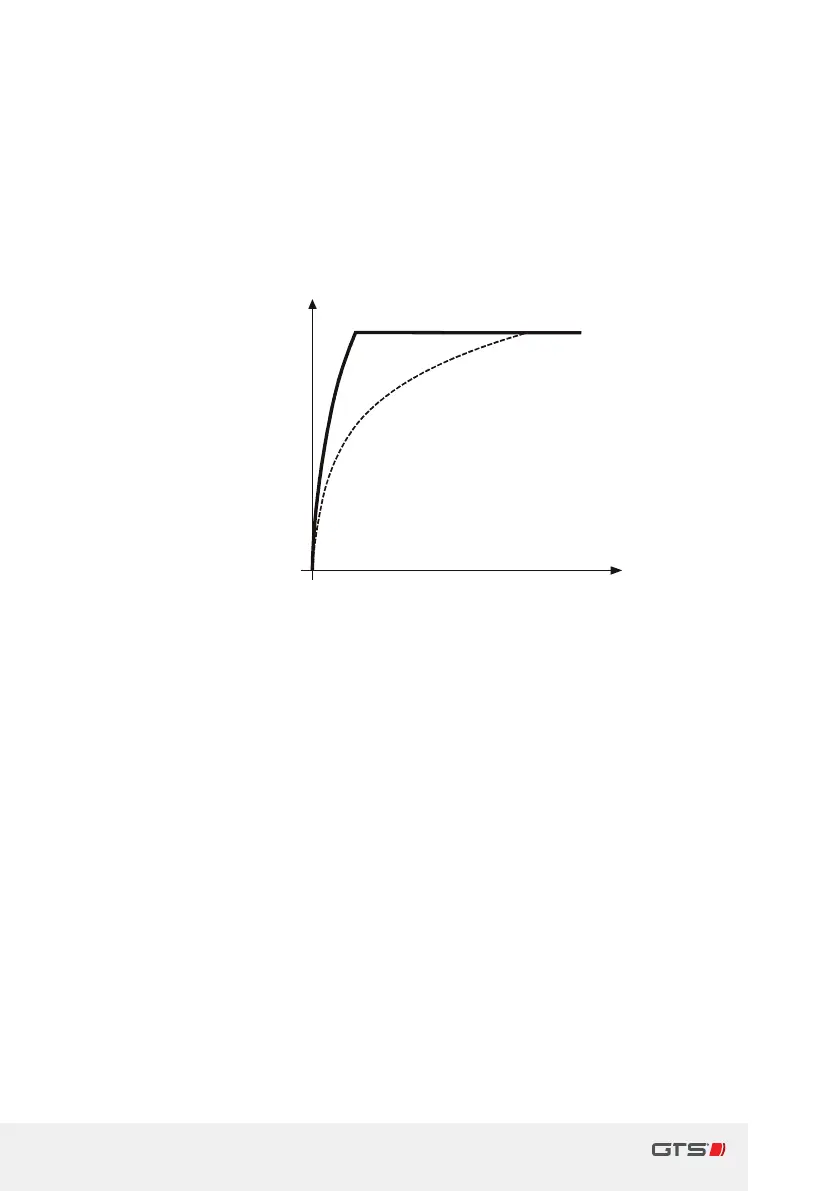
Magnetisation is completed alot earlier and the lifting magnet reaches its
maximum tension force much earlier. Once the saved current value has been
reached, the voltage is reduced to the rated value. As aresult, the current in
the lifting magnet remains constant until the load is released.
Ö Fig. 2, Characteristic curve, “lifting”, page24
Magnetic force
(corresponds to the
ow of current)
Quick magnetisation
with impulse excitation
Normal magnetisation
without impulse excitation
Lifting
Time
Fig. 2 Characteristic curve, “lifting”
4.4.2 Release load (switch o lifting magnet)
During standard demagnetisation, the magnetic current also falls slowly, like
an exponential function. The residual magnetism which persists for along
time means the lifting magnet needs arelatively long time to release the
entire load.
Ö Fig. 3, Characteristic curve “release”, page25
To accelerate the demagnetisation, the iMAPLA system uses an automatic
demagnetisation process with countervoltage and sequence pulsation.
This method also uses the reference current measured before starting for the
rst time.


 To Next Page