Chapter 1. The Kaye Validator AVS
Kaye Validator AVS User’s Manual 11
Specify calibration setpoints, temperature stability, and deviation criteria for
sensor calibration and verification
Specify start and stop conditions for the qualification cycle and the exposure cycle
Specify how often to scan sensors
Define the output relays
After you have created and saved your setup, you run the study by loading the setup
into the Validator AVS via connection from your Console to the Validator AVS. See
the Validator AVS online Help for instructions on setting up a study.
1.5.5 Sensor Calibration
The Validator AVS provides both pre-qualification sensor calibration and post-
qualification calibration verification.
Before you perform a qualification study, you should calibrate the temperature sensors
to correct raw temperature readings to a traceable temperature standard. You can
perform a two-point calibration, or a two-point calibration with an additional check-
point. Sensors that do not meet the pre-qualification calibration test criteria are marked
as failed and are not calibrated. Sensors that fail calibration are marked red in the live
data screens and cannot be used in a qualification study.
After the qualification study, you can perform a post-qualification verification to verify
that the sensor readings are still within the required criteria. You can perform a one-
point, two-point or three-point post-qualification verification or even change the
criteria before running the verification. If a sensor fails post-qualification verification,
the sensor is noted as failed but the readings are still reported. Calibration offsets are
not changed during post-qualification verification.
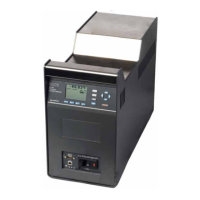
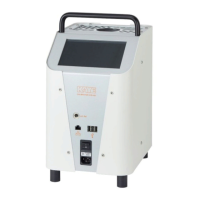
If your validation system includes a Kaye temperature reference and a Kaye IRTD, you
can perform fully automatic pre-qualification and post-qualification calibrations. If you
do not have a Kaye temperature reference you can manually set your reference.
For instructions on sensor calibration, see Chapter 7, Calibrating and Verifying
Sensors.


 To Next Page