5-22 LeeBoy 6150 Conveyor Paver
Maintenance
Liquid ballast types include:
• Water: Plain water is inexpensive, but it freezes. Ice
expands and will push the tire off the rim. Even in
Florida, there is a chance of freezing during winter, so
water is not recommended unless.
• Calcium Chloride: This toxic, highly corrosive
chemical is sold in ake form to mix with water, adding
considerable weight to the water. It resists freezing
down to -50° F (45.5° C), but will rust wheels in a very
short time, which can adversely affect your warranty.
Therefore, it is NOT recommended for use.
• Antifreeze: Antifreeze added to water resists freezing
down to -40° F (-40° C) and does not add weight
to the water, which is eight pounds per gallon. It is
economical and readily available. Ethylene glycol
antifreeze is toxic to animals: It only takes a little to
poison pets.
• Beet Juice: A fairly new product on the market is beet
juice, sold under the name “Rim Guard,” which resists
freezing down to -35° F (-37° C), is noncorrosive,
environmentally friendly, and 30 percent heavier than
water. It is expensive compared to antifreeze.
NOTE: Foam lling is NOT recommended due to the
expense, inability to adjust tire pressure for
the job, and damage that can occur. You will
have to cut the tire off the wheel--and buy new
wheels--when you want to change tires. If
using this method, it must be professionally
done.
It is important to displace most of the air when inating
the rear tires with liquid ballast, allowing the tire to be
inated to a relatively low pressure for proper footprint
and maximum tractive effort. Do not deviate from the
following procedure:
1. Mix the ethylene glycol antifreeze solution at a
50/50 ratio in a large container with hose/pump
attachment. A ll nozzle with valve that allows
displaced air to escape as the uid enters must be
used.
2. Support the axle to take the machine’s weight from
the tires and deate.
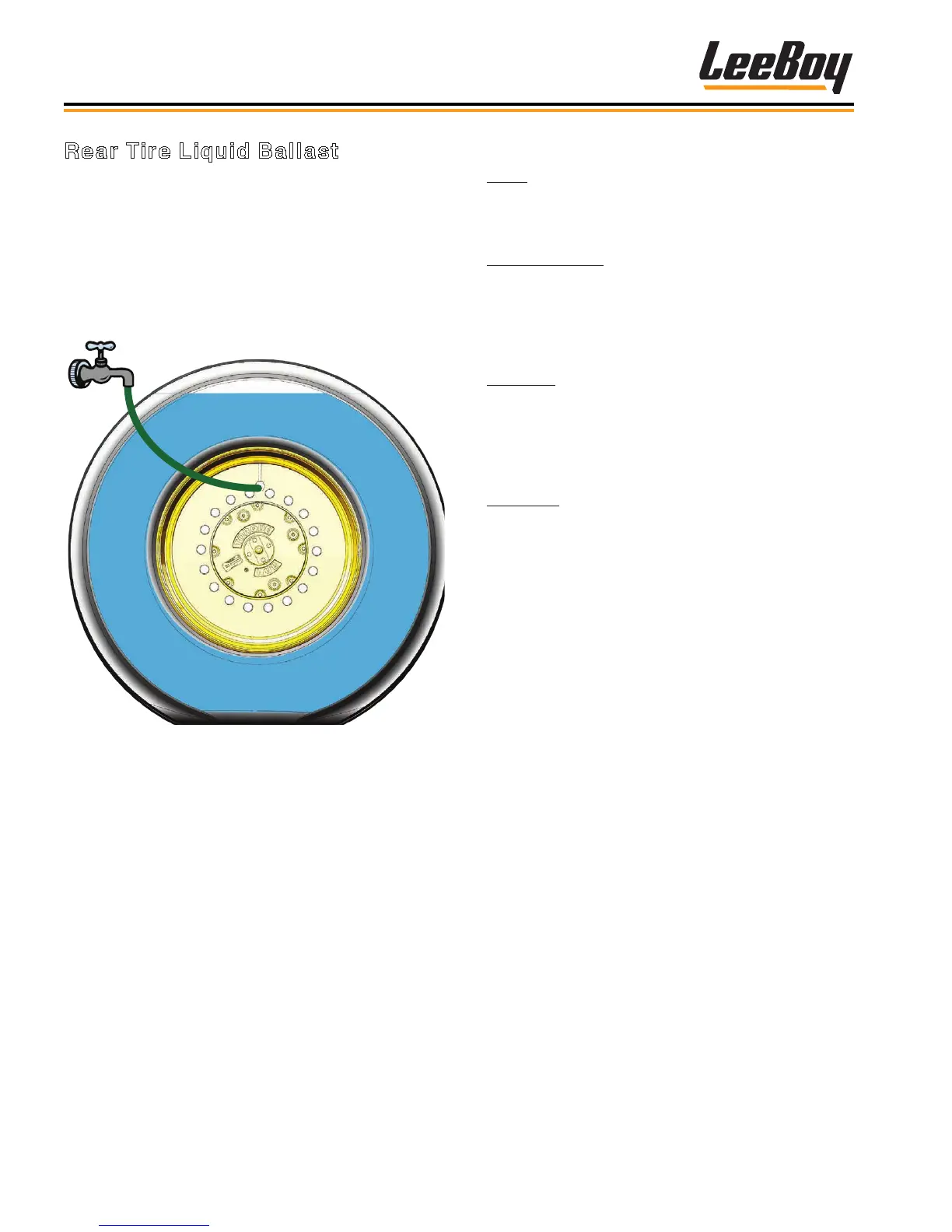
Rear Tire Liquid Ballast
Pumping liquid ballast into the drive tires stiffens the
tire sidewalls, helps prevent slippage, decreases tire
compaction on the paving surface, and adds weight
to the lowest center of gravity. This additional weight
absorbs surface bumps, reducing wheel bounce that
can affect the quality of paving. (Figure 5-22)
NOTE: Always inspect the tire, rims and wheel for
damage before inating.
Figure 5-22. Liquid Ballast at 95 Percent Level
Most tire manufacturer suggest adding up to 95
percent liquid ballast volume, depending upon the
situation. Changes in weather, temperature extremes,
type of liquid ballast used, job site requirements and
weight split between the front and rear axles are major
considerations.
• If the front axle needs to be lighter, evacuate the liquid
ballast.
• To add weight at the rear axle for heavy torque work,
pump ballast into the rear tires.
Consult your tire manufacturer (or ballast product
manufacturer) for proper ballasting ination calculations
and values. (You may also need to purchase a water
ller attachment.)


 To Next Page