Page 8
• 12H or 24H
• Month
• Date
• Year
• Daylight Saving Time
• OFF - Daylight savings time is disabled
• US - Daylight savings time is set to "United States" daylight savings mode,
with 1 hour adjustment in the fall and spring.
• EU - Daylight savings time is set to "European" daylight savings mode with
1 hour adjustments in the fall and spring, yet different dates then the US
• US7 - Daylights savings time is set to "United State" daylight savings mode
which is currently scheduled to become active in 2007 per the new Energy
Conservation act
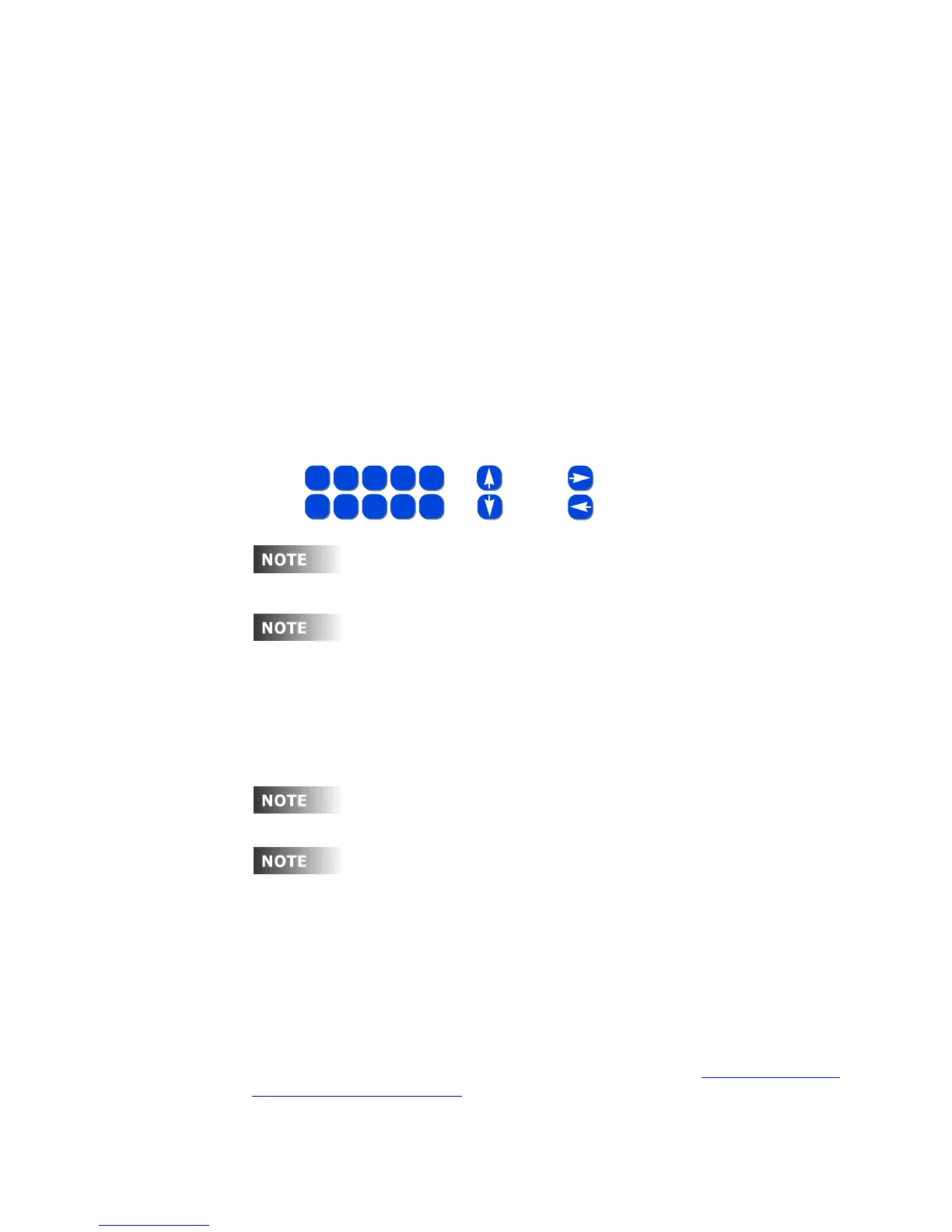
The editable field will be flashing. As always, use the following keys
To the right of the time field, the day of the week is displayed. This
field is not editable and is set based on the date setting.
When 12 hour mode is active, the AM/PM field is active for editing. If
Daylight Savings Time is active, the field will display in upper case
characters. If Daylight Savings Time is inactive, the field will display
in lower case characters. If 24 hour mode is active, the AM/PM field
is replaced with an “s” or a “d” and is not editable. Instead, the value
is determined by the Daylight Savings Time setting. The “s” indicates
standard time (Daylight Savings Time inactive); the “d” indicates that
Daylight Savings Time is active.
If Daylight Savings time is active, the am/pm will be displayed in
Upper case letters.
If you exit from this menu via the MENU or CANCEL button, all
changes will be lost.
Set the Astronomical Time Clock
The Z-MAX Scheduler allows you to turn lights on or off in relation to sunrise and
sunset. For example, yard lights can be set to turn on an hour before sunset, and turn
off an hour after sunrise, according to the time of year.
The astronomical time clock (Astro Time) calculates the time of sunrise and sunset for
every week of the year depending on the location of the installation. To use Astro
Time you must know the approximate latitude (in degrees) (See Appendix A for
various cities in North America) of the controller’s location, as well as the present time
of sunrise and sunset (often found in the daily newspaper). Visit www.srrb.noaa.gov/
highlights/sunrise/sunrise.html for a complete listing of Latitude, Longitude, Sunrise
and Sunset information.
5
JKL
1
-
2
ABC
3
DEF
4
GHI
0
SPACE
6
MNO
7
PQRS
8
TUV
9
WXYZ
OR
{
FOR FIELD VALUE CHANGES
FOR FIELD
NAVIGATION
AND



 To Next Page