Page 46
•
STD NC
- Normally closed relay module which requires electricity to keep the relay
off.
•
ST SEN L
- Sentry switch Long is for use only with Leviton relay module P/N RELAY-
STD. This unique relay type can be used in conjunction with sentry switches.
When an Off command is issued, the relay will shut off for a brief time period and
then turn back on. This signals the downstream Sentry Switch to turn off the lights,
however, the circuit remains energized.
•
ST SEN S
- Sentry switch Short is for use only with Leviton relay module P/N
RELAY-STD and is designed to be used with WattStopper AS-100 style switches
which require a short pulse to signal the lights turning off yet the relay must remain
on.
•
NC SEN L
- Is just like ST SEN L except designed to be used with a normally closed
relay module.
•
NC SEN S -
Is just like ST SEN S except designed to be used with a normally closed
relay module.
•
PULSE
- type is currently unsupported
•
CUSTOM
- type is currently unsupported.
To assign relays to groups
Groups are used when you want multiple relays to be controlled collectively from a
single button press, occupancy sensor, action,...etc. They are collections of relays
which can be all located in a single cabinet or spread throughout multiple cabinets on
an entire network. The groups are activated, on/off, by group on/off commands from
a controlling source.
A relay can belong to a maximum of 32 different groups, numbered 1-32, and each
group is also numbered, 1-65,535. Currently Z-Max only allows assignment of group
numbers 1-9,999. By default, each of the (32) group associations are set to "None".
Group commands are always broadcast across all data networks.
Therefore, group assignments are not
specific to each cabinet but are
in turn general to the entire network
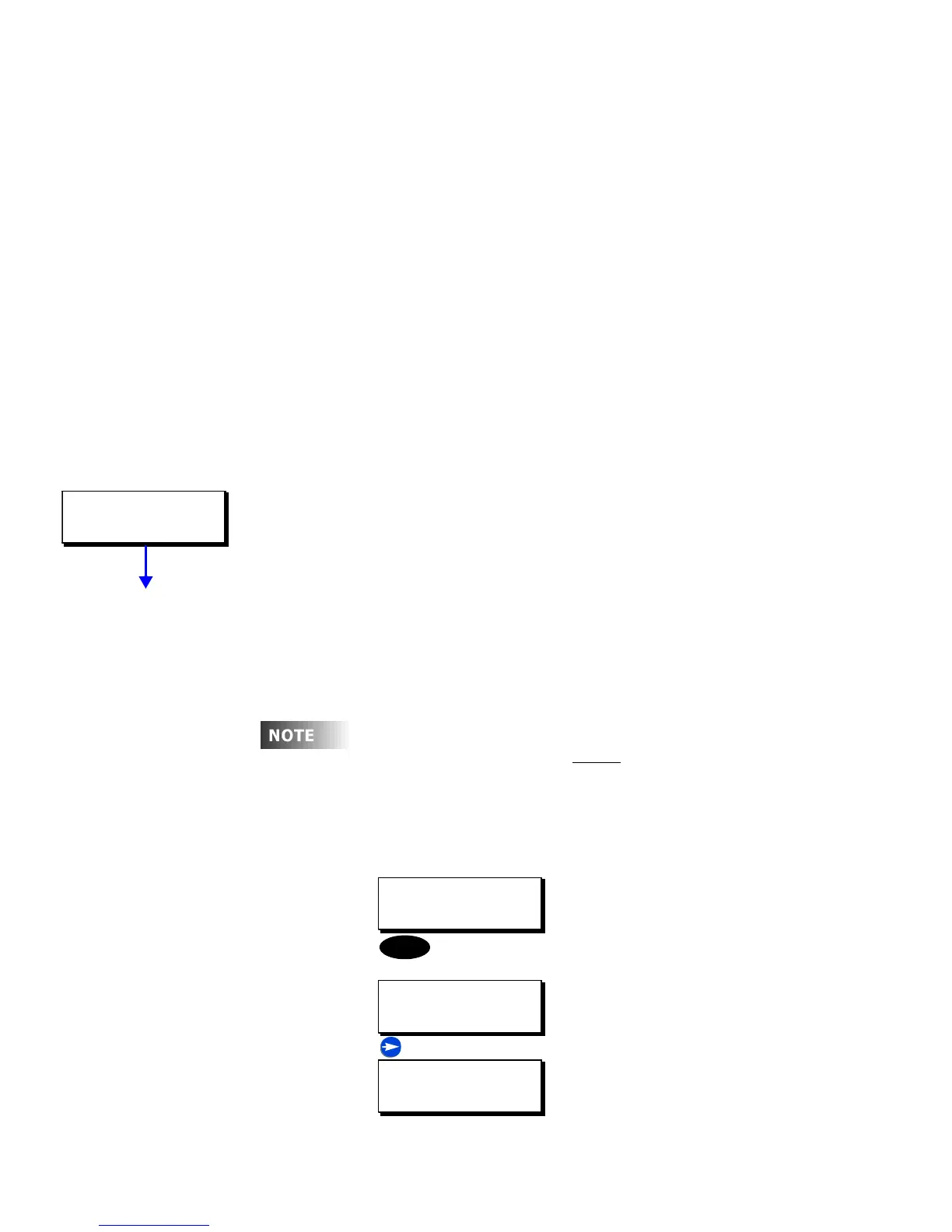
To make relay 1 part of groups 14 & 57, follow the procedure below:
Step 1: Navigate the menu structure to the relay menu and the group settings for
relay #1
Step 2: Press so that the text "NONE" is flashing
Step 3: Enter "14"
Step 4: Press to advanced to group 2
RELAY 1 LOC
GROUP 1: NONE
RELAY 1 LOC
GROUP 1: NONE
SELECT
RELAY 1 LOC
GROUP 1: 14
RELAY 1 LOC
GROUP 2: NONE



 To Next Page